

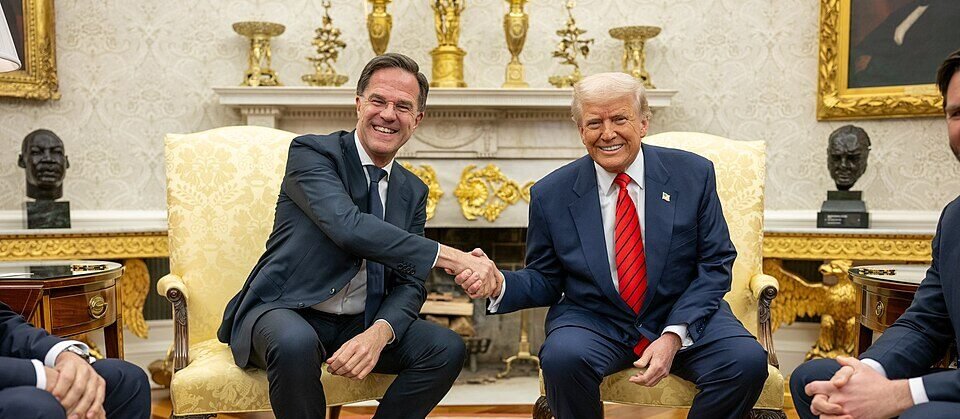
White House Signals Friction With NATO Over Middle East Crisis
Washington, D.C. — Donald Trump met with Mark Rutte, the Secretary General of NATO, at the White House on Wednesday as tensions surrounding the conflict in the Middle East and the security of the Strait of Hormuz continue to test relations between the United States and its European allies.
The meeting took place amid growing disagreements over how NATO members should respond to escalating tensions involving Iran and threats to global oil shipments passing through the strategically vital waterway.
White House Criticizes NATO Response
Shortly before the meeting, White House Press Secretary Karoline Leavitt shared a message from President Trump criticizing the alliance’s response to the crisis.
According to Leavitt, Trump said NATO had been “tested and failed,” reflecting the administration’s frustration with what it sees as insufficient support from European partners during the escalating tensions in the Gulf region.
In recent weeks, Trump has also warned that the United States could reconsider its commitment to the alliance if member states fail to increase cooperation and burden‑sharing.
Europe Seeks to Maintain Dialogue
Despite the tensions, European officials view the meeting as an important effort to maintain communication with the Trump administration.
Policy analyst Constanze Stelzenmüller of the Brookings Institution said many policymakers in Europe believe their options for influencing Trump’s position are limited.
She noted that visits by senior European leaders are aimed primarily at keeping diplomatic channels open and ensuring continued cooperation between the United States and Europe.
Ukraine Aid and Weapons Sales Also on Agenda
One of the key issues expected to be discussed during the meeting was the continued flow of weapons to support Ukraine in its ongoing conflict with Russia.
European governments have been purchasing American weapons for delivery to Ukraine, and officials want assurances that those arrangements will remain in place.
Disagreements Over Strait of Hormuz Mission
Another major point of disagreement involves calls from the Trump administration for international support in securing the Strait of Hormuz, a key shipping route through which roughly a fifth of the world’s oil supply passes.
While Washington has suggested that countries dependent on Gulf oil should help ensure free navigation in the waterway, European diplomats say their governments are unlikely to participate in mine‑clearing or other military operations there.
Analysts note that NATO’s formal mission focuses primarily on defense within the Euro‑Atlantic region, meaning member states are not automatically obligated to support operations outside that area without formal consultations and approval through the alliance’s decision‑making structures.
Alliance Faces Growing Uncertainty
The meeting between Trump and Rutte comes at a time when geopolitical tensions, energy security concerns, and differing strategic priorities are placing new pressure on the transatlantic alliance.
Observers say the discussions could shape how the United States and its NATO partners coordinate their responses to the evolving crisis in the Middle East in the weeks ahead.
About Republican Column: At Republican Column, we bring you breaking U.S. news, politics, and global developments every day to keep you informed.