

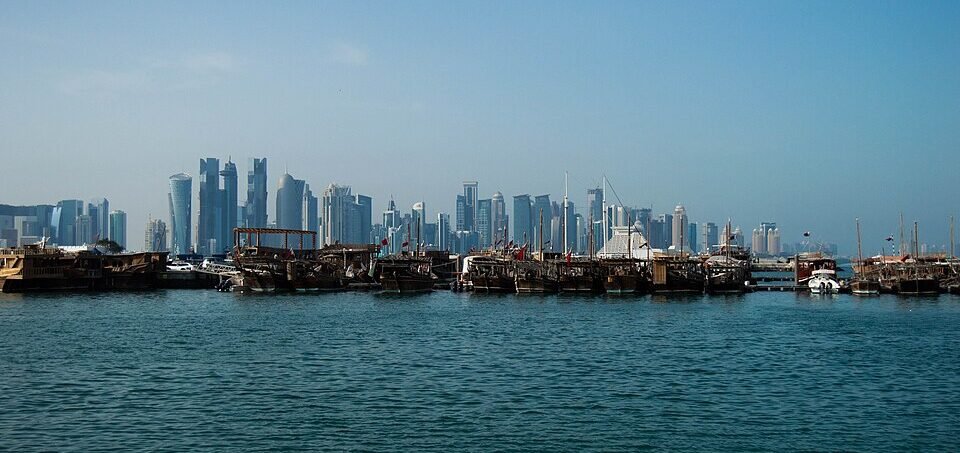
A British cargo vessel was struck by an unidentified projectile 31 kilometers off the Qatari coast — no casualties, but plenty of unanswered questions at one of the world’s most strategically sensitive waterways.
31 km From Doha coast, north-northeast
0 Casualties reported so far
~20% Of global energy supply transits this corridor
A British cargo ship is limping through the Gulf this morning with a hole in its hull — and nobody on the ground is yet claiming responsibility. The UK Maritime Trade Operations confirmed the vessel was struck by an unknown projectile on its port side, approximately 31 kilometers north of Doha, Qatar. The damage sits above the waterline, which is the one piece of good news here: the ship is stable, there are no casualties, and there’s no reported environmental spill.
But “stable” doesn’t mean “fine.” Technical teams are now assessing the hull’s structural integrity, and maritime traffic in the area has been put on high alert. The vessel’s crew got lucky. The region’s nerves, less so.
“A tanker hit by an unknown projectile on the port side, causing damage to the hull above the waterline — no environmental impact, authorities investigating.”— UK Maritime Trade Operations statement
This isn’t happening in isolation. The Gulf corridor off Doha is one of the most watched — and most vulnerable — stretches of open water on the planet. Around 20% of the world’s total energy supply moves through this region. When something gets hit here, energy markets notice, insurers start making calls, and diplomats reach for their phones.
The timing is impossible to ignore. The attack comes as the Trump administration is deep in nuclear negotiations with Iran, with Secretary of State Marco Rubio and Special Envoy Steve Witkoff meeting Qatar’s Prime Minister in Miami just this weekend. Iran has been increasingly active in the Gulf — testing what the fragile regional ceasefire will actually tolerate — and while no one has officially pointed the finger yet, the pattern is hard to miss.
What authorities do know: the projectile’s trajectory data is still being processed, multiple international agencies have the sector under surveillance, and the investigation is active. What they won’t say — at least not yet — is where it came from.
WHY THIS STRETCH OF WATER MATTERS
- Roughly 20% of global energy supply moves through the Gulf and Strait of Hormuz
- China imports over 1 million barrels of Iranian crude oil through this corridor daily
- Multiple nations — US, UK, EU — maintain surveillance operations in the area
- Iran has repeatedly threatened to close the Strait of Hormuz in response to sanctions
For now, the ship is damaged but afloat, the crew is safe, and the world is watching to see who claims — or denies — responsibility. In a region where every incident lands differently depending on what week it is, this one lands at a genuinely tense moment.
More updates are expected as investigators process the site and as the region awaits Iran’s formal response to the U.S. peace proposal. The two stories may be more connected than they appear.
About Republican Column: At Republican Column, we bring you breaking U.S. news, politics, and global developments every day to keep you informed.