

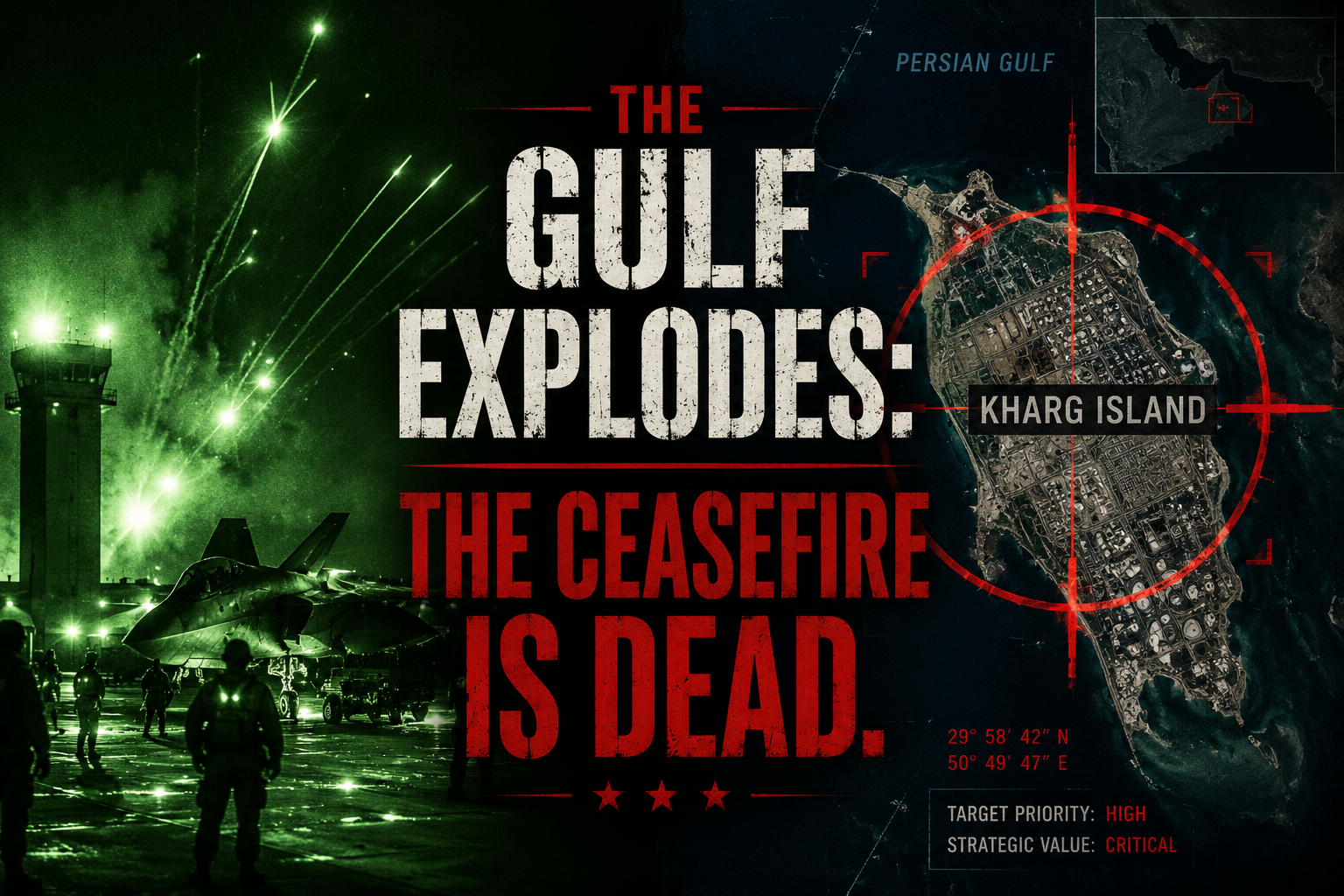
Regional tensions rose sharply this week after reports of missile and drone attacks targeting military facilities used by U.S. forces in Kuwait, Bahrain, and Jordan, marking one of the most significant escalations in the ongoing confrontation between Iran and the United States.
The reported attacks come amid a fragile security environment across the Middle East, where recent ceasefire efforts and diplomatic initiatives have struggled to contain growing instability. While U.S. defense officials indicated that air defense systems successfully intercepted many incoming threats and no American casualties were immediately reported, the developments have intensified concerns about a broader regional conflict.
Reported Attacks Target Strategic Locations
According to regional security reports and international media coverage, military installations associated with U.S. operations in Kuwait, Bahrain, and Jordan were among the sites targeted during the latest wave of attacks.
Defense analysts note that these locations play an important role in supporting regional security operations, maritime protection efforts, and coalition activities throughout the Gulf region.
Military officials have emphasized that defensive systems were activated to counter incoming projectiles and drones, helping limit damage and protect personnel stationed at the affected facilities.
Growing Concerns Over Regional Stability
The latest escalation has raised new questions about the future of ongoing diplomatic efforts aimed at reducing tensions across the Middle East.
In recent months, international mediators have worked to encourage dialogue among regional stakeholders, but repeated military exchanges have complicated those efforts. Security experts warn that continued retaliatory actions by any side could increase the risk of miscalculation and make future negotiations more difficult.
The situation also highlights the strategic importance of the Gulf region, where energy infrastructure, commercial shipping routes, and military assets remain closely interconnected.
Impact on Global Energy Markets
Financial markets reacted quickly to the renewed instability. Energy traders closely monitored developments in the Gulf, particularly around critical maritime corridors that facilitate a significant portion of global oil shipments.
Analysts have noted that prolonged disruptions or heightened security risks in the region could place additional pressure on energy prices, transportation costs, and global supply chains.
Oil markets have historically responded sharply to geopolitical uncertainty involving major producing nations, making regional stability a key factor for investors and policymakers worldwide.
Economic Implications Beyond the Region
The effects of Middle East instability often extend well beyond the immediate conflict zone. Rising energy costs can influence transportation expenses, manufacturing costs, and consumer prices across multiple sectors.
International economic institutions have warned that geopolitical disruptions remain one of the primary risks facing global growth forecasts in 2026. Continued uncertainty could contribute to inflationary pressures and create additional challenges for central banks already navigating a complex economic environment.
The Path Ahead
As military and diplomatic developments continue to unfold, policymakers face the challenge of balancing deterrence, regional security, and long-term stability.
While defense officials monitor potential threats and governments assess their next steps, international observers remain focused on whether diplomatic channels can prevent further escalation.
The coming weeks are likely to be critical in determining whether the region moves toward renewed negotiations or enters a more prolonged period of confrontation.
For businesses, investors, and consumers around the world, developments in the Middle East will remain an important factor influencing energy markets, economic forecasts, and global security discussions throughout the year.
You can review a deeper visual breakdown of the raw battlefield movements and hear directly from military analysts by watching this comprehensive LiveNOW from FOX Report on the Kharg Island Crisis. This broadcast details President Trump’s official Truth Social directives regarding Operation Epic Fury, breaking down the exact strategic value of Iran’s primary oil hub and the deployment of American force in the region.
Sources & Deep-Dive Verification
Regional Security & Military Developments
- The Washington Post World News – Detailed reporting on the reported Iranian missile and drone attacks targeting military facilities in Kuwait, Bahrain, and Jordan, along with analysis of the broader regional security implications.
- The Hindu – West Asia Coverage – Ongoing reporting tracking military activity, regional responses, maritime security concerns, and diplomatic developments across the Middle East.
Economic & Energy Market Analysis
- Associated Press (AP) Middle East Bureau – Coverage examining energy market reactions, shipping security, regional airspace restrictions, and international responses to escalating tensions.
- World Bank – Global Economic Prospects – Economic outlook and forecasts assessing the potential impact of geopolitical instability, energy market disruptions, and trade uncertainty on global growth.
Official Statements & Security Monitoring
- U.S. Central Command (CENTCOM) – Official military updates, operational statements, and regional security briefings concerning U.S. forces in the Middle East.
Reporting on rapidly developing geopolitical events may evolve as additional information becomes available. Readers are encouraged to review primary-source statements and official updates for the latest developments.
About Republican Column: At Republican Column, we bring you breaking U.S. news, politics, and global developments every day to keep you informed.