

Published: 12 July 2026
For decades, reports of unidentified flying objects occupied an unusual space in American public life. Some were dismissed as folklore, others fueled conspiracy theories, and many quietly disappeared into classified government archives.
That picture has changed significantly over the past few years.
Instead of denying the existence of unusual aerial incidents, the U.S. Department of Defense now publicly acknowledges that military personnel occasionally encounter objects or phenomena that cannot be immediately identified. While officials stress that “unidentified” does not mean extraterrestrial, the government has gradually increased the amount of information released to the public.
This week marked another step in that effort.
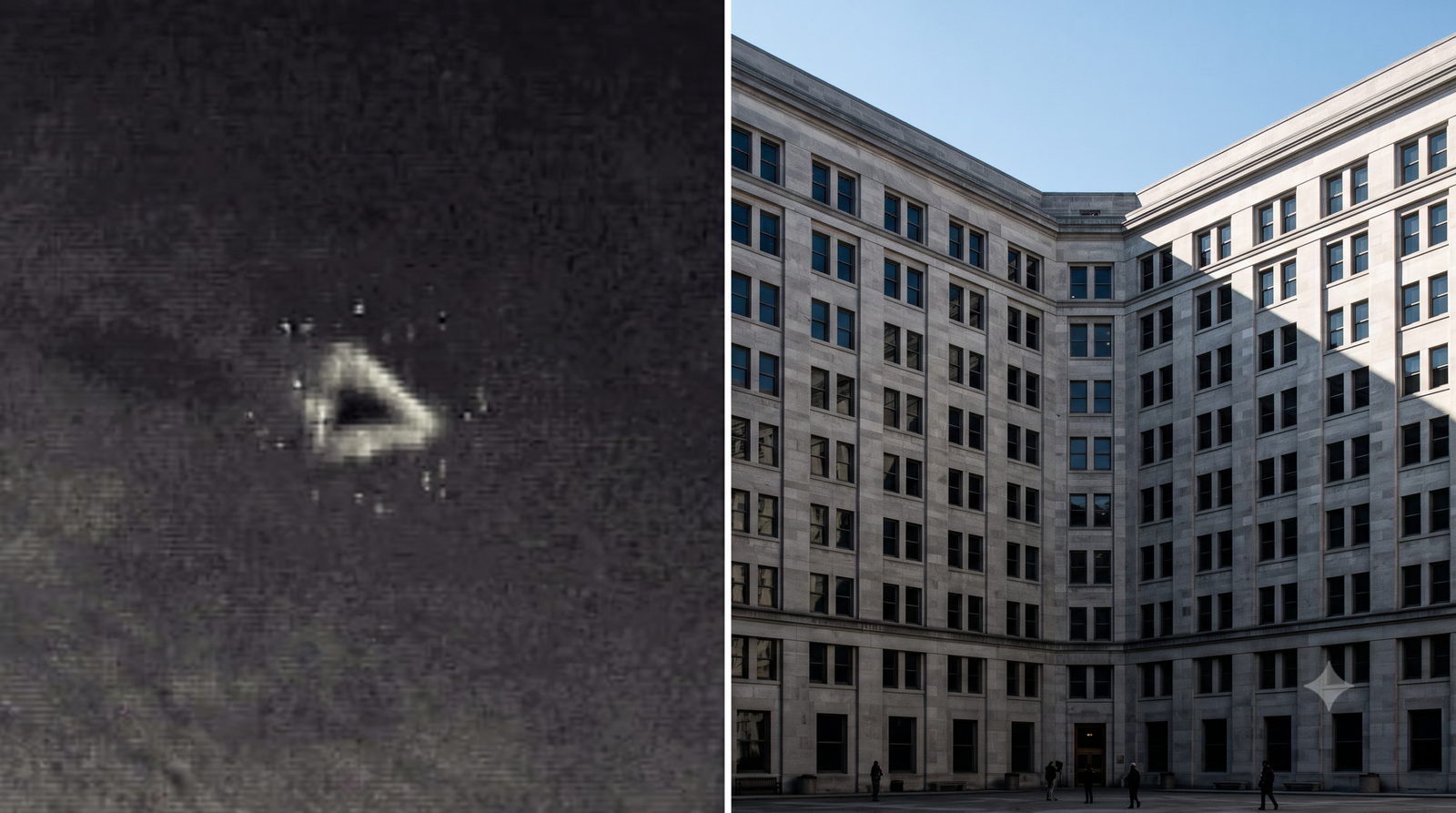
The Pentagon published its fourth major collection of declassified Unidentified Anomalous Phenomena (UAP) records, adding dozens of new documents, videos, audio recordings, and images to its public archive. The release has once again sparked widespread discussion among researchers, aviation experts, military observers, and curious members of the public.
Importantly, the newly released material does not conclude that any object is alien in origin. Instead, it provides additional examples of incidents that investigators have not yet fully explained.
What’s Included in the Latest Release?
According to the Defense Department, the newest release contains 40 separate records, including:
- 14 written reports
- 19 military videos
- 4 audio recordings
- 3 still-image files
Much of the material comes from military operations conducted between 2010 and 2025, with incidents occurring in multiple regions around the world.
Rather than focusing on one dramatic event, the collection highlights the variety of reports military analysts continue to examine.
Several cases involve infrared camera footage, pilot observations, radar data, and cockpit communications collected during routine operations.
Military Pilots Continue Reporting Unusual Sightings
One report receiving particular attention comes from a veteran military aviator with nearly three decades of flight experience.
According to the pilot’s written account, the object behaved unlike any conventional aircraft they had previously encountered during their career.
While investigators were unable to determine exactly what the object was, the report was preserved because of the pilot’s experience level and the quality of supporting sensor data.
Defense officials have repeatedly emphasized that these reports are valuable because military pilots are trained observers who routinely identify aircraft, drones, weather conditions, and other aerial activity.
That doesn’t automatically make every report extraordinary—but it does mean investigators generally take them seriously.
Incidents Span Multiple Strategic Regions
The newly released files also demonstrate that these reports are not limited to one part of the world.
Among the locations referenced are:
Yellow Sea
Infrared footage reportedly captured an unusual object or formation over the Yellow Sea during military operations in the Indo-Pacific region.
East China Sea
Another video follows an unidentified object moving near military aircraft before rapidly changing course and disappearing from view.
Persian Gulf
Several previously released records have documented unusual aerial observations over the Gulf region, where military aircraft regularly conduct surveillance and security missions.
Taken together, the reports show that UAP investigations increasingly focus on areas where major military powers routinely operate.
Why the Pentagon Investigates These Reports
Popular culture often associates UFO stories with extraterrestrial life.
The Pentagon approaches the issue very differently.
Officials have consistently stated that the primary concern is national security, not science fiction.
If an object cannot immediately be identified, investigators must determine whether it could represent:
- A foreign surveillance platform
- Advanced drone technology
- Electronic warfare systems
- Sensor interference
- Atmospheric phenomena
- Previously unknown aerospace technology
Only after conventional explanations have been examined do cases remain officially unresolved.
That distinction is important because many reports ultimately receive ordinary explanations once additional evidence becomes available.
Many UAP Reports Have Ordinary Explanations
Experts caution against assuming that every unidentified object represents something extraordinary.
Common sources of confusion include:
| Possible Explanation | Why It Can Be Misidentified |
|---|---|
| Weather balloons | Lighting and altitude can make them appear unusual. |
| Commercial or military drones | Small size and unexpected flight paths may confuse observers. |
| Satellite reflections | Sunlight can create unusual visual effects. |
| Rocket launches | Exhaust plumes sometimes produce dramatic shapes in the sky. |
| Atmospheric conditions | Temperature inversions and optical effects can distort appearance. |
Scientists note that “unidentified” simply means investigators do not yet have enough information—not that an object is beyond known science.
The Pentagon’s Investigation Process
The Department of Defense established the All-domain Anomaly Resolution Office (AARO) to investigate reports involving unusual objects observed across air, sea, land, and space environments.
AARO reviews information from:
- Military pilots
- Radar systems
- Satellite observations
- Infrared sensors
- Naval operations
- Intelligence agencies
The office’s mission is to determine whether reported phenomena pose any potential threat to U.S. national security.
Most cases eventually receive conventional explanations, while a smaller number remain unresolved because available evidence is incomplete.
A Shift Toward Greater Transparency
One of the most notable developments over the past several years has been the government’s willingness to release more information publicly.
Historically, many UAP-related records remained classified for years due to concerns involving military capabilities and intelligence collection methods.
More recent policy changes have encouraged periodic public releases whenever officials determine that doing so will not compromise sensitive operations.
Supporters of greater transparency argue that public access helps reduce speculation and allows independent researchers to examine the same material available to government investigators.
Critics, meanwhile, note that released footage often lacks sufficient context to reach firm conclusions.
Both perspectives underscore why additional data—not assumptions—remains essential.
Public Interest Continues to Grow
Interest in UAP investigations has expanded considerably since the U.S. government officially acknowledged the issue several years ago.
Congress has held hearings.
Former military personnel have testified publicly.
Defense agencies have established formal reporting systems.
Researchers have gained access to previously classified records.
This latest release continues that broader trend by adding more primary-source material for journalists, analysts, and the public to review.
If you’re interested in government transparency and national security reporting, you may also enjoy our recent coverage of FBI Director Kash Patel’s unscheduled White House visit and Israel’s intelligence warning regarding alleged threats against President Trump, both of which examine how intelligence information shapes high-level government decision-making.
▶ Watch: NewsNation’s Elizabeth Vargas Reports recently explored the Pentagon’s ongoing UAP disclosure initiative, including why officials created a public archive and what investigators say they’re looking for. The program provides useful background on the government’s broader transparency effort leading up to this latest document release.
What Happens Next?
Defense officials say additional historical records will continue to be reviewed for possible public release.
Meanwhile, AARO continues investigating newly reported incidents from across the military.
For now, the latest collection offers another reminder that not every unusual observation has an immediate explanation—and that careful investigation often takes time.
Whether future cases ultimately point to advanced technology, natural phenomena, sensor limitations, or something entirely unexpected, Pentagon officials maintain that every credible report deserves systematic analysis before conclusions are drawn.
Editorial Note
This article is based on publicly released Department of Defense materials and official reporting regarding Unidentified Anomalous Phenomena (UAP). The released records do not conclude that the observed objects are extraterrestrial in origin. Many cases remain under review, while others may ultimately receive conventional explanations as additional evidence becomes available.
About Republican Column: At Republican Column, we bring you breaking U.S. news, politics, and global developments every day to keep you informed.