

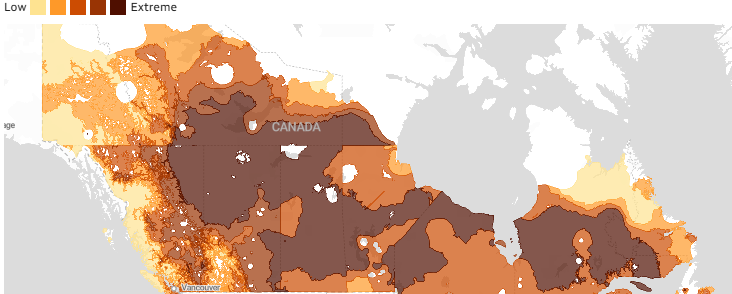
TORONTO, Ontario — Wildfires sweeping across northwestern Ontario have forced evacuations, disrupted transportation, and sent thick smoke across parts of central Canada, renewing debate over wildfire preparedness, forest management, and climate policy.
Emergency officials continue to battle dozens of active fires as residents in several remote communities leave their homes. Dramatic images circulating online showed a Canadian National freight train surrounded by flames near Armstrong, highlighting the growing challenges facing emergency responders and critical infrastructure during this year’s wildfire season.
Air quality also deteriorated across parts of Ontario as wildfire smoke drifted into major population centers. Health officials issued advisories urging residents, particularly seniors, children, and people with respiratory conditions, to limit outdoor activities until conditions improve.
The fires have sparked renewed political debate over how governments should address increasingly destructive wildfire seasons.
Environmental advocates and climate researchers argue that rising temperatures, prolonged drought, and changing weather patterns have increased wildfire risks across Canada. They say long-term climate adaptation and emissions reduction remain important components of future wildfire policy.
At the same time, some policymakers, forestry experts, and conservative commentators argue that greater emphasis should be placed on active forest management. They contend that expanding controlled burns, improving vegetation management, investing in wildfire prevention, and increasing support for local firefighting resources could help reduce the severity of future fires.
Questions have also been raised about emergency preparedness in remote communities after local leaders reported challenges during evacuation efforts. Officials have said reviews of emergency response procedures will continue as firefighting operations remain underway.
Wildfire specialists note that no single factor explains the increasing frequency and intensity of large fires. They say weather conditions, forest management practices, fuel accumulation, topography, and emergency response capacity all play significant roles in determining how quickly fires spread and how effectively they can be contained.
As firefighting crews continue working to protect threatened communities, the broader policy debate is expected to continue in the months ahead, with governments facing renewed calls to strengthen both wildfire prevention efforts and emergency response capabilities across Canada’s fire-prone regions.
About Republican Column: At Republican Column, we bring you breaking U.S. news, politics, and global developments every day to keep you informed.