

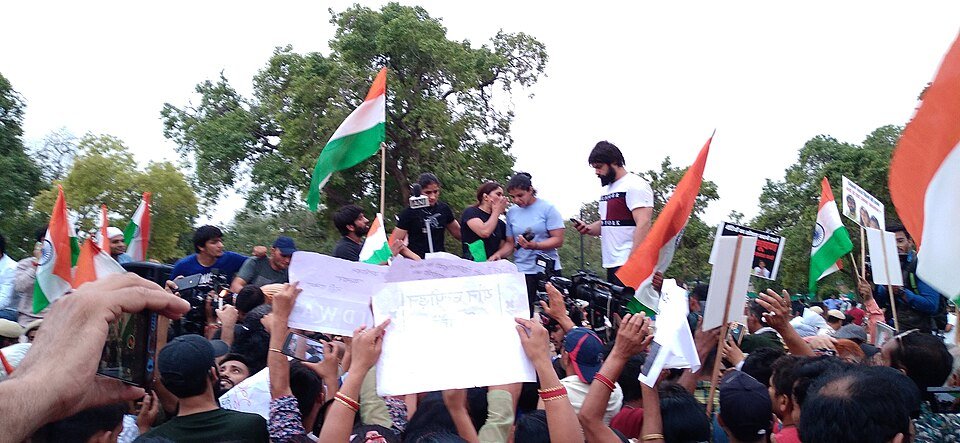
India’s capital witnessed one of its biggest anti-government demonstrations in years on Monday as tens of thousands of students and young protesters marched toward Parliament, demanding the resignation of Education Minister Dharmendra Pradhan and, in many cases, Prime Minister Narendra Modi.
The demonstration, organized by the youth-led Cockroach Janta Party (CJP) movement, drew crowds from across the country after weeks of anger over repeated examination scandals, including the cancellation and alleged leaks of the 2026 NEET-UG medical entrance exam. Protest organizers argue the education system has failed millions of students, while many demonstrators say the controversy has become a broader symbol of frustration over unemployment, accountability, and the government’s treatment of young people.
A Massive Show of Youth Anger
From early Monday morning, central New Delhi filled with protesters carrying Indian flags, banners, and placards while chanting anti-government slogans. Many participants had camped overnight near the protest site at Jantar Mantar, and organizers estimated that more than 50,000 people joined the demonstrations throughout the day.
The march represented the largest public action yet by the Cockroach Janta Party, a movement that began only months ago after India’s chief justice referred to some activists and unemployed youth as “cockroaches.” What started as an online satire campaign has rapidly evolved into a nationwide youth movement.
Many demonstrators demanded Education Minister Dharmendra Pradhan’s resignation over repeated exam failures, while large sections of the crowd also openly called for Prime Minister Narendra Modi to step down, accusing his government of ignoring young people’s concerns.
Police Restrictions Failed to Stop the Crowd
Delhi Police had denied permission for the march before it began. Authorities imposed restrictions on public gatherings, erected barricades across major roads leading toward Parliament, and shut down internet access in parts of central Delhi.
Metro stations near the protest zone were also affected as officials attempted to limit access to the demonstration area.
Despite those measures, protesters continued arriving throughout the day, many walking long distances after transportation routes were blocked.
Clashes Erupt Near Parliament
As crowds attempted to move toward Parliament, clashes broke out between protesters and police.
Videos widely circulated by Indian and international news organizations showed officers using batons to disperse crowds. Footage also captured police firing tear gas toward demonstrators as protesters attempted to push through security barricades.
Several students appeared to suffer injuries during the confrontations. Videos from multiple news outlets showed protesters being struck repeatedly with batons, while others received medical assistance after exposure to tear gas.
Opposition politicians condemned the police response.
Congress leader Priyanka Gandhi criticized the government’s handling of the demonstrations, questioning why students protesting education issues were being met with force instead of dialogue.
Watch: India protests: Thousands march on parliament demanding PM Modi’s resignation (Al Jazeera English)
India protests: Thousands march on parliament demanding PM Modi’s resignation
Why Students Are Protesting
The demonstrations were triggered by this year’s NEET-UG examination controversy.
More than two million students compete annually for roughly 130,000 medical school seats in India. After allegations that this year’s examination paper had been leaked, authorities canceled the exam and required students to take it again.
Student groups argue the repeated failures have devastated families who invest years preparing for the country’s fiercely competitive entrance exams.
Some protesters also linked the crisis to broader frustrations over unemployment and declining opportunities for young graduates.
“We are standing here to fight for our education system and for the future of young people,” one protester told reporters. “We just want accountability.”
Sonam Wangchuk’s Hunger Strike Adds Momentum
The movement gained additional national attention after renowned engineer and education activist Sonam Wangchuk joined the campaign.
Wangchuk has remained on an extended hunger strike demanding the resignation of Education Minister Pradhan.
On Sunday, police removed Wangchuk from the protest site and transferred him to a government hospital, where he said he was being held against his will. Images and videos of his removal spread rapidly across social media, further energizing Monday’s demonstrations.
In a handwritten message released from the hospital, Wangchuk said he would continue his fast after witnessing what he described as the “brutality” used against peaceful student protesters.
Government Opens Talks
For weeks, protesters said the government had ignored their demands.
However, following Monday’s massive turnout, government officials invited representatives from the Cockroach Janta Party for discussions.
According to CJP leaders, they met with senior cabinet minister J.P. Nadda, but organizers said no concrete commitments were made regarding their demands.
By Monday evening, Education Minister Dharmendra Pradhan had not announced any plans to resign.
Protest organizers vowed to continue demonstrations until they receive meaningful action on education reforms and political accountability.
For many of the students gathered in New Delhi, Monday’s march was about far more than one examination. They say it represents a larger demand for transparency, fairness, and a government willing to answer to the country’s younger generation.
About Republican Column: At Republican Column, we bring you breaking U.S. news, politics, and global developments every day to keep you informed.