

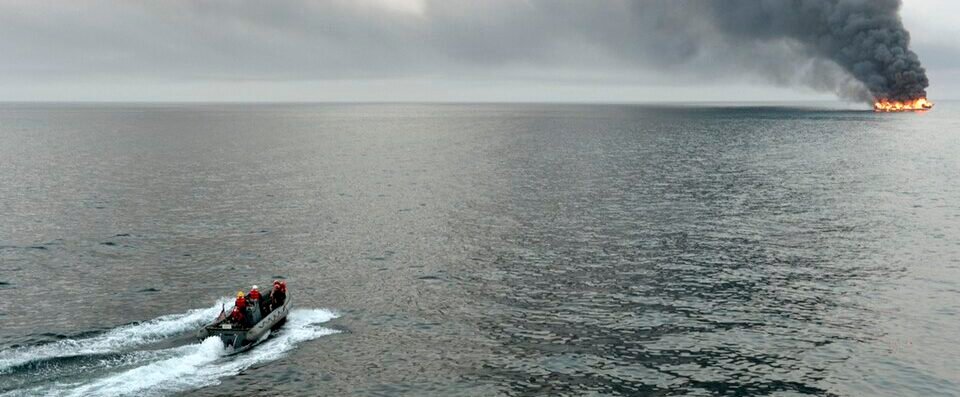
President Trump’s decision to hold off on immediate strikes is being framed by supporters as calculated leverage, while Gulf allies push for diplomacy and a deal over the Strait of Hormuz.
President Donald Trump’s decision to temporarily pause military action against Iran has opened a new chapter in an increasingly tense Middle East standoff.
Rather than signaling a retreat, Trump and his supporters have portrayed the pause as part of a broader “Peace Through Strength” strategy—keeping military options available while giving diplomacy a chance to produce results.
The central question now is whether that pressure can translate into a lasting agreement, particularly over the strategically vital Strait of Hormuz.
For Trump’s supporters, the calculation is straightforward: America does not need to rush into another prolonged Middle Eastern conflict when the threat of military action itself can create leverage at the negotiating table.
A Pause With a Purpose
The decision to delay strikes immediately triggered debate in Washington.
Critics questioned whether postponing military action could weaken American credibility. Trump’s allies, however, argued the opposite—that maintaining overwhelming military readiness while withholding immediate action gives the president greater flexibility.
Trump has repeatedly emphasized that he would prefer a negotiated outcome if one can protect American interests.
That approach fits a broader foreign-policy philosophy associated with his political movement: demonstrate strength first, make consequences unmistakable, and then allow the opposing side an opportunity to negotiate.
The strategy also places greater responsibility on regional governments.
Gulf Allies Step Forward
The diplomatic activity surrounding the crisis has increasingly involved Gulf states and other regional intermediaries.
Saudi Arabia, Qatar, Oman and other governments have strong economic and security interests in preventing a wider conflict. A major confrontation involving Iran could threaten shipping, energy markets and regional stability far beyond the immediate battlefield.
That reality gives these countries a powerful incentive to push Tehran toward negotiations.
For the Trump camp, this is precisely what an America First approach should accomplish: Washington maintains its military strength while wealthy and strategically important regional partners take a larger role in solving a crisis unfolding in their own neighborhood.
Instead of automatically placing American troops at the center of every regional problem, the administration can use American power as leverage while encouraging allies to carry more of the diplomatic burden.
Hormuz at the Center
Few issues carry more economic significance than the Strait of Hormuz.
The narrow waterway connects the Persian Gulf with international shipping routes and serves as a major passage for global energy supplies. Any prolonged disruption could affect oil prices, shipping costs and economies far beyond the Middle East.
That makes freedom of navigation a major American interest.
Iran has repeatedly demonstrated its ability to threaten shipping in and around the region, while Western governments have warned that attempts to restrict commercial traffic could have serious consequences.
Trump’s position has been that the waterway must remain open and that Iran should not be allowed to use control of the passage as economic leverage.
The diplomatic challenge is finding a framework that protects shipping without creating another open-ended military confrontation.
The Trump Calculation
Supporters describe the president’s approach as a form of strategic unpredictability.
By keeping military forces prepared while simultaneously pursuing negotiations, Trump retains multiple options. If diplomacy succeeds, the United States can avoid a potentially devastating escalation. If negotiations fail, the administration can argue that it gave diplomacy an opportunity before considering further action.
That flexibility is particularly important for a president whose political base has long expressed opposition to endless foreign wars.
The MAGA movement has generally emphasized stronger borders, stronger national defense and a foreign policy centered on American interests rather than prolonged nation-building.
Trump’s supporters therefore see the current moment as a test of whether military strength can be used to prevent war rather than simply prepare for it.
A High-Stakes Test
There are still enormous uncertainties.
Iran may reject diplomatic proposals. Regional governments may disagree over the details of any agreement. A single military incident could quickly change the calculations of every government involved.
And while negotiations can lower tensions, they cannot guarantee that the underlying dispute will disappear.
For Trump, however, the pause provides something valuable: time.
Time for allies to negotiate. Time for intermediaries to communicate with Tehran. Time to assess the economic consequences of escalation. And time to determine whether American military power can produce a diplomatic result without another major conflict.
That is why the coming days could prove critical.
The Trump administration has made clear that military options remain available, while diplomatic channels remain open. Whether that combination produces a breakthrough—or merely delays the next confrontation—could determine the next phase of the Middle East crisis.
For Trump’s supporters, the message is already clear: strength does not necessarily mean firing first. Sometimes, they argue, the strongest move is demonstrating that you are prepared to act—and then waiting to see who comes to the table.
About Republican Column: At Republican Column, we bring you breaking U.S. news, politics, and global developments every day to keep you informed.