

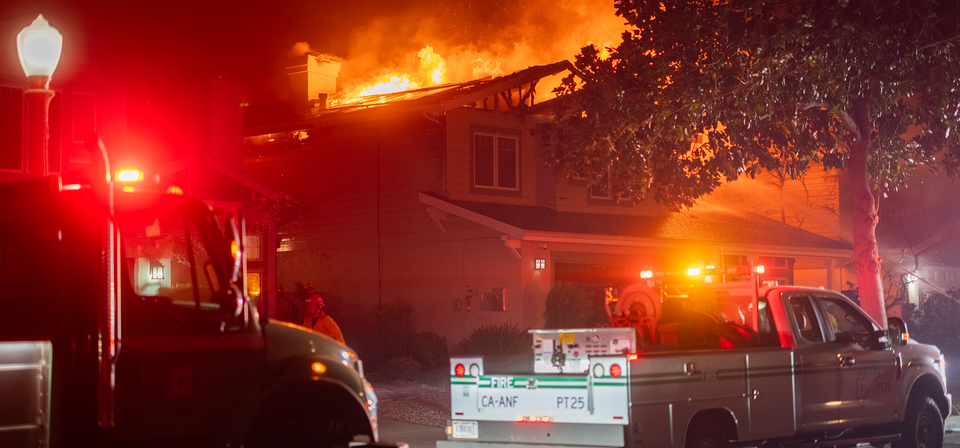
An 18-month investigation into the deadly Eaton Fire has put Southern California Edison’s infrastructure under renewed scrutiny, raising difficult questions about maintenance, oversight and emergency preparedness.
The Eaton Fire left a devastating mark on Southern California. Communities around Altadena and Pasadena were confronted with destroyed homes, displaced families and the loss of 19 lives. Now, the findings of an 18-month investigation have added a new and consequential chapter to the disaster.
According to the investigation described in the source material, investigators determined that electrical arcing associated with Southern California Edison infrastructure played a role in igniting the fire. The finding has intensified questions about the condition of utility equipment, maintenance practices and whether more could have been done to reduce the risk before extreme winds arrived.
For residents who watched the fire spread through their communities, the investigation is more than a technical conclusion. It raises a basic question: Could the disaster have been prevented?
A Utility System Under Scrutiny
The investigation focused attention on an SCE transmission structure near Eaton Wash. The source material says the equipment involved was considered out of service but was nevertheless capable of producing electrical arcing.
That distinction is important. An electrical system does not have to be operating normally to become part of a wildfire investigation. Equipment, conductors and surrounding vegetation can create complicated safety risks, particularly during periods of strong winds and extremely dry conditions.
The findings have therefore placed utility maintenance at the center of the public debate.
Critics argue that California has devoted enormous attention and resources to energy-transition policies while infrastructure maintenance has not received the same level of urgency. Supporters of the state’s energy policies, however, point to California’s increasingly difficult wildfire environment, where drought, heat, wind and vegetation can combine to create dangerous conditions.
The investigation does not by itself settle every broader political argument about California’s energy policy. What it does do is focus attention on the physical condition of the infrastructure that communities depend upon.
The Accountability Question
For families who lost their homes, determining how the fire began is only the beginning.
The source material says Southern California Edison faces extensive civil litigation from property owners and other victims. The possibility of further legal action means questions about responsibility could continue for years.
One of the most sensitive issues is whether utility customers could ultimately bear some of the financial consequences through insurance costs, legal settlements or changes in electricity rates.
That possibility has fueled frustration among residents who already face high household expenses.
The debate also extends beyond the utility itself. California’s regulatory system gives state agencies significant responsibility for overseeing electrical companies, while local governments are responsible for emergency response and evacuation systems.
That creates a difficult chain of accountability.
If infrastructure was inadequately maintained, who was responsible for detecting the problem? If warnings were delayed, where did the emergency communication system fail? And if regulations were insufficient, should state regulators have acted earlier?
Those questions remain central to the aftermath.
Warning Systems Under the Microscope
The fire also renewed scrutiny of emergency communications.
The source material raises concerns about whether residents in different parts of Altadena received evacuation information at the same time. During a fast-moving wildfire, even a short delay can become significant.
Modern emergency-alert systems are designed to give residents information about evacuation zones, road closures and immediate threats. But technology alone cannot guarantee that every resident receives or understands a warning quickly enough.
Officials must also account for power outages, overloaded communication networks, language barriers, disabilities and residents who may not have access to smartphones or other connected devices.
The Eaton Fire has consequently become part of a larger conversation about whether California’s emergency systems are prepared for increasingly complex wildfire events.
Beyond Politics
The political debate surrounding California’s energy policies is likely to continue. Some critics argue that the state has focused too heavily on climate initiatives and renewable-energy mandates while neglecting traditional infrastructure.
Others argue that climate conditions themselves are making infrastructure protection more difficult and that California needs both cleaner energy and stronger wildfire preparation.
There is room for legitimate disagreement on those questions.
But the immediate lesson from the investigation is less ideological: critical infrastructure has to work, and it has to be maintained.
Transmission equipment, vegetation management, fire detection, evacuation alerts and emergency coordination all matter when communities are facing extreme weather.
What Happens Next?
The Eaton Fire investigation could ultimately lead to additional legal, regulatory and political consequences.
For victims, the priority remains straightforward: accountability, compensation and answers.
For policymakers, the challenge is broader. Preventing another catastrophe will require examining utility maintenance standards, regulatory oversight, emergency communications and wildfire preparedness without allowing political arguments to overshadow practical safety measures.
The Eaton Fire demonstrated how quickly a local infrastructure problem can become a community-wide catastrophe.
Whatever conclusions emerge from the lawsuits and further reviews, one principle should remain non-negotiable: protecting lives must come before politics.
For the families who lost loved ones and the residents who lost everything, that is not an ideological question. It is the most important question of all.
About Republican Column: At Republican Column, we bring you breaking U.S. news, politics, and global developments every day to keep you informed.