

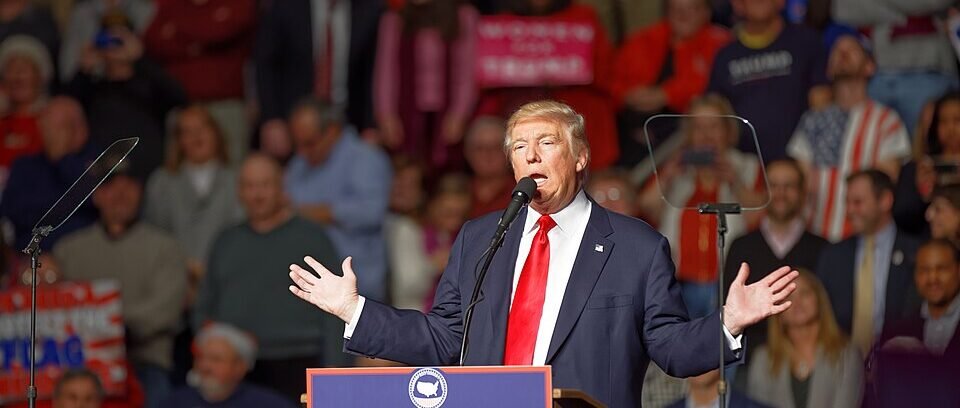
WASHINGTON — Former President Donald Trump is once again making a proposal for direct payments to American families a central part of his political messaging, telling supporters that Republicans could pursue $5,000 checks for eligible households if the party secures major victories in the 2026 midterm elections.
The pledge has quickly become a topic of discussion among lawmakers, economists, and voters, adding a new dimension to a campaign season already expected to focus heavily on inflation, household finances, taxes, and government spending.
Speaking at recent campaign events, Trump argued that many families continue to face economic pressures despite signs of improvement in some parts of the economy. Rising living expenses, housing affordability concerns, and financial uncertainty for working households remain key issues for many voters, particularly in suburban and middle-income communities.
Trump has presented the proposed payments as a form of economic relief that would put money directly into the hands of Americans. He contends that a Republican-controlled Congress would be better positioned to advance such a measure and broader economic policies aimed at boosting growth and increasing domestic production.
The proposal has also become a rallying point for supporters who view direct payments as a way to provide immediate financial assistance without creating additional layers of government programs. Campaign speeches have emphasized the idea that taxpayers should benefit directly from economic gains and federal fiscal policies.
However, while the proposal has generated significant attention, many details remain unclear. No comprehensive legislative package outlining how the payments would be funded or distributed has yet been introduced. As a result, much of the current debate revolves around the concept itself rather than specific policy language.
Political reactions have largely followed familiar partisan lines.
Many Republicans have welcomed the focus on family finances, arguing that economic concerns remain among the most important issues for American voters. Some GOP lawmakers have suggested that direct financial relief could be paired with broader tax and energy policies intended to strengthen household budgets and encourage economic activity.
At the same time, some fiscal conservatives have raised questions about the potential cost of a nationwide payment program. Concerns about federal debt and long-term budget sustainability continue to influence debates within the party, particularly among lawmakers who prioritize spending restraint.
Democrats, meanwhile, have criticized the proposal, arguing that it lacks a clear funding strategy and could create economic risks if enacted on a large scale. Several Democratic lawmakers have characterized the plan as a campaign promise that would face significant legislative and budgetary challenges.
The debate reflects broader disagreements over how government should respond to economic pressures facing American families. While some policymakers favor direct payments or tax rebates, others argue that efforts should concentrate on reducing long-term costs such as housing, healthcare, childcare, and education.
Economic experts have also offered a range of perspectives.
Some analysts note that direct cash payments can provide immediate relief to households struggling with expenses. During periods of economic disruption, similar programs have been credited with helping consumers maintain spending and meet essential financial obligations.
Others caution that large-scale payments require careful planning and clear funding mechanisms. Economists generally agree that factors such as the size of the program, the method of financing, overall economic conditions, and consumer behavior would all influence the ultimate impact of any payment initiative.
Questions surrounding inflation have become a central part of the discussion. Critics argue that injecting substantial amounts of money into the economy could contribute to renewed price pressures under certain conditions. Supporters, however, contend that the effect would depend heavily on the broader economic environment at the time any proposal is implemented.
Another major factor is political feasibility.
Even if Republicans perform strongly in the 2026 midterms, any proposal involving direct federal payments would likely require extensive legislative negotiation. Congressional committees, budget analysts, and policymakers would need to evaluate costs, eligibility requirements, funding sources, and administrative procedures before any plan could move forward.
Political observers note that campaign proposals often evolve significantly once they enter the legislative process. As a result, the final shape of any direct-payment initiative could look very different from the concepts currently being discussed on the campaign trail.
Beyond the specifics of the proposed checks, the issue highlights the growing importance of economic messaging in the upcoming election cycle. Polling has consistently shown that many Americans rank economic concerns among their top priorities, creating strong incentives for both parties to present competing visions for addressing household finances.
Republicans are expected to emphasize tax policy, domestic energy production, and direct financial relief, while Democrats are likely to focus on wage growth, healthcare costs, infrastructure investment, and targeted assistance programs.
For voters, the debate may ultimately come down to competing approaches for improving financial security. Supporters of direct payments see them as a practical way to provide immediate support, while critics argue that long-term economic stability requires deeper structural solutions.
As the 2026 midterm campaign gathers momentum, Trump’s proposal for $5,000 checks is expected to remain a prominent talking point. Whether the idea gains broader legislative support or remains primarily a campaign pledge will likely depend on both election outcomes and the evolving state of the U.S. economy.
For now, the proposal has succeeded in placing economic relief and household affordability at the center of the national political conversation, ensuring that questions about spending, inflation, and family finances will continue to play a major role in the road to the 2026 midterms.
About Republican Column: At Republican Column, we bring you breaking U.S. news, politics, and global developments every day to keep you informed.