

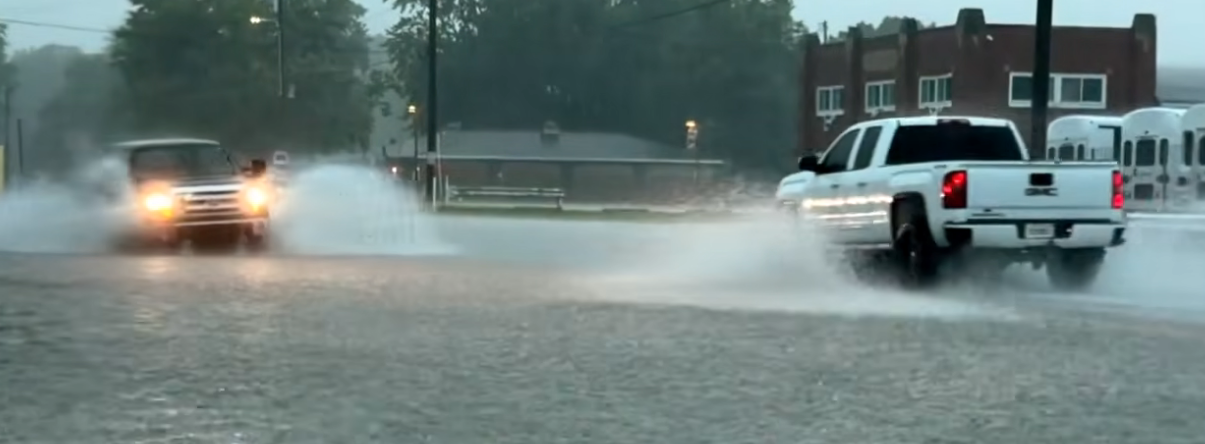
Record-breaking rainfall pushed rivers to dangerous levels, killed at least six people and left more than 150,000 customers without power across Indiana.
Indiana Families Face Historic Flooding as First Responders Lead Emergency Effort
Indiana communities are facing a major flooding emergency after days of severe storms dumped extraordinary amounts of rain across parts of the state. At least six people have died, according to state emergency officials, while rescue crews continue working to help residents affected by rising rivers, flooded roads and widespread power outages.
Some areas received more than 11 inches of rain in two days, overwhelming waterways and infrastructure that were not built to handle such a rapid surge. The White River reached record levels around Noblesville and Anderson, exceeding previous historical marks and forcing evacuations in vulnerable communities.
For families across central Indiana, the disaster has brought an unsettling combination of flooded neighborhoods, damaged property, closed roads and uncertainty about when normal life will return.
First Responders at the Center of the Crisis
Emergency personnel have been working under difficult conditions as officials urge residents to take evacuation orders seriously.
In Indianapolis, Hamilton County and other affected areas, firefighters, police officers, emergency managers and other responders have been conducting rescues and evacuations as floodwaters spread.
The scale of the flooding has surprised even communities accustomed to periodic high water. Officials described the event as unprecedented in areas that experienced record river levels and widespread flooding.
President Donald Trump has also approved an emergency declaration for Indiana, making federal disaster assistance available as the state responds to the damage.
For supporters of Trump’s America First approach, the federal response highlights the importance of having government agencies prepared to move quickly when Americans face an emergency.
Record Water Levels Raise Serious Concerns
The White River has been one of the most visible indicators of the storm’s extraordinary impact.
Around Noblesville, the river rose beyond previous record levels. Local emergency planning documents classify water levels above roughly 24 feet as a record-flood scenario capable of causing extensive damage to roads, businesses and homes.
That kind of flooding creates dangers that extend well beyond inconvenience.
Fast-moving water can make normally familiar roads impassable, isolate neighborhoods and prevent emergency vehicles from reaching people who need help. Officials have repeatedly warned residents not to drive through flooded roads or underestimate moving water.
The danger has been especially serious because some communities that do not routinely experience severe flooding have suddenly found themselves dealing with rapidly rising water.
Power Outages Add Another Layer of Difficulty
Flooding has also disrupted electricity across Indiana and the wider Midwest.
Reuters reported that more than 360,000 homes and businesses across the Midwest were without power during the broader wave of severe weather, with Indiana accounting for a significant portion of the outages.
Power failures complicate nearly every part of disaster recovery.
Residents may lose refrigeration, air conditioning and communications, while businesses face interruptions and emergency services must operate under challenging conditions.
Utility crews are now working alongside emergency personnel to restore service while continuing to monitor weather and flood conditions.
A Second Threat: Disaster Scammers
Natural disasters unfortunately create opportunities for criminals looking to exploit people who are already under enormous stress.
Indiana’s Department of Homeland Security warns residents to be cautious around people claiming to represent FEMA or other government agencies. Officials specifically warn against providing banking information or paying someone who claims to be a FEMA inspector.
The Federal Trade Commission similarly warns that FEMA does not charge people for disaster assistance, inspections or applications.
Residents should therefore be especially skeptical of unexpected calls, texts, emails or visits requesting money or sensitive personal information.
That warning is particularly important during a crisis, when exhausted homeowners may be more likely to trust someone who appears to offer immediate help.
The America First Lesson
For conservatives and Trump supporters, the Indiana disaster also reinforces a broader argument about government preparedness.
Political slogans matter little when families are standing in floodwater. What matters is whether emergency personnel have the equipment, communications systems, transportation and resources necessary to respond quickly.
That means maintaining resilient infrastructure, supporting first responders and ensuring that federal assistance can reach communities when state and local resources are overwhelmed.
The crisis is also a reminder that disaster response should remain focused on people rather than politics.
Whether someone lives in a Republican county, a Democratic city or somewhere in between, a flooded home is still a flooded home—and Americans expect their government to help when disaster strikes.
Recovery Will Take Time
The immediate priority remains protecting lives and reaching residents who need assistance. But once the water recedes, communities will face a second challenge: rebuilding.
Homes, businesses, roads, electrical systems and public facilities will need to be inspected and repaired. Families will have to begin the difficult process of documenting losses and returning to damaged properties.
Indiana’s flooding has already demonstrated the importance of preparation and rapid response.
For now, the most visible story is the work of emergency crews and ordinary residents helping one another through an extraordinary event. As recovery begins, the effectiveness of federal, state and local coordination will be closely watched.
Capital Bridge will continue following developments in Indiana as officials assess the damage and communities begin rebuilding.
About Republican Column: At Republican Column, we bring you breaking U.S. news, politics, and global developments every day to keep you informed.