

Trump’s D.C. crackdown sparks a heated debate over public safety, federal authority and the future of the capital.
President Donald Trump’s decision to deploy National Guard personnel in Washington, D.C., has pushed public safety and federal authority back to the center of the national conversation.
The administration has presented the deployment as a response to concerns about crime, disorder and the safety of residents, commuters and visitors. Supporters argue that a stronger federal presence can deter criminal activity and restore confidence in public spaces. Critics, meanwhile, question whether military personnel are the right tool for addressing problems that traditionally fall under local law enforcement.
The disagreement reflects a broader debate that has followed Washington for years: how should the nation’s capital balance public safety, civil liberties and local control?
A More Visible Federal Presence
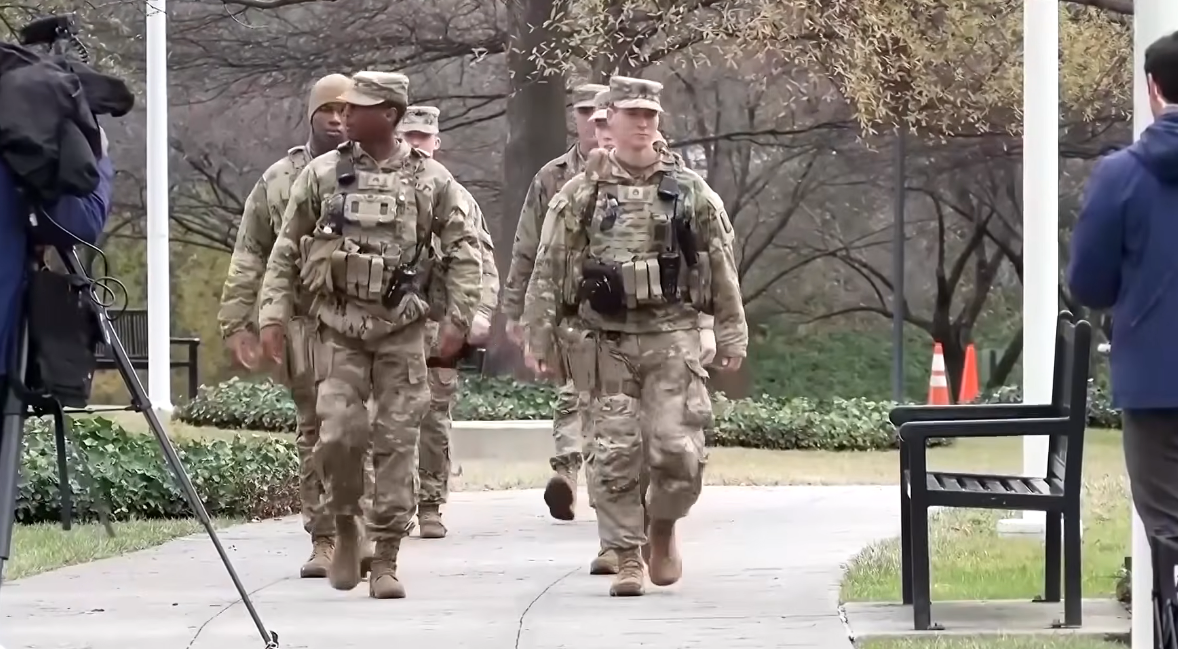
National Guard personnel have become a highly visible presence around parts of the capital, particularly in areas where large numbers of people travel each day.
For commuters, the deployment has produced mixed reactions. Some residents say seeing uniformed personnel provides an additional sense of security, particularly in busy transit areas. Others worry that an increased military presence can make ordinary public spaces feel unnecessarily militarized.
That contrast is important because the impact of a security operation is not measured only by arrests or crime statistics. Public perception also plays a role. Residents who feel unsafe may change how they travel, where they shop or when they use public transportation, even when official crime figures are moving in a different direction.
Crime Remains a Political Flashpoint
Crime has long been one of the most politically sensitive issues in Washington.
Supporters of tougher enforcement argue that addressing lower-level offenses can help prevent public disorder from becoming more serious. Their philosophy emphasizes visible policing, enforcement of existing laws and consequences for repeated offenses.
Critics counter that aggressive enforcement of minor violations can consume law-enforcement resources while doing little to address the underlying causes of serious crime. They also argue that Washington’s public-safety strategy should focus heavily on violent offenders, investigations and community-based prevention.
The debate becomes especially complicated when National Guard personnel are involved. Guard members can support security and logistics operations, but their role is different from that of ordinary police officers. Questions about training, authority and appropriate responsibilities therefore become central to the discussion.
What Supporters See as a Necessary Reset
Trump’s supporters view the deployment through the broader lens of his law-and-order agenda.
They argue that Washington should project an unmistakable commitment to public safety and that federal authorities should not hesitate to intervene when they believe local systems are failing to provide adequate security.
For these supporters, the issue goes beyond individual arrests or isolated incidents. They see visible enforcement as a signal that public spaces belong to residents and visitors rather than criminals.
That argument has become a recurring feature of American political debates over policing. Supporters of tougher enforcement frequently emphasize deterrence, arguing that consistent enforcement can influence behavior before a serious offense occurs.
Critics Raise Questions About Federal Power
Opponents of the deployment have focused on a different concern: the balance between federal authority and local government.
Washington, D.C., has a unique political structure because Congress maintains significant authority over the District. That relationship has repeatedly generated disputes over policing, budgets and local decision-making.
Critics argue that public safety should remain primarily the responsibility of local institutions unless there is a clearly defined federal need. They also warn that expanding federal involvement could create a precedent for future administrations.
The legal and political questions surrounding the deployment therefore extend beyond the streets of Washington. They involve broader questions about how much power a president should exercise over the capital and how that authority should interact with elected local officials.
Beyond the Politics
For residents, however, the debate is ultimately practical.
People want to know whether they can walk through their neighborhoods safely, use public transportation without fear and conduct everyday business without encountering disorder.
Those concerns exist regardless of political affiliation.
The effectiveness of the deployment will ultimately depend on measurable outcomes: crime trends, emergency calls, arrests, public-safety incidents and the experiences of people living and working in the District.
The political argument will likely continue, but the most important question is simpler: does the strategy produce a safer Washington while respecting the legal boundaries between federal and local authority?
Trump has made public order a major part of his political message. His D.C. deployment puts that promise into practice—and also creates a real-world test of whether a stronger federal presence can improve security without creating new controversies over government power.
For Washington residents, the answer will be judged not by political slogans, but by what they experience on the streets of the capital.
About Republican Column: At Republican Column, we bring you breaking U.S. news, politics, and global developments every day to keep you informed.