

California’s latest congressional special election is giving both parties plenty to think about.
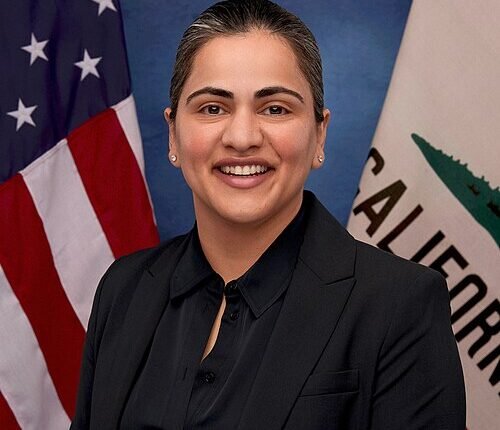
Progressive Democrat Aisha Wahab’s victory in California’s 14th Congressional District has energized the left while giving conservative voters another reason to pay close attention to the direction of the Democratic Party. The result is not, by itself, proof that the entire country is moving sharply left. But it does provide a useful snapshot of the ideological battle taking place inside one of America’s major political parties.
For Republicans and MAGA voters, the bigger question is simple: Will Democrats continue moving toward the progressive policies that have energized their activist base, or will moderates push the party back toward the political center?
That fight could become increasingly important as the November elections approach.
A Victory That Goes Beyond One District
Wahab’s win matters because special elections often attract intense attention from party activists, donors and political organizations.
California’s 14th District is also deeply Democratic territory, meaning the result should not be treated as a national referendum on President Donald Trump or the Republican Party. Still, the contest highlighted a larger struggle over the Democratic Party’s identity.
Wahab has positioned herself with the party’s progressive wing on several major issues, including immigration, taxation, social programs and U.S. foreign policy.
That creates an opening for Republicans.
Rather than simply celebrating or criticizing one Democratic candidate, conservative campaigns can use the election to ask voters what they believe the Democratic Party now stands for—and whether those policies match the concerns of working families.
Immigration Remains a Major Fault Line
One of the sharpest disagreements involves immigration enforcement.
Wahab has supported significant changes to federal immigration policy, including opposition to Immigration and Customs Enforcement in its current form.
For progressive voters, such positions can represent a demand for a fundamentally different immigration system.
For conservatives, however, immigration enforcement is closely tied to national sovereignty, public safety and the rule of law.
That difference gives Republicans a straightforward political argument heading into November: America can welcome legal immigrants while still enforcing its borders and immigration laws.
The Trump movement has made border security one of its defining issues, and Republican candidates are likely to continue emphasizing that message.
Progressive Economics Face a Conservative Counterattack
Economic policy presents another major dividing line.
Progressive Democrats frequently advocate higher taxes on wealthy Americans, expanded government programs and stronger federal intervention in the economy.
Supporters argue that these policies can address inequality and expand access to essential services.
Republicans counter that higher taxes and expanding bureaucracy can discourage investment, entrepreneurship and job creation.
The MAGA argument is built around a different philosophy: reduce unnecessary government barriers, encourage domestic production, protect American workers and allow businesses to grow.
That contrast could become particularly powerful if voters remain focused on housing costs, food prices, energy expenses and household budgets.
For many families, political ideology eventually comes down to a very practical question: Is life getting more affordable or more expensive?
Foreign Policy Adds Another Divide
Wahab’s positions on U.S. policy toward Israel and the broader Middle East also place her on the progressive side of an increasingly contentious Democratic debate.
For decades, American support for Israel enjoyed substantial bipartisan backing in Washington.
That consensus has weakened as progressive Democrats have become increasingly critical of Israeli military operations and U.S. assistance.
Republicans, including President Trump’s supporters, are likely to portray this change as another example of Democrats moving away from traditional American foreign-policy positions.
The counterargument from progressives is that U.S. foreign policy should be reconsidered when American taxpayer dollars and military support are involved.
The disagreement is unlikely to disappear anytime soon.
What Conservatives Should Watch Next
The biggest mistake would be to assume that one California special election predicts the entire country.
It doesn’t.
California’s political environment is dramatically different from that of states such as Ohio, Florida, Texas, Pennsylvania or Wisconsin. A progressive victory in a heavily Democratic district cannot automatically be translated into a national trend.
But the election does reveal something important: the Democratic Party’s internal ideological debate is far from settled.
Progressive candidates continue to have significant influence, particularly in Democratic strongholds. Their success can energize younger voters and activists, while simultaneously giving Republicans an opportunity to portray the opposition as increasingly disconnected from the political center.
That dynamic could shape campaign messaging throughout the remainder of the election cycle.
The MAGA Response: Make the Contrast Clear
For Trump-aligned Republicans, the lesson is not simply to attack Wahab personally.
The stronger strategy is to make the policy contrast unmistakable.
Republicans can argue for stronger border enforcement, lower barriers to domestic production, expanded American energy development, reduced bureaucracy and a foreign policy centered on U.S. national interests.
President Trump has repeatedly branded his political movement around the concept of America First.
That message remains designed to appeal to voters who believe Washington should prioritize American workers, American communities and American national security before international institutions or ideological agendas.
Wahab’s victory gives conservatives another opportunity to make that case.
November Will Tell a Bigger Story
A special election is only one piece of a much larger political puzzle.
The real test will come when voters across the country decide which candidates they want representing them for full congressional terms.
For Democrats, the challenge is balancing progressive enthusiasm with the concerns of voters who may be less interested in ideological battles and more concerned about jobs, prices, crime, immigration and economic security.
For Republicans, the challenge is equally clear: turn criticism of progressive policies into a positive argument for conservative governance.
Aisha Wahab’s victory may ultimately prove to be a local political event. But it also highlights a national question that will not disappear: How far left is the Democratic Party prepared to go?
As November approaches, voters—not political commentators—will provide the answer.
About Republican Column: At Republican Column, we bring you breaking U.S. news, politics, and global developments every day to keep you informed.