

The scale of the disaster unfolding along Nepal’s northern border is becoming clearer by the hour, and the numbers are devastating.
A massive glacial collapse in the Himalayas triggered a destructive chain of events on Wednesday, sending ice, rock, mud and water rushing into river valleys across northern Nepal and into Tibet. Entire sections of communities were damaged or swept away, while roads, bridges, hydropower facilities and other critical infrastructure were destroyed.
Nepal’s government said Friday that 538 bodies had been recovered, while many people remained missing. Officials stressed that the figures could change as search teams reach areas that have been cut off by the destruction.
The disaster has also affected travelers from around the world. Hundreds of foreign nationals are among those still unaccounted for, adding an international dimension to an already desperate rescue effort.
A Disaster That Began High in the Mountains
What initially looked like an earthquake-related event has since been linked to a major collapse involving a glacier and surrounding rock near Langtang Lirung.
Satellite imagery and geological analysis indicate that a huge section of the mountain gave way, sending enormous quantities of ice and rock into the valley. The resulting debris flow entered the river system and helped produce the catastrophic flooding that later swept downstream.
The force was extraordinary.
Reports indicate that the collapse generated seismic signals equivalent to a magnitude 5.2 event, illustrating just how much material came crashing down the mountain.
From there, the disaster moved rapidly through the Bhote Koshi and Trishuli river corridors, turning normally confined mountain waterways into channels of mud, boulders and debris.
Communities Left Cut Off
The destruction has made the rescue mission exceptionally difficult.
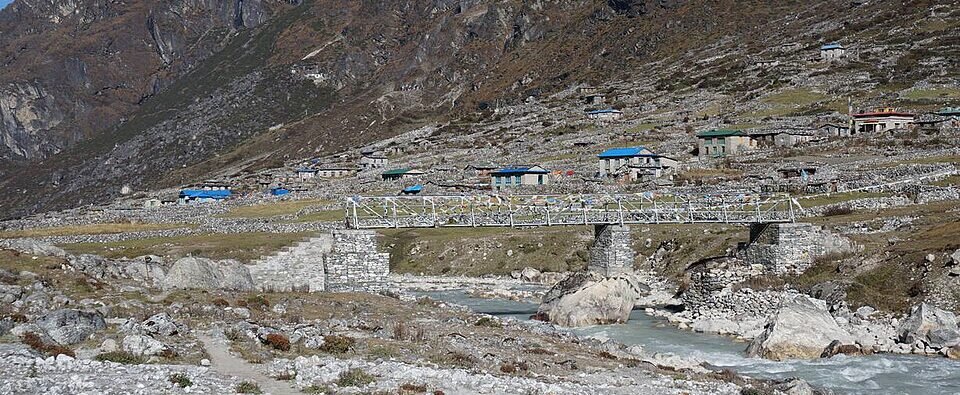
Roads have been damaged or destroyed. Bridges have disappeared. Communications have been disrupted, and some of the hardest-hit areas are accessible only by helicopter or specialized rescue teams.
Nepal’s security agencies, disaster-management authorities and health services have been mobilized for search, evacuation, medical assistance and relief operations. The government says downstream river conditions are being monitored continuously.
For families waiting for news, however, every hour feels painfully long.
Some residents have returned to areas where their homes once stood only to find buildings buried beneath enormous quantities of mud and rock. Others are still waiting for information about relatives who were traveling through the region.
The disaster has also struck an important travel corridor used by tourists and pilgrims heading toward Tibet and Mount Kailash.
The Second Threat Hanging Over Rescuers
Even as rescue operations intensify, authorities are confronting another serious problem: secondary flooding.
The collapse and subsequent debris flows have altered river channels and created unstable impoundments in parts of the mountain landscape. Water accumulating behind debris can suddenly break through, sending another surge downstream.
That possibility has already forced rescue teams to temporarily suspend or restrict some operations while authorities assess the danger. Reuters reported that rescue operations later resumed after assessments indicated that the immediate threat from an overflowing glacier-formed lake had eased.
This creates an agonizing calculation for emergency crews.
Rescuers need to move quickly because people may still be trapped. But sending teams into an unstable valley without understanding the water threat could put rescuers themselves in danger.
A Massive Humanitarian Challenge
The physical destruction is only one part of the crisis.
Thousands of people have been displaced, while damaged roads and infrastructure have complicated the delivery of food, medical supplies and shelter. Hydropower facilities and other important infrastructure have also suffered significant damage.
Authorities are using helicopters and ground teams to reach isolated communities, while Chinese rescuers are working to access heavily damaged areas on the Tibet side of the border.
The international community is also watching closely as governments work to account for their citizens who remain missing.
What Happens Next?
For now, the priority is painfully simple: find survivors, recover the missing and keep more people out of harm’s way.
The Nepal-Tibet border disaster has demonstrated how quickly a high-altitude geological event can become a regional humanitarian emergency.
It has also exposed the enormous challenges facing communities that live in remote Himalayan valleys, where a destroyed bridge or road can turn a nearby village into an isolated island.
The search will continue as conditions allow.
Families are still waiting for calls. Rescue crews are still working through debris. Authorities are still watching the rivers and unstable mountain lakes for signs of another surge.
And across the affected valleys, the question remains the same:
About Republican Column: At Republican Column, we bring you breaking U.S. news, politics, and global developments every day to keep you informed.