

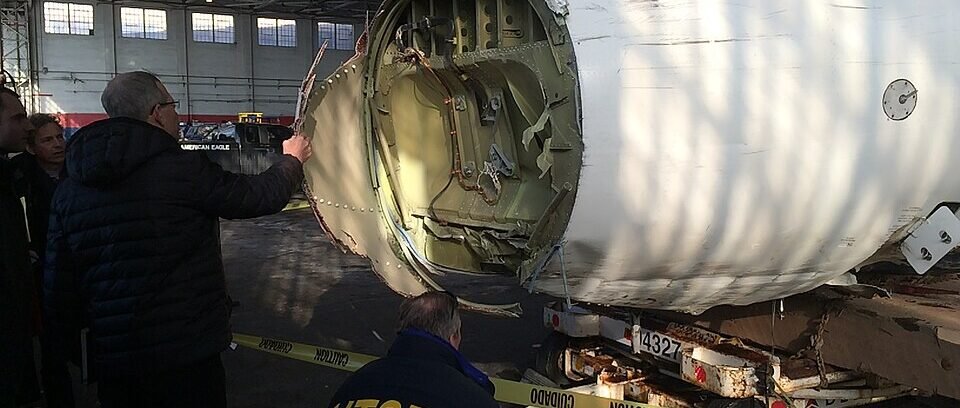
NEW YORK — The investigation into the fatal runway collision at New York’s LaGuardia Airport is turning increasing attention toward air traffic control staffing, communications and the decisions made inside the airport’s control tower in the moments before the crash.
The March 22 collision involved an Air Canada Express regional jet and an airport fire truck operating on the runway. Both pilots were killed, while the accident prompted an extensive investigation into how an emergency vehicle came to occupy the runway as an aircraft was landing.
Questions surrounding staffing have now added another layer to the investigation.
According to reporting cited in The Wall Street Journal, two air traffic controllers allegedly left their positions before the scheduled end of their shifts. The circumstances surrounding those departures, including whether they violated FAA procedures and whether they had any connection to the accident, remain subjects of scrutiny.
Why Controller Staffing Matters
Air traffic control is built around layers of responsibility and backup.
Controllers must coordinate aircraft arriving and departing while simultaneously monitoring vehicles, taxiways and runway movements. At a busy airport such as LaGuardia, the workload can change rapidly.
A controller may be responsible for aircraft in the air one moment and ground traffic the next.
That makes staffing levels an important safety factor.
Investigators are examining whether controllers who remained on duty were required to manage responsibilities that would normally have been distributed among additional personnel.
The central question is not simply how many controllers were present, but what workload they were carrying at the precise time of the collision.
The LaGuardia Runway Collision
The accident occurred when an Air Canada Express aircraft encountered an airport fire truck that had entered or was crossing the runway.
The circumstances have raised questions about runway clearance, communications between controllers and emergency personnel, and whether warnings were received and understood in time.
Investigators are expected to examine multiple factors rather than attribute the accident to a single individual.
That includes controller workload, radio communications, vehicle procedures, aircraft movements, runway visibility, airport layout and the emergency response operation.
Aviation accidents are rarely caused by one decision alone. Instead, investigators typically examine how several events and safeguards interacted before the accident occurred.
The Controversy Over Early Departures
The reported early departures have become particularly contentious because aviation agencies rely on accurate staffing schedules.
An informal practice sometimes described within air traffic control circles as an “early shove” involves personnel leaving before the scheduled conclusion of a shift.
Whether such a departure occurred at LaGuardia, whether it violated applicable rules and what consequences may follow are separate questions from whether it contributed to the collision.
That distinction is important.
Personnel discipline and accident causation are not necessarily the same thing.
The FAA can investigate alleged workplace violations while the National Transportation Safety Board independently examines the factors that contributed to the crash.
NATCA and Controller Concerns
The National Air Traffic Controllers Association, which represents U.S. air traffic controllers, has been involved in discussions surrounding the reported staffing issues.
The broader dispute comes at a time when staffing shortages have already become a major concern throughout the U.S. air traffic control system.
Controllers have faced demanding workloads in numerous facilities, while the FAA has worked to recruit and train additional personnel.
That makes the LaGuardia case potentially significant beyond one airport.
If investigators determine that staffing practices created unnecessary operational risk, aviation authorities could face pressure to strengthen scheduling controls and supervision.
If the evidence points elsewhere, the findings could instead reinforce the importance of existing procedures while identifying specific failures in runway coordination.
What Investigators Still Need to Establish
Several critical questions remain.
Who was responsible for the runway clearance?
Investigators must determine exactly which controller authorized the movements involved and what information was available at the time.
What did the controllers know?
Radio recordings, surveillance data and tower records can help establish what controllers knew about the aircraft and emergency vehicle.
Was staffing adequate?
The investigation must establish whether the number of controllers working at the time was appropriate for the traffic and operational workload.
Did any staffing violation contribute to the accident?
This may prove to be one of the most important questions. A staffing violation, if established, does not automatically mean it caused the collision.
Accountability Without Guesswork
For families of the pilots and everyone affected by the crash, accountability matters.
But aviation safety also depends on getting the facts right.
A rushed conclusion could punish an individual without addressing a broader systemic problem—or overlook an individual failure that genuinely contributed to the tragedy.
The FAA’s personnel review and the NTSB’s accident investigation therefore serve different purposes.
One examines workplace conduct and regulatory compliance.
The other seeks to determine what happened, why it happened and how similar accidents can be prevented.
A Larger Test for Aviation Safety
The LaGuardia collision has placed air traffic control procedures under an intense public spotlight.
For passengers, the issue ultimately goes beyond two controllers or one airport. It concerns whether the systems protecting aircraft on the ground and in the air are strong enough when traffic becomes complicated and seconds matter.
The investigation will determine how much weight staffing, communications and tower procedures should receive in explaining the tragedy.
Until those findings are complete, claims about individual responsibility should remain allegations rather than conclusions.
One thing, however, is already clear: the questions raised at LaGuardia could have consequences far beyond the control tower, potentially influencing how the FAA manages staffing, accountability and runway safety across America’s busiest airports.
About Republican Column: At Republican Column, we bring you breaking U.S. news, politics, and global developments every day to keep you informed.