

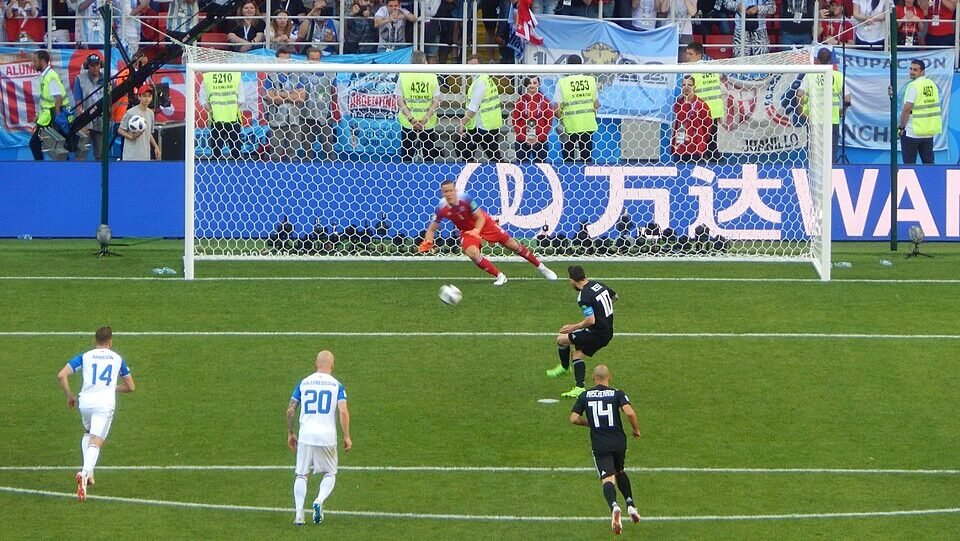
Lionel Messi has announced his retirement from international football, bringing an extraordinary 20-year chapter with Argentina to an emotional close.
At 39, the Argentina captain says he has reached the point where stepping away is the right decision. His announcement ends a remarkable national-team career that carried him through six World Cups, two Copa América triumphs and, most importantly, the 2022 World Cup victory in Qatar.
For football fans around the world, it is difficult to imagine Argentina without Messi wearing the famous blue and white shirt.
But Messi appears ready to turn the page
An Emotional Decision
Messi’s announcement comes only weeks after the death of his father, a deeply personal loss that had already caused him to question whether he could continue playing for Argentina.
In his latest statement, Messi acknowledged that retirement was painful but said he understood that the time had come.
He reflected on the years he spent representing his country and thanked his family, teammates and everyone who had shared the journey with him.
His message was not simply about football.
It was about closing a chapter of his life.
After two decades at the center of Argentina’s national team, Messi said he had given everything he had and believed younger players now deserved their opportunity.
That acknowledgment could make the transition easier for Argentina’s next generation, but there is no question that replacing a player of Messi’s influence will be an enormous challenge.
Six World Cups and a Historic Legacy
Messi’s international career stretched across an extraordinary six World Cup tournaments.
For years, his relationship with the Argentina national team was complicated. He carried enormous expectations and endured painful defeats before finally achieving the success many believed had escaped him.
The breakthrough came in 2022.
Argentina won the World Cup in Qatar, ending a wait of more than three decades since the country’s previous World Cup triumph.
For Messi personally, the victory carried enormous significance.
The World Cup trophy completed the collection of major international honors that had eluded him for much of his career.
He had already established himself as one of football’s greatest players at club level. But winning the World Cup with Argentina transformed the conversation surrounding his international legacy.
He was no longer simply the brilliant player who had carried impossible expectations.
He was a world champion.
More Than 200 International Appearances
The numbers behind Messi’s Argentina career are staggering.
He finished with 207 international appearances and 125 goals, according to the supplied report.
Those figures place him among the most prolific players ever to represent a national team.
Yet statistics only tell part of the story.
Messi became the face of Argentine football for an entire generation. Children grew up watching him play for the national team, while older supporters witnessed the pressure placed on him to deliver a championship.
His journey included triumph, disappointment, criticism and ultimately redemption.
That makes his decision to retire particularly significant.
Argentina is not simply losing its captain.
It is losing the central figure of its football identity for the modern era.
The Timing Feels Significant
Messi’s decision also comes at a fascinating moment in his career.
He remains active at club level with Inter Miami and has continued producing spectacular performances.
The supplied report notes that Messi scored four goals in his most recent match for the club, demonstrating that his decision to leave international football does not necessarily mean he is finished competing.
That distinction is important.
Retiring from Argentina allows Messi to reduce the enormous demands associated with international football while continuing to play at club level.
But his wording has also created speculation about what comes next.
His reference to “chapters closing” has prompted questions about whether retirement from Argentina could eventually be followed by retirement from football altogether.
For now, however, that remains unknown.
Argentina Faces a New Era
The next challenge belongs to Argentina.
The national team now has to begin building an identity beyond Messi.
That will not happen overnight.
For 20 years, Argentina’s attack, expectations and global attention have revolved around one extraordinary player.
Now younger stars will have the opportunity Messi himself says they deserve.
There is something fitting about that.
Messi entered the national team as a young prodigy surrounded by enormous expectations. He leaves it as a world champion, a veteran leader and one of the most accomplished footballers the country has ever produced.
His departure therefore does not have to represent the end of Argentina’s golden era.
It can become the beginning of another one.
The End of an Era
There are moments in sports when retirement feels bigger than the career itself.
Messi’s decision is one of them.
For supporters, there will be memories of breathtaking goals, impossible dribbles, heartbreaking defeats and, finally, the unforgettable sight of Messi lifting the World Cup.
There will also be an inevitable question:
What will Argentina look like without Lionel Messi?
That answer will take years to fully emerge.
What is already clear is what Messi leaves behind.
Twenty years of service.
Six World Cups.
Two Copa América titles.
A World Cup championship.
207 appearances.
125 goals.
And countless memories shared by millions of fans.
At 39, Lionel Messi has decided that his time with Argentina is over.
It is a decision that may hurt deeply for supporters, but it also arrives after he achieved the prize that once seemed impossibly distant.
The boy who dreamed of carrying Argentina to glory eventually did exactly that.
Now, the next generation gets its turn.
About Republican Column: At Republican Column, we bring you breaking U.S. news, politics, and global developments every day to keep you informed.