

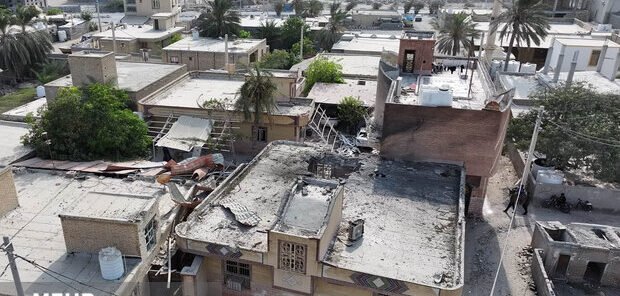
In a recent broadcast interview, Tehran‑based academic Mustafa Khoshchashm attempted to project confidence on behalf of the Iranian regime. He claimed that Tehran now determines the “theater, timing, and cost” of the regional standoff, brushing off U.S. precision strikes and insisting Iran is prepared for a high‑stakes confrontation. Yet behind the rhetoric lies a stark reality: American military deterrence and targeted strikes continue to dismantle Iranian infrastructure while exposing the regime’s growing isolation.
The Reality of American Precision Strikes Khoshchashm argued that Tehran intercepted a significant portion of recent U.S. cruise missiles targeting radar installations and bases across southern Iran. He suggested that Iranian air defenses forced U.S. assets to operate from afar. However, military analysts point out that American forces successfully neutralized key radar arrays, command nodes, and strategic assets — crippling Iran’s operational visibility in crucial maritime passages. Rather than engaging in risky ground operations, U.S. strategy has relied on calculated air and naval power to dismantle threats while minimizing risk to personnel.
Tehran’s Expanding Targets vs. America’s Unmatched Power The Iranian analyst boasted about retaliatory strikes against U.S. regional outposts, framing them as proof of Tehran’s expanding “bank of targets.” Yet such posturing overlooks the resilience of America’s military footprint in West Asia. While Iran relies on asymmetric tactics and proxy forces, the U.S. maintains unmatched force projection. Every hostile move has been met with swift counter‑measures, neutralizing threats before they achieve strategic objectives.
+———————————————————————–+ | U.S. Strategic Deterrence | +———————————————————————–+ | • Precision Radar Strikes — Neutralizing detection capabilities | | • Defense Industrial Base — Scaling munition production lines | | • Maritime Protection — Securing global shipping lanes | | • Unmatched Air Power — Maintaining regional air dominance | +———————————————————————–+
Economic Reality Hits the Regime Hard When pressed on the economic toll of the conflict, Khoshchashm claimed Iran’s Central Bank had controlled inflation and pointed to crude oil revenues as proof of endurance. Yet sanctions continue to choke off financial pipelines to state‑sponsored proxies. Ordinary Iranians face runaway inflation, currency devaluation, and widespread hardship. Analysts note that internal dissatisfaction with Tehran’s ruling elite is growing, undermining the regime’s ability to sustain prolonged confrontation.
Sanctions and Strategic Pressure
- Sanctions Working: Rigorous measures restrict Iran’s access to global markets.
- Domestic Strain: Citizens bear the brunt of economic fallout.
- Desperation Tactics: Proxy warfare and propaganda mask structural weakness.
American Policy Objectives The Iranian analyst suggested the conflict is a “war for trophies” for Washington. In reality, U.S. policy emphasizes deterrence and protection of national interests. The objective is not unnecessary nation‑building but safeguarding global stability through strength. By deploying advanced technology and maintaining readiness, the U.S. demonstrates that it can strike decisively when required.
Peace Through Strength in Action Iran’s calculation that election‑year politics or economic pressure will force Washington to back down misreads American resolve. The principle of Peace Through Strength remains central: overwhelming capability deters adversaries and reassures allies. As Tehran escalates rhetoric, U.S. forces continue to operate with superior technology, disciplined strategy, and a commitment to defending global security.
Conclusion The escalation between Iran and the United States underscores a fundamental imbalance. Tehran’s propaganda may project confidence, but American precision strikes, economic sanctions, and unmatched military capacity reveal the regime’s vulnerabilities. As U.S. forces maintain deterrence in West Asia, the message is clear: America remains firmly in command of global security, prepared to neutralize threats and uphold stability.
About Republican Column: At Republican Column, we bring you breaking U.S. news, politics, and global developments every day to keep you informed.