

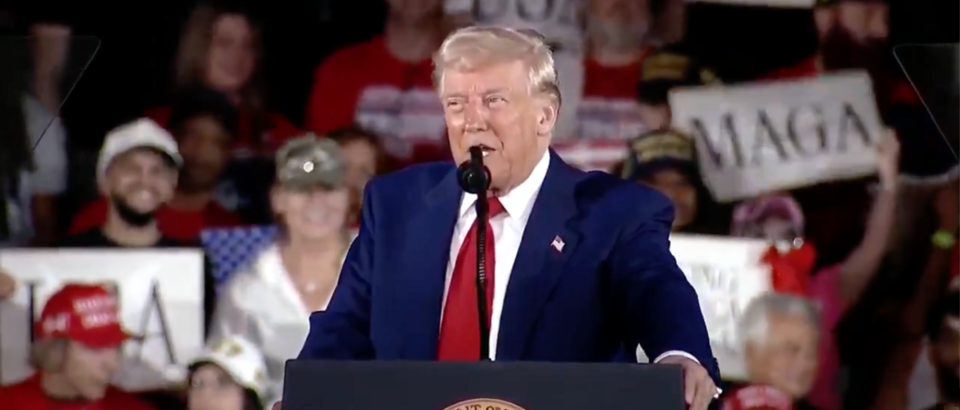
WASHINGTON, D.C. — President Donald Trump made his first public appearance following a dramatic midterm election cycle that delivered heavy losses to Republicans and handed Democrats a series of significant victories across the country. The election results, which reshaped the political balance in Washington, have already triggered debate within Republican circles about the future of the party and the challenges facing the administration during the remainder of Trump’s term.
Political observers described the outcome as one of the most consequential midterm elections in recent memory. In race after race, Democratic candidates outperformed expectations, securing major wins in congressional contests and strengthening their influence in Washington. The results have created a more complicated political environment for the White House, with the prospect of increased partisan confrontation on both domestic and foreign policy issues.
During his appearance, President Trump largely avoided an extensive discussion of the election results. Instead, he focused much of his attention on infrastructure and construction projects underway in the nation’s capital. Among the topics highlighted were ongoing improvements around the White House and development projects tied to public spaces near the National Mall.
Although the president briefly acknowledged the shifting political landscape, his remarks emphasized administration priorities rather than election analysis. Supporters viewed the appearance as an effort to project stability and continuity, while critics argued it reflected a reluctance to directly address voter dissatisfaction reflected in the election outcome.
The election itself produced several headline-grabbing victories. In Michigan, Abdul El-Sayed secured a landmark Senate victory, making history and drawing national attention. His campaign focused on healthcare, economic opportunity, and community investment, themes that resonated strongly with voters in a highly competitive race.
Elsewhere, longtime Republican Senator Susan Collins of Maine was defeated after decades in office. Her loss became one of the most closely watched results of the election and was viewed by many analysts as further evidence of shifting voter sentiment in traditionally competitive states.
Several other races remained closely contested as ballots continued to be counted, particularly in states where margins were exceptionally narrow. Political strategists from both parties spent election night monitoring developments across key battleground states, recognizing that the final results could influence legislative priorities for years to come.
Within Republican ranks, the scale of the losses immediately sparked internal debate. Some party leaders called for a reassessment of campaign strategies, while others pointed to broader national issues that may have affected voter behavior. The conversation quickly expanded beyond individual races and began focusing on the direction of the Republican Party heading into future elections.
One of the most notable reactions came from Vice President JD Vance, who openly linked the election outcome to concerns surrounding U.S. involvement in the conflict with Iran. His remarks reflected a broader discussion among Republican officials regarding the political impact of foreign policy decisions.
The issue of Iran emerged repeatedly throughout post-election analysis. Critics of the administration argued that public concerns about international tensions may have influenced voters seeking a different approach to foreign affairs. Supporters of the administration, however, maintained that national security decisions should not be judged solely through an electoral lens and defended the president’s actions as necessary for protecting American interests.
When questioned about the criticism, President Trump defended his administration’s handling of Iran and reiterated his belief that strong action was necessary to address security threats. He argued that difficult decisions often come with political consequences but insisted that safeguarding national interests remained a top priority.
The new political landscape is expected to have significant implications for policymaking in Washington. With Democrats now holding greater influence in Congress, legislative negotiations are likely to become more contentious. Areas including federal spending, immigration, healthcare, and foreign policy could become major battlegrounds between Congress and the White House.
Democratic leaders have already signaled their intention to pursue aggressive oversight of the administration while advancing policies that differ sharply from White House priorities. Many newly elected lawmakers campaigned on promises of expanding healthcare access, addressing economic inequality, and increasing government accountability.
At the same time, Republican leaders face the task of rebuilding momentum and maintaining party unity after a difficult election cycle. Political analysts note that how the party responds in the coming months may play a critical role in shaping future national elections.
For President Trump, the road ahead will likely involve navigating a more challenging political environment than the one that existed before the midterm elections. Legislative victories may become harder to secure, and bipartisan cooperation could prove elusive as both parties prepare for future electoral battles.
Despite the setbacks, administration officials have indicated that they intend to continue pursuing their policy objectives while adapting to the realities of a divided Washington. Whether that strategy proves effective remains uncertain, but there is little doubt that the election results have ushered in a new chapter in American politics.
As Congress prepares to reconvene and newly elected officials begin their terms, attention now turns to how both parties will govern in a deeply divided political climate. The midterm election may be over, but its consequences are only beginning to unfold.
About Republican Column: At Republican Column, we bring you breaking U.S. news, politics, and global developments every day to keep you informed.