

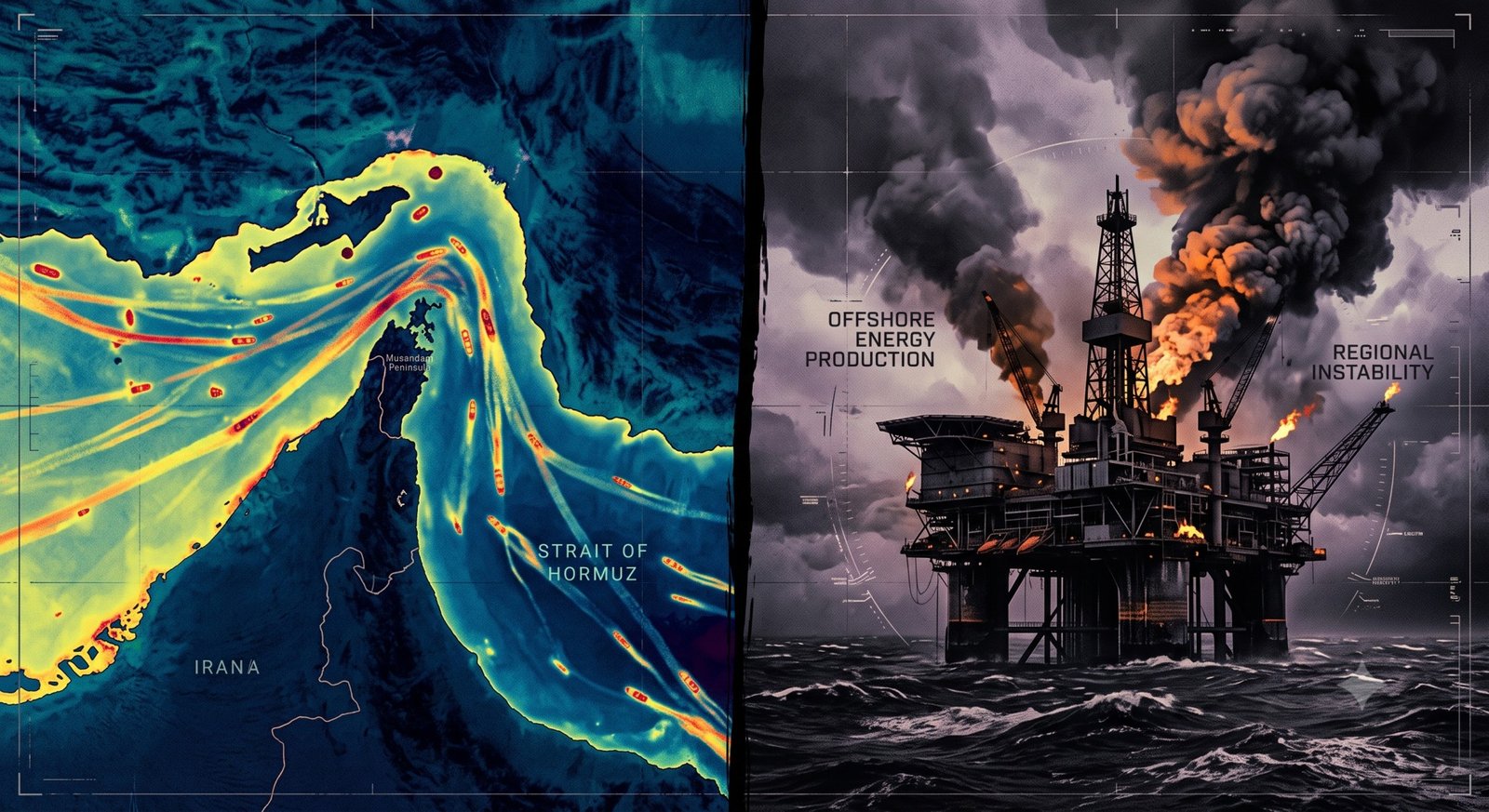
Iran has said the Strait of Hormuz will remain closed until the United States meets seven conditions tied to a June memorandum of understanding, adding another obstacle to efforts to end the conflict and restore normal commercial shipping through the strategically important waterway.
Iranian Parliament Speaker Mohammad Baqer Ghalibaf said Sunday that Tehran had received proposals from Washington through intermediaries but would not reopen the strait until the conditions associated with the Islamabad memorandum are implemented.
The statement comes as indirect U.S.-Iran negotiations continue through regional mediators, including Qatar. Iran has said reopening the waterway is a central priority, while Washington has focused more broadly on the terms of a potential settlement, including Iran’s nuclear program.
Iran Links Hormuz Reopening to Seven Conditions
Ghalibaf said Iran’s position was firm and that the strait would not be reopened until the seven conditions based on the Islamabad memorandum were fulfilled. He also accused Washington of presenting different positions publicly and privately through intermediaries.
The June memorandum addressed a broader framework for ending hostilities and establishing a longer-term political settlement. A publicly available draft of the Islamabad memorandum includes provisions concerning an end to military operations, respect for sovereignty and territorial integrity, and restrictions on further military action.
Iran has previously demanded measures that include:
- An end to U.S. military operations against Iran and its regional allies
- Removal of the U.S. naval blockade
- Withdrawal of U.S. military forces from the region
- Lifting of U.S. sanctions
- Release of frozen Iranian assets
- Compensation for damage caused by the conflict
Some of those demands were publicly outlined by Iranian officials earlier in the year. However, Iran has not publicly provided a definitive seven-item list in Ghalibaf’s latest statement, making it important to distinguish the broader demands from the specific conditions he referenced Sunday.
Why the Strait of Hormuz Matters
The Strait of Hormuz is one of the world’s most important energy routes. It connects the Persian Gulf with the Gulf of Oman and the Arabian Sea, providing a major shipping route for oil and natural gas exports from Gulf producers.
The U.S. Energy Information Administration estimated that about 20% of global LNG trade passed through the strait in 2024, with Qatar accounting for most of the LNG moving through the waterway. Much of that gas was destined for Asian markets, including China, India and South Korea.
The strait’s importance extends beyond LNG. Large volumes of crude oil and petroleum products also normally pass through the waterway, meaning prolonged disruption can affect energy prices, shipping costs and insurance markets far beyond the Gulf.
Strait of Hormuz Standoff at a Glance
| Issue | Current Situation |
|---|---|
| Waterway | Iran says the Strait of Hormuz will remain closed |
| Condition for reopening | Tehran says seven conditions tied to the Islamabad memorandum must be met |
| Diplomacy | U.S. and Iran continue indirect contacts through mediators |
| Energy significance | About one-fifth of global LNG trade passed through Hormuz in 2024 |
| Main risk | Prolonged disruption could increase pressure on energy and shipping markets |
Seven-Day Reopening Proposal
Iran has previously indicated that the strait could be reopened within seven days under a diplomatic arrangement.
That proposal was presented during the United Nations General Assembly and involved broader measures intended to end the conflict. According to Reuters, the Iranian proposal included ending hostilities, unfreezing Iranian assets, lifting U.S. sanctions and reopening the Strait of Hormuz, while Iran would return to negotiations concerning its nuclear program.
The major disagreement now appears to involve the sequence in which the measures would be carried out, rather than simply whether the two sides have discussed the individual elements.
That sequencing issue is significant. Washington has sought assurances and concessions from Tehran, while Iran has pushed for measures such as sanctions relief and reopening the waterway as part of the broader settlement.
Shipping Disruptions Add to the Pressure
The diplomatic dispute is unfolding alongside continued disruption around the waterway.
A tanker was reported attacked in the Strait of Hormuz on Sunday, according to reporting citing a British maritime agency. The incident came as Iranian officials again warned that the conflict would not be resolved through military pressure alone.
Any sustained threat to commercial vessels can increase the risks faced by shipping companies, insurers and energy traders. Even when vessels continue moving, higher security and insurance costs can add to the overall cost of transporting fuel.
For countries that depend heavily on Gulf energy supplies, the uncertainty is particularly important.
What the Standoff Means for Energy Markets
A prolonged closure would not necessarily translate into an immediate global energy shortage. The impact depends on how long the disruption lasts, how much cargo can be rerouted, whether alternative pipelines can compensate for lost shipments and how quickly diplomatic or military developments change the situation.
However, Hormuz’s role in global energy transportation means that prolonged disruption can create additional volatility.
LNG is particularly sensitive because a significant share of Gulf exports normally passes through the strait. EIA data show that roughly 20% of global LNG trade transited Hormuz in 2024.
Oil markets can also respond quickly to expectations of tighter supply, even before physical shortages develop.
U.S.-Iran Talks Face a Difficult Path
The latest statement from Ghalibaf suggests that Tehran is not prepared to separate the reopening of Hormuz from the broader diplomatic framework.
At the same time, Washington and its regional partners face a complicated negotiation involving sanctions, military operations, Iranian assets, the nuclear program and the security of commercial shipping.
Regional mediators continue to work toward an agreement, but the gap between the two sides remains substantial.
For now, Iran’s message is clear: the Strait of Hormuz will not reopen until Tehran’s stated conditions are met.
The longer the impasse continues, the greater the potential for further disruption to one of the world’s most important energy and shipping corridors.
Sources & Deep-Dive Verification
- Regional Broadcast Dispatches & Reporting:
- Al Jazeera English: “Iran says Strait of Hormuz to remain closed until US meets conditions,” reporting on Iranian diplomatic statements, Ghalibaf’s remarks, and regional transit impacts (October 4, 2026).
- The Independent / Middle East Desk: “Tehran threatens to keep Hormuz shut until US meets conditions,” live updates on Ghalibaf’s address and Houthi refinery strikes (October 4, 2026).
- Gulf Today: “Hormuz will not reopen until conditions are met: Iran,” wire analysis detailing Tehran’s seven prerequisite demands (October 4, 2026).
- Geopolitical & Maritime Monitoring:
- U.S. Naval Institute (USNI) News: Fleet updates on transit security protocols and commercial shipping routes across the Persian Gulf and Gulf of Oman.
- International Energy Agency (IEA): Global supply assessments monitoring shipping diversions and energy chokepoint impacts.
About Republican Column: At Republican Column, we bring you breaking U.S. news, politics, and global developments every day to keep you informed.
Just wipe Iran of the face of the earth one huge bomb and let the sand fleas clean up all the terrorists bodies they have to eat also. Americans are sick and tired of dealing with assholes for 5 decades. Time to destroy them completely before they try and destroy America. They hate America and Americans people so it’s time to stop talks and start destroying them all.