

Understanding the Ghost of 1877: What History’s Deadliest Super El Niño Teaches Us About a Changing Climate
The catastrophic El Niño of 1877 shows how extreme climate events can become global crises when food systems, infrastructure and vulnerable communities are already under pressure
The world has experienced powerful El Niño events before, but few have left a historical legacy as devastating as the episode that unfolded in 1877 and continued into the following year.
The event brought droughts, floods and crop failures across several regions, contributing to famine, disease and widespread human suffering. Historical estimates of the death toll vary considerably, but the disaster remains an important example of how a major climate event can interact with economic conditions, political decisions and social inequality.
Today, scientists have far better forecasting technology and emergency-response systems. Yet the story of 1877 continues to offer a warning: extreme weather becomes far more dangerous when societies are unprepared for the consequences.
What Makes an El Niño So Powerful?
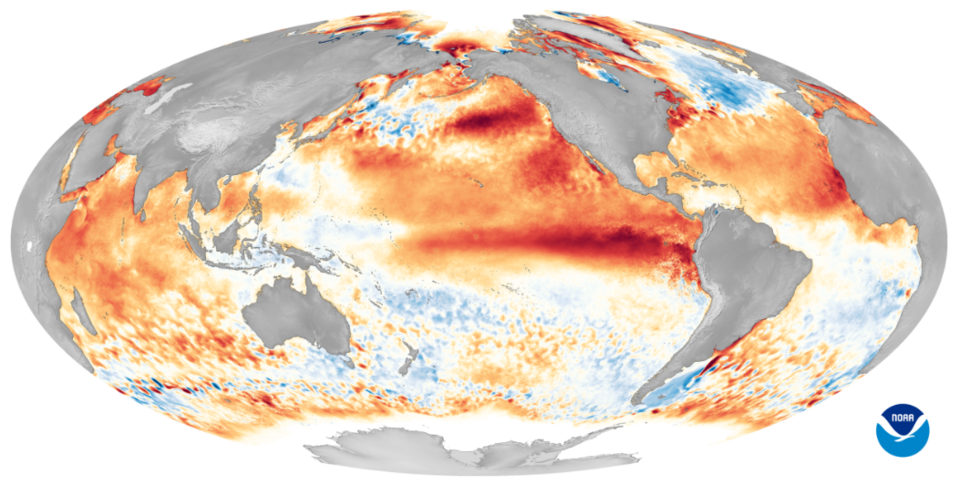
El Niño is a naturally occurring climate pattern involving unusual warming of surface waters in the central and eastern tropical Pacific Ocean.
Under normal conditions, trade winds push warm surface water toward the western Pacific, around Australia and Indonesia. Cooler water rises near the western coast of South America.
During an El Niño event, those trade winds weaken or change, allowing warmer water to move eastward across the Pacific.
That shift can alter rainfall patterns far beyond the Pacific region.
Some areas may experience unusually heavy rainfall and flooding, while others face prolonged drought. The effects can extend into agriculture, water supplies, transportation, energy markets and food prices.
When an El Niño becomes exceptionally strong, the consequences can become much more widespread.
Why 1877 Became Such a Catastrophe
The 1877 event occurred during a period when global society was becoming increasingly connected through railways, steamships and international trade.
That growing connectivity created economic opportunities, but it also meant that local agricultural failures could have consequences far beyond national borders.
The transcript describes severe drought affecting areas including India, northern China, northeastern Brazil and parts of Africa. Crop failures placed enormous pressure on communities that depended heavily on agriculture.
In India, the disruption of monsoon rainfall contributed to a devastating famine. In China, drought struck communities already facing serious political and economic difficulties.
Brazil also experienced severe drought, contributing to displacement and hardship.
The human consequences were amplified by poverty and limited government capacity. For many people, there were few alternatives when harvests failed and food prices rose.
The lesson is important: the severity of a climate disaster depends not only on the weather itself, but also on the resilience of the society experiencing it.
Globalization Can Spread the Shock
One of the most striking parallels with the modern world is the role of interconnected markets.
By the late 19th century, international trade was already becoming an important part of the global economy. Food and commodities could move between continents, linking distant populations to the same economic system.
That meant a crop failure could contribute to wider price pressures.
Modern globalization has made those connections dramatically more complex.
Food, energy, manufacturing and transportation now depend on enormous international networks. A drought in one major agricultural region can influence commodity markets thousands of miles away.
A disruption to shipping routes can also affect the availability and price of essential goods.
The 1877 experience therefore offers a historical reminder that interconnected economies can provide resilience in some circumstances while also transmitting shocks quickly.
Today’s World Has Better Tools
Modern society has advantages that were unimaginable in 1877.
Satellites monitor ocean temperatures and atmospheric conditions. Weather agencies can issue warnings days or weeks before some extreme events occur. Governments can organize emergency responses, move food and supplies and provide assistance to affected communities.
These improvements have helped reduce the human cost of many natural disasters.
But they do not eliminate vulnerability.
Infrastructure can still fail under extreme conditions. Agricultural systems can still be damaged by drought or flooding. Poor communities often have fewer resources to recover.
The transcript points to disruptions such as low water levels affecting major shipping routes, demonstrating how climate-related changes can have consequences for international commerce.
A Warmer Baseline Adds Another Challenge
The most important difference between 1877 and today is the broader climate background.
El Niño is a natural phenomenon, but it now operates within a world that is significantly warmer than it was during the 19th century.
A warmer atmosphere can hold more moisture, increasing the potential for intense rainfall in some circumstances. At the same time, higher temperatures can increase evaporation and worsen the effects of drought and heat.
That does not mean every extreme event can be directly attributed to El Niño or climate change. Weather events have multiple causes, and scientists assess each event individually.
But the combination of natural climate variability and long-term warming creates additional challenges for communities trying to prepare for extremes.
Preparing Before the Next Major Event
The central lesson from 1877 is not that another disaster of the same scale is inevitable.
It is that preparation matters.
Governments can strengthen early-warning systems, improve food-storage capacity, protect water supplies and invest in infrastructure capable of handling extreme weather.
International cooperation also matters because climate-related disruptions rarely respect national borders.
Better forecasting can help governments prepare farmers, businesses and communities for changing conditions before a crisis reaches its peak.
The history of 1877 ultimately shows that natural climate events do not occur in isolation. Their consequences depend on the economic systems, infrastructure and social conditions surrounding them.
Modern society has far more information and technology than the world of 1877.
The challenge is turning that knowledge into preparation.
A powerful El Niño cannot be prevented. But the famine, disruption and vulnerability that can follow a major climate shock can be reduced when governments and communities prepare in advance.
That may be the most important lesson the ghost of 1877 has left for the modern world.
About Republican Column: At Republican Column, we bring you breaking U.S. news, politics, and global developments every day to keep you informed.