

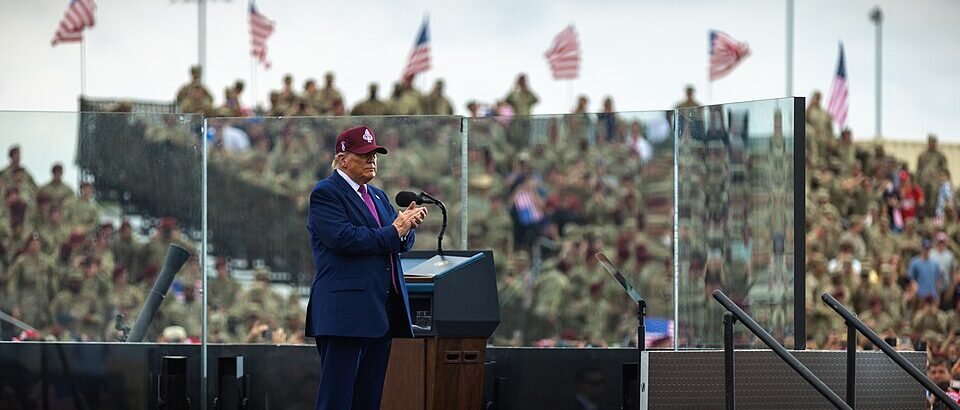
Trump Highlights Hunter Biden Documents and Shifts Focus to Factory Workers
The president revisited questions about Hunter Biden’s past business dealings in Ukraine before turning to manufacturing wages, worker incomes and the administration’s economic priorities.
President Donald Trump used a recent public address to revisit questions surrounding Hunter Biden’s past international business dealings, drawing attention to newly released documents and the scrutiny surrounding his work in Ukraine. The president also turned to the economy, highlighting manufacturing wages and worker income as he outlined the priorities of his administration.
The remarks brought together two recurring themes in American politics: questions about the business activities of prominent political families and the debate over whether federal economic policies are delivering tangible benefits to American workers.
According to the video transcript, Trump referred to newly surfaced material concerning Hunter Biden’s business relationships and compensation connected to Ukraine’s energy sector. He then shifted toward comparisons between economic conditions under his administration and those of previous years, emphasizing domestic production, job creation and the financial position of industrial workers.
The address did not, by itself, establish new findings about Hunter Biden’s business activities or independently verify the economic comparisons cited by the president.
Hunter Biden’s Ukraine Business Dealings Return to the Spotlight
During the opening portion of his remarks, Trump pointed to documents concerning Hunter Biden and his previous international business relationships. The discussion focused particularly on his work in Ukraine’s energy sector and the compensation associated with that position.
Hunter Biden, the son of former President Joe Biden, became a subject of sustained political scrutiny over his role on the board of Ukrainian natural gas company Burisma Holdings while his father was serving as vice president.
The arrangement attracted attention in Washington because of the overlap between Hunter Biden’s private business activities and his father’s public responsibilities. Republican lawmakers and conservative commentators have repeatedly questioned whether the relationship created potential conflicts of interest or opportunities to trade on the Biden family name.
Those questions have remained politically contentious. Allegations concerning influence, access and potential conflicts of interest must be distinguished from findings established by documentary evidence or legal proceedings.
In the address described by the transcript, Trump emphasized the timing and significance he attributed to the newly released material. However, the supplied transcript does not provide enough detail to identify every document, establish what new information it contains or determine whether it changes the existing public record.
For that reason, the documents’ specific contents and implications require separate examination rather than being treated as proof of wrongdoing.
Trump Connects the Political Debate to His Economic Agenda
After discussing Hunter Biden, Trump redirected his remarks toward domestic economic conditions, particularly wages and manufacturing.
The president highlighted figures relating to factory workers and industrial-sector incomes, presenting them as part of a broader argument about the direction of the American economy.
Manufacturing has long occupied an important place in Trump’s political agenda. His economic message emphasizes domestic production, investment in American industry and policies intended to encourage businesses to manufacture goods within the United States.
For supporters of the administration, stronger factory wages and increased domestic investment are important measures of economic progress. They argue that workers should benefit directly from national economic growth rather than seeing its gains concentrated primarily among large corporations or financial markets.
Trump’s comments reflected that emphasis, placing industrial employment and worker income at the center of his account of the administration’s performance.
Nevertheless, wage statistics require context. Changes in factory pay can reflect inflation, productivity, labor shortages, shifts in workforce composition and broader economic conditions, as well as government policy. A comparison between different administrations therefore needs consistent data and clearly defined time periods.
The transcript does not provide sufficient detail to independently assess all the figures Trump cited or determine how much any particular policy contributed to the trends he described.
Manufacturing and the Cost of Living
The president’s focus on manufacturing wages also connects to a wider national debate over household purchasing power.
Higher wages can help workers manage housing, transportation, food and other expenses. But nominal wage increases do not necessarily translate into greater purchasing power if prices rise at a similar or faster rate.
That distinction is central to evaluating claims about economic improvement.
For manufacturing communities, the effects of economic policy can extend beyond paychecks. New investment may support suppliers, logistics businesses and local services, while factory closures or reduced production can affect entire regional economies.
Trump has consistently argued that domestic manufacturing deserves greater priority in federal policy. His administration’s emphasis on production and economic competitiveness reflects the view that a strong industrial base contributes to both national prosperity and economic security.
Whether those policies deliver lasting gains depends on a range of factors, including business investment, consumer demand, productivity, energy costs and international competition.
The president’s remarks highlighted his preferred indicators of progress, but a comprehensive assessment would require examining a broader set of economic data.
A Familiar Political Contrast
By moving from Hunter Biden’s business dealings to manufacturing wages, Trump connected a politically sensitive subject involving the previous administration with his own economic message.
The structure of the address reflects a familiar feature of American political communication: presidents frequently use public remarks to contrast their priorities with those of their predecessors.
For Trump and his supporters, scrutiny of Hunter Biden’s business activities forms part of a broader argument about accountability and the relationship between political influence and private enterprise. His economic message, meanwhile, emphasizes domestic production and the financial circumstances of American workers.
Critics of this approach may question whether references to political controversies distract from the practical challenges facing households. Others may argue that questions about public officials’ families deserve attention when credible evidence warrants investigation.
Both the political allegations and the economic claims are best assessed on their own evidence.
What Comes Next?
Trump concluded his remarks by emphasizing national growth, job creation and economic competitiveness. The address reinforced his administration’s stated focus on domestic production while bringing renewed attention to Hunter Biden’s past business relationships in Ukraine.
The broader significance of the speech will depend partly on what the newly released documents actually establish and whether the economic figures cited by the president are supported by comparable, independently verifiable data.
For now, the transcript shows Trump using the occasion to address two issues that continue to feature prominently in American political debate: accountability surrounding prominent political families and the economic prospects of workers in the United States.
The questions surrounding Hunter Biden’s business activities remain separate from the challenge of measuring economic performance. Both require careful examination of records, evidence and context.
Ultimately, the address offered a clear picture of the themes Trump wants to emphasize: scrutiny of past political relationships, stronger American manufacturing and an economy in which workers see meaningful benefits from national growth.
About Republican Column: At Republican Column, we bring you breaking U.S. news, politics, and global developments every day to keep you informed.