

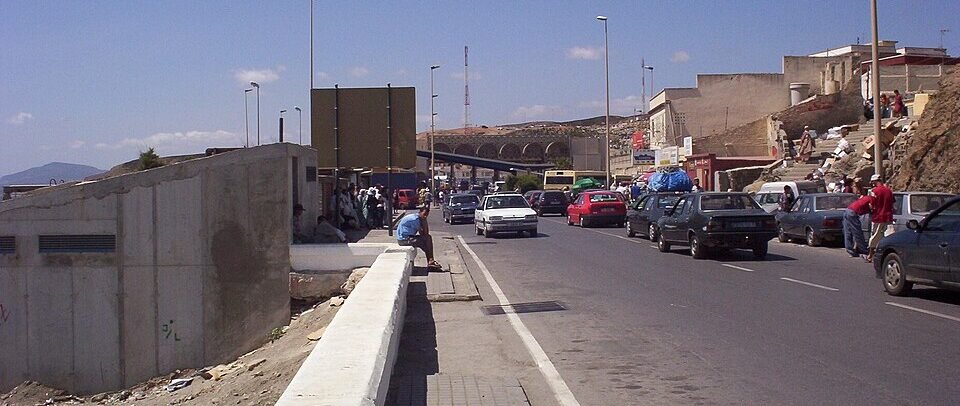
A single court ruling was enough to trigger the largest single-day migrant surge Spain has ever seen — and at least 57 people paid for it with their lives.
By the time Spanish Prime Minister Pedro Sánchez landed in Ceuta on Friday to survey the damage, the numbers were already almost impossible to process: roughly 60,000 people had crossed from Morocco into the tiny North African enclave in barely 24 hours — more than half the territory’s entire population arriving at once.
It didn’t happen by accident. Ceuta’s president, Juan Jesús Vivas, and officials in Madrid say the surge traces back to a single decision: a Spanish Supreme Court ruling that barred authorities from immediately returning migrants intercepted after arriving by sea, a protection that doesn’t apply to people who cross by land or scale the border fence. According to Sánchez himself, word of that legal opening “spread like wildfire” through human-smuggling networks within hours, and the result was a stampede toward the coast.
A situation of absolute humanitarian and social emergency.” — Juan Jesús Vivas, Ceuta’s president
What followed was chaos by any description. Migrants — overwhelmingly young men — swam for miles around breakwater barriers or rushed shoreline checkpoints on foot, facing down Spanish security forces armed with water cannons, tear gas, and warning shots. Some made it through open ground; others were crushed in stampedes trying to climb the breakwater near the border crossing, or drowned in the open water. By Friday, the confirmed death toll stood at 57, with officials warning it could still rise.
Spain responded by deploying the armed forces alongside national police and the Guardia Civil — a step Sánchez’s government called necessary to restore basic order in a territory that Vivas said had become “absolutely unsustainable.” Temporary holding areas went up. A 500-meter floating barrier was installed along the water’s edge to choke off further sea crossings. And by Friday afternoon, more than 48,000 of the roughly 60,000 who’d crossed had already returned to Morocco — some voluntarily, many pushed back by the sheer absence of food, water, or shelter waiting for them on the other side.
“They’re not being given any food or drink,” one migrant told reporters at the scene, “but even if everything is closed, we’re going to stay here whether we’re hungry or not.” It’s a line that captures both the desperation driving people toward Europe and the reality that a city of roughly 85,000 people was never built to absorb tens of thousands of new arrivals overnight.
The political fallout has been immediate. Opposition leaders across Spain and Europe have pointed directly at Sánchez’s broader immigration posture — including a policy his Socialist government rolled out earlier this year granting legal status to roughly half a million undocumented immigrants already living in the country. Santiago Abascal, leader of Spain’s Vox party, went further, calling Sánchez a “traitor” over the crisis and demanding his removal. Italy and France, watching the surge unfold just across the Mediterranean, moved quickly to tighten their own border checks rather than risk the same wave spilling further into the continent.
For American conservatives who’ve spent years arguing that border enforcement is a matter of basic sovereignty, not cruelty, Ceuta is being held up as living proof. The sequence is one they say plays out anywhere enforcement softens: a legal loophole opens, smuggling networks exploit it within hours, and the people who pay the highest price aren’t policymakers in Madrid — they’re the migrants themselves, dozens of whom are now dead because a court ruling created an opening that networks built entire businesses around exploiting.
That’s the argument driving renewed calls, on both sides of the Atlantic, for clear rules, consistent enforcement, and borders that mean what they say. Advocates for stronger enforcement note that the tragedy in Ceuta didn’t happen because Spain’s border was too strong — it happened in the gap opened by a ruling meant to add legal protection. Whether that argument holds up under scrutiny is likely to be debated in Madrid and Brussels for months. What isn’t in dispute is the toll: 57 confirmed dead, tens of thousands displaced in a single day, and a small Spanish city that may take years to recover from a 24-hour crisis nobody in Ceuta saw coming.
As of Saturday, Spanish military vehicles remained stationed along the shoreline, and officials said they expect the floating barrier and reinforced patrols to stay in place indefinitely — an acknowledgment, supporters of stronger enforcement say, that sovereignty isn’t optional, even for countries that would rather not admit it.
About Republican Column: At Republican Column, we bring you breaking U.S. news, politics, and global developments every day to keep you informed.