

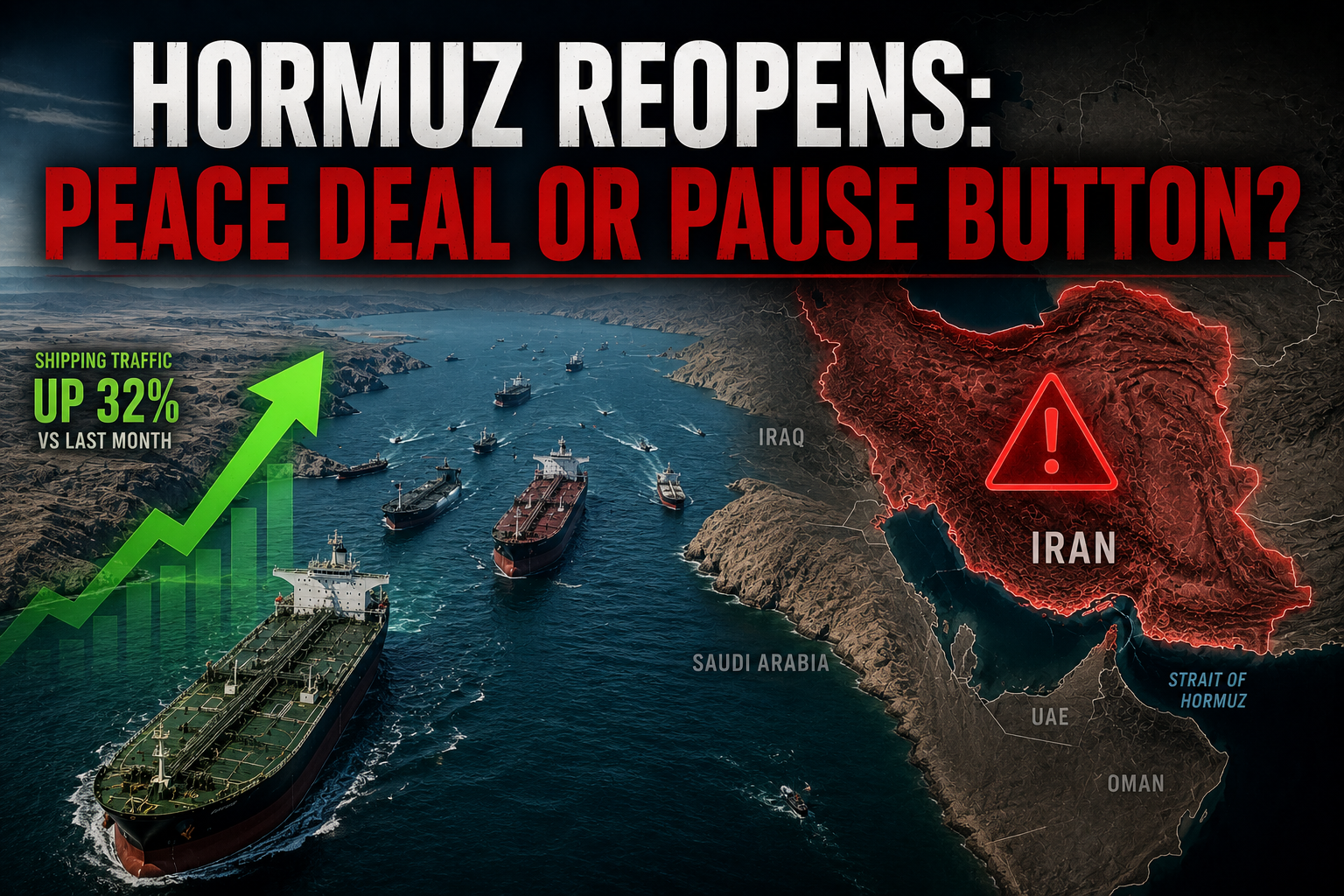
The announcement of a new framework agreement between the United States and Iran has sent ripples through global energy markets, shipping networks, and diplomatic circles.
After months of heightened tensions that disrupted trade through one of the world’s most important maritime corridors, commercial vessels are preparing to move more freely through the Strait of Hormuz once again. For consumers, businesses, and policymakers alike, the development raises a critical question: Is this the beginning of lasting stability, or merely a temporary pause in a long-running conflict?
President Donald Trump addressed that uncertainty during remarks surrounding the G7 summit, emphasizing that any future cooperation would depend on Iran’s actions rather than promises. The administration has made clear that economic relief and broader negotiations will remain tied to compliance with the framework’s terms.
Why the Strait of Hormuz Matters
Few waterways carry greater strategic importance than the Strait of Hormuz.
Roughly one-fifth of the world’s oil supply moves through the narrow passage connecting the Persian Gulf to international markets. Any disruption can quickly affect fuel prices, shipping costs, and broader economic confidence.
Recent tensions created significant bottlenecks throughout the region, leaving millions of barrels of crude oil and petroleum products waiting to reach global markets.
With restrictions easing, analysts expect increased supply to help reduce some of the pressure that has driven energy volatility in recent months.
For American consumers, that could eventually translate into lower fuel costs and reduced inflationary pressure if stability holds.
A Temporary Agreement, Not a Final Settlement
While markets welcomed the reopening of shipping routes, many of the underlying disputes between Washington and Tehran remain unresolved.
The current framework is widely viewed as an interim arrangement designed to create space for additional negotiations.
Several major issues—including Iran’s nuclear activities, sanctions policy, regional security concerns, and long-term economic relations—are expected to remain subjects of intense discussion in the weeks ahead.
Rather than representing a final peace agreement, the framework may be better understood as a testing period in which both sides evaluate whether a broader deal is achievable.
Markets Are Watching Closely
Energy traders responded quickly to news of the agreement, with oil prices retreating from recent highs as concerns about supply disruptions eased.
Shipping companies and insurers have also welcomed the reopening, though many remain cautious about conditions in the region.
Industry experts note that confidence takes longer to rebuild than infrastructure. While vessels may resume normal routes, companies will continue monitoring developments closely before fully returning to pre-crisis operating patterns.
That caution reflects a broader reality: investors and businesses are looking for evidence of sustained stability, not just short-term diplomatic announcements.
The Economic Stakes
The outcome of these negotiations extends far beyond the Middle East.
Energy prices influence transportation costs, manufacturing expenses, food prices, and inflation across the global economy. Any improvement in stability can provide relief to consumers already dealing with elevated living costs.
At the same time, renewed tensions could quickly reverse recent gains.
This is why financial markets are treating the agreement as an important first step rather than a definitive resolution.
What Comes Next
The coming weeks may prove decisive.
Diplomatic efforts are expected to continue as negotiators work through some of the most difficult issues dividing Washington and Tehran. Success would offer greater certainty to energy markets and international commerce.
Failure, however, could bring renewed pressure on shipping routes, energy supplies, and regional security.
For now, the reopening of the Strait of Hormuz marks a significant development with global implications. Whether it becomes the foundation for lasting stability or simply another chapter in a decades-long confrontation remains one of the most consequential questions facing international policymakers today.
About Republican Column: At Republican Column, we bring you breaking U.S. news, politics, and global developments every day to keep you informed.