

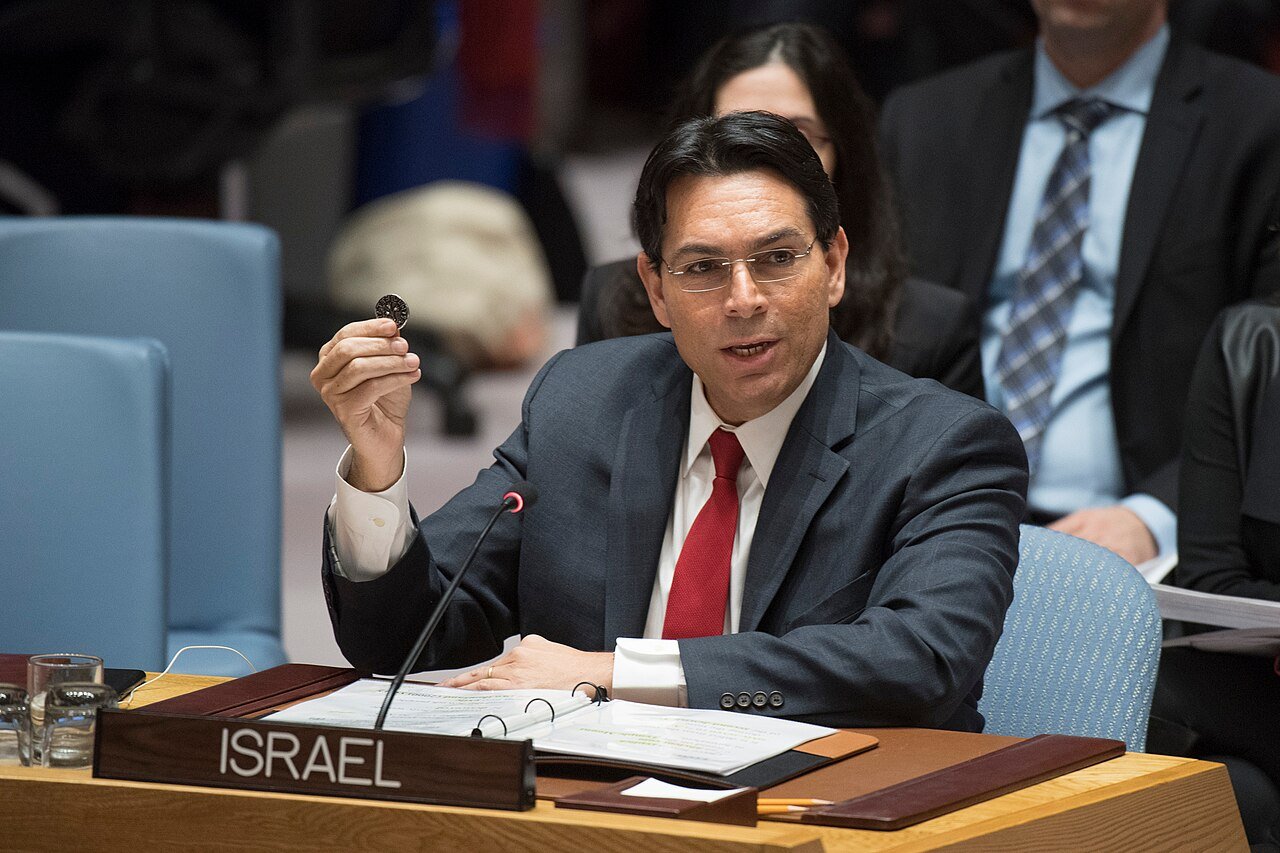
Tensions between Israel and the United Nations escalated dramatically this week after Israeli officials announced the freezing of relations with UN Secretary-General António Guterres and his office following a highly controversial UN blacklist decision.
The diplomatic fallout erupted after reports emerged that the United Nations planned to place Israeli entities on a blacklist connected to allegations of conflict-related sexual violence — a list that already includes groups such as Hamas and ISIS. Israeli officials strongly condemned the move, calling it politically motivated and morally indefensible.
Israeli Ambassador to the UN Danny Danon announced that Israel would suspend cooperation with the office of the Secretary-General for the remainder of Guterres’ term.
“We are done with this Secretary-General,” Danon said in a public statement, accusing the UN of placing Israel “on the same blacklist as Hamas, ISIS and the most depraved terrorist organizations in the world.”
Why Israel Says the Move Crossed a Line
According to Israeli officials, the government had spent months cooperating with UN representatives, providing documents, data, and responses to allegations raised during the review process. Israeli diplomats argue that despite those efforts, the UN leadership moved forward with what they describe as a predetermined political decision.
The controversy centers around an upcoming UN report on conflict-related sexual violence that has not yet been formally published but was reportedly shared in advance with involved states. The report is expected to include allegations involving Israeli detention facilities and security operations during the Gaza conflict.
Israeli officials insist the comparison between Israel and internationally recognized terrorist organizations is unacceptable and further damages the credibility of the United Nations in the eyes of many Israelis.
Growing Friction Between Israel and the UN
The latest clash is part of a broader deterioration in relations between Israel and several UN bodies since the start of the Gaza war.
Earlier this year, Israel severed ties with multiple UN agencies and international organizations, accusing them of institutional bias, inefficiency, and hostility toward the Jewish state. Israeli Foreign Minister Gideon Sa’ar stated at the time that additional international partnerships could also face review.
The UN, meanwhile, has continued criticizing Israeli military operations and humanitarian restrictions in Gaza, leading to repeated diplomatic confrontations between Jerusalem and international officials.
Supporters Say Israel Is Pushing Back Against Double Standards
Supporters of Israel argue that the UN has disproportionately focused on the Jewish state for years while failing to apply equal scrutiny to authoritarian regimes and terrorist organizations across the Middle East.
Critics of the UN also point to the organization’s long history of resolutions targeting Israel, arguing that the latest blacklist controversy reflects a larger institutional problem rather than an isolated dispute.
UN officials have defended the reporting process and denied accusations of political bias. A spokesperson for Guterres said the Secretary-General remains open to dialogue with Israel despite the diplomatic freeze.
A Diplomatic Crisis With Global Implications
The standoff now represents one of the most serious diplomatic breaks between Israel and the UN leadership in recent years.
With the war in Gaza still reshaping international alliances and global politics, analysts say the confrontation could deepen divisions between Western democracies, international institutions, and Middle Eastern powers over the future role of the United Nations in modern conflicts.
Whether the relationship can be repaired may depend on both the final contents of the UN report and the broader geopolitical direction of the region in the months ahead.
Sources & Additional Coverage
Readers interested in reviewing the original reporting, diplomatic statements, and international reactions surrounding the growing dispute between Israel and the United Nations can explore the following sources:
Primary Reporting & Diplomatic Developments
Reuters
Coverage detailing Israel’s decision to freeze ties with UN Secretary-General António Guterres following reports tied to a UN blacklist involving allegations connected to the Gaza conflict.
Read Reuters Coverage
Israel National News
Statements from Israeli Ambassador Danny Danon and Israeli officials responding to the UN decision and outlining Israel’s diplomatic position.
Read Israel National News Coverage
International Relations & UN Tensions
Euronews
Background reporting on Israel’s broader diplomatic disputes with international organizations and recent moves to suspend or reevaluate cooperation with global institutions.
Read Euronews Coverage
Reuters – UN & Gaza Coverage
Additional reporting on ongoing tensions between Israel and United Nations agencies during the Gaza conflict, including humanitarian and diplomatic disputes.
Read Additional Reuters Reporting
International Reactions & Commentary
UOL / AFP International Coverage
International reporting covering the diplomatic fallout and official responses from the office of UN Secretary-General António Guterres.
Read International Coverage
About Republican Column: At Republican Column, we bring you breaking U.S. news, politics, and global developments every day to keep you informed.
It is sad for a country to be accused of Racism, Apartheid, and Inhumanity.
And worse to find itself charged with maltreatment and sexual abuse of prisoners.
And it is, certainly, even worse to stand accused of Genocide!
The only question here must be: IS ALL THAT TRUE?
IF SO, THEN WE ARE LOOKING AT A SERIOUS CRIME – AND CANNOT IGNORE THAT!
People often stand before Courts and claim their innocence – and they don’t have to prove it!
BUT IF OTHERS STAND IN COURT AND HAVE EVIDENCE – WE MUST LOOK AT IT ALL!
TURNING ONE’S BACK AT A COURT IS NO PROOF OF INNOCENCE!
The important word is: HAVING A DAY IN COURT!