

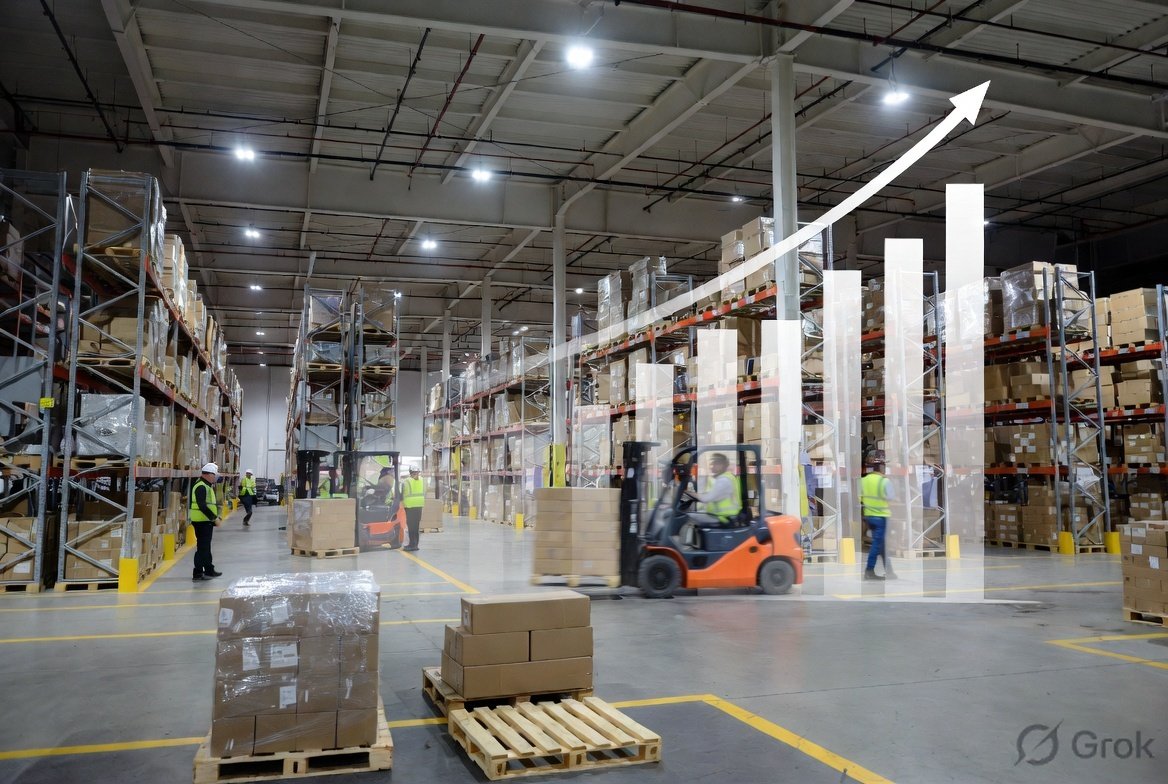
Stocking Up, Not Slowing Down: What Rising Business Inventories Reveal About the U.S. Economy
For months, recession forecasts have dominated financial headlines. Critics warned that consumers were pulling back, businesses would be left with excess inventory, and a painful slowdown was only a matter of time.
But the latest numbers from the U.S. Census Bureau tell a different story.
According to data released Wednesday, total U.S. business inventories increased 0.5% in April, reaching $2.727 trillion. The gain matched economists’ expectations and followed a revised 1.0% increase in March, suggesting businesses remain confident about future demand rather than preparing for a downturn.
More importantly, sales continue to outpace inventory growth—a sign that goods are moving through the economy at a healthy pace.
A Key Indicator Hits a Four-Year Low
One of the most closely watched measures in the report is the inventory-to-sales ratio, which estimates how long it would take businesses to sell their current inventory at existing sales levels.
In April, that ratio fell to 1.31 months, down from 1.32 in March and well below the 1.38 months recorded a year ago.
That’s the lowest reading since 2021.
For economists, a declining inventory-to-sales ratio often signals strong demand. Businesses are replenishing stock, but customers are buying products quickly enough to keep inventories from building up excessively.
Inventory Growth Across the Economy
The increase wasn’t concentrated in just one area. Growth was spread across multiple sectors:
- Wholesale inventories rose 0.6%, reflecting continued confidence among distributors.
- Retail inventories increased 0.7%, with non-automotive inventories up 0.6%.
- Manufacturing inventories climbed 0.3%, indicating steady production activity.
At the same time, total business sales advanced 1.2% in April following a strong 2.2% gain in March.
Taken together, the data suggests businesses are responding to sustained demand rather than bracing for a sharp decline.
Why It Matters for Economic Growth
Inventory investment plays a significant role in calculating Gross Domestic Product (GDP). During recent quarters, businesses reduced stock levels, which weighed on overall economic growth.
That trend now appears to be reversing.
As companies rebuild inventories, economists expect inventory investment to become a positive contributor to second-quarter GDP growth. Several analysts have already adjusted forecasts higher following the latest report.
While inventory data rarely grabs headlines, it often provides valuable insight into how businesses view future conditions. Companies generally do not increase orders and replenish shelves unless they believe customers will continue spending.
A Signal of Business Confidence
Economic reports rarely tell the whole story on their own, but April’s inventory data offers another indication that many businesses remain optimistic despite ongoing concerns about inflation, interest rates, and global uncertainty.
Rather than cutting back, companies appear to be preparing for continued activity in the months ahead.
For now, the numbers point to an economy where products are moving, sales remain solid, and businesses are stocking up for what they expect to be a busy summer season.
Sources
- U.S. Census Bureau Manufacturing and Trade Inventories and Sales Report (MTIS)
- Reuters Economic Analysis
- Dow Jones Newswires
- Wall Street Journal Economic Surveys
- U.S. Department of Commerce
About Republican Column: At Republican Column, we bring you breaking U.S. news, politics, and global developments every day to keep you informed.