

Published: July 1, 2026 | Category: Consumer Freedom | Transportation | White House
For millions of Americans, owning a vehicle has become increasingly expensive—not only because of higher purchase prices, but also because routine repairs often require specialized software, proprietary parts, and dealership-only service.
President Donald Trump is seeking to change part of that equation.
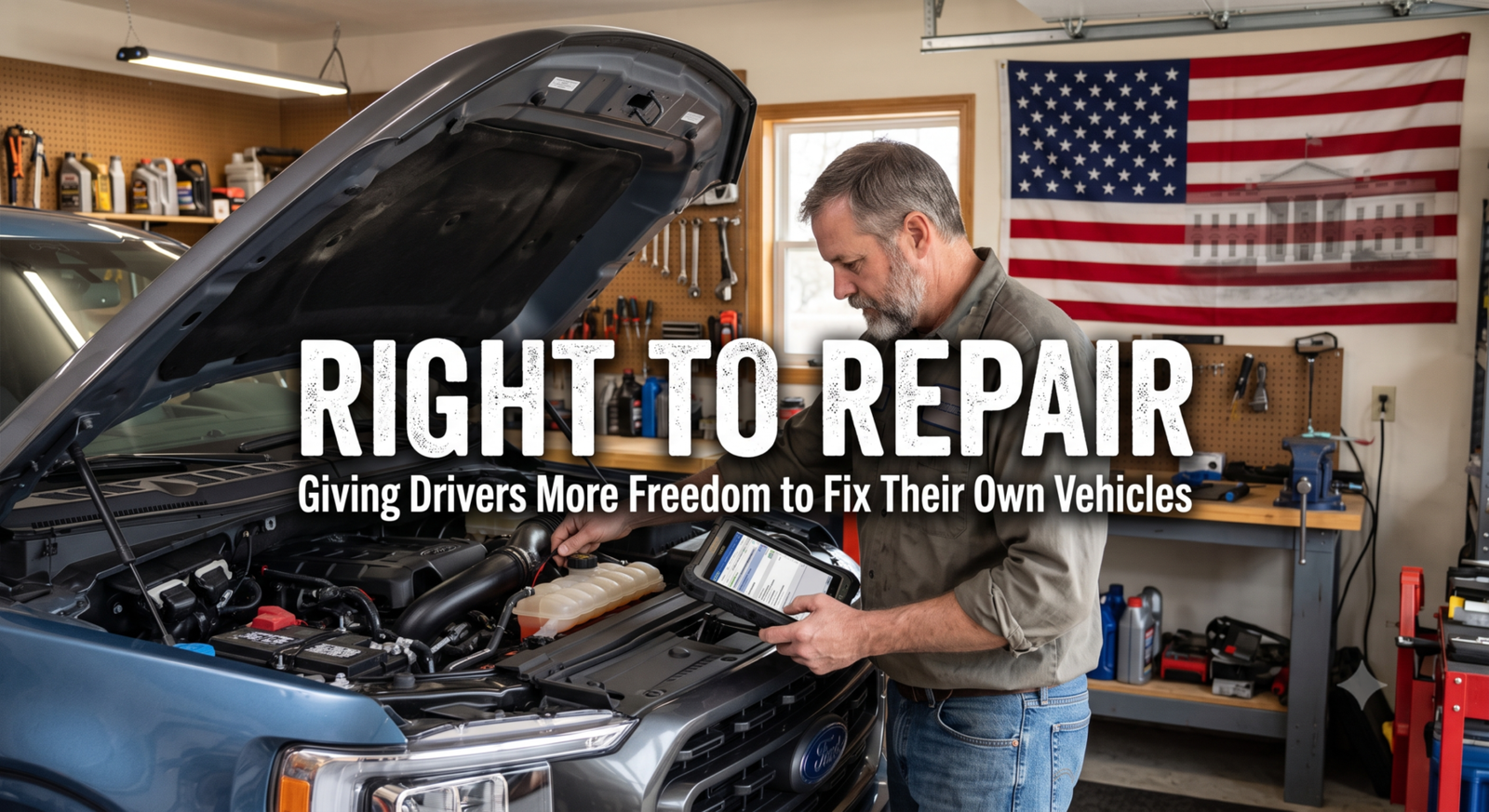
On June 29, Trump signed a presidential memorandum titled “Lowering the Cost of Living by Promoting the Freedom to Fix,” directing the Environmental Protection Agency (EPA) to review how federal emissions regulations are applied to vehicle repairs and to make it easier for consumers to legally repair their own vehicles or use independent repair shops.
A Push for More Consumer Choice
The administration argues that many Americans face unnecessary costs because existing regulations and certification systems make aftermarket repair parts difficult to bring to market.
Under the memorandum, the EPA is instructed to:
- Clarify what repairs owners may legally perform on emissions-related systems under the Clean Air Act.
- Consider additional certification pathways for aftermarket emissions parts.
- Reduce dependence on California’s certification process for qualifying replacement components.
- Consider giving lower enforcement priority to individuals who make good-faith repairs that restore vehicles to their original emissions configuration.
Administration officials say these steps are intended to lower repair costs while maintaining compliance with federal emissions standards.
Extending an Earlier Deregulatory Effort
The White House described the memorandum as an expansion of earlier actions focused on agricultural and off-road equipment, where owners have long argued that manufacturer restrictions make repairs unnecessarily difficult.
Speaking after signing the memorandum, Trump called the effort “common sense,” saying many Americans possess the skills to repair their own vehicles and should not face unnecessary regulatory uncertainty when doing so.
The Debate Over Right to Repair
The “Right to Repair” movement has gained support from consumers, independent repair businesses, and many state lawmakers over the past decade.
Supporters argue that vehicle owners should have access to:
- Diagnostic software
- Repair manuals
- Replacement parts
- Programming tools
without being forced to rely exclusively on franchised dealerships.
Independent repair organizations say broader access would increase competition, lower prices, and provide consumers with more repair options.
Automakers, however, have argued that modern vehicles contain increasingly complex electronic systems. Industry representatives have maintained that restrictions on certain software and security functions help protect vehicle safety, cybersecurity, and emissions compliance.
Why California’s Certification Process Is Part of the Debate
One notable element of the memorandum focuses on the certification of aftermarket emissions-related parts.
Currently, many manufacturers rely on the certification process administered by the California Air Resources Board to demonstrate compliance with federal emissions requirements.
The White House argues that the process has become lengthy and costly, creating delays for manufacturers and reducing the availability of replacement parts nationwide. The memorandum directs the EPA to explore additional certification pathways that could provide manufacturers with greater flexibility while remaining consistent with federal law.
What Happens Next?
The memorandum does not immediately change federal regulations.
Instead, it instructs the EPA to issue guidance within 30 days clarifying how existing law applies to vehicle repairs and to evaluate additional policy changes within its authority. Any broader regulatory revisions would still need to follow applicable administrative procedures.
For consumers, independent repair shops, and aftermarket manufacturers, the administration’s actions could influence future repair policies and the availability of replacement parts.
Whether the initiative ultimately results in significant regulatory changes will depend on the EPA’s implementation and any subsequent rulemaking.
Editorial Standards
Primary Sources: White House Presidential Memorandum; White House Fact Sheet.
Additional Reporting: Reuters.
About Republican Column: At Republican Column, we bring you breaking U.S. news, politics, and global developments every day to keep you informed.