

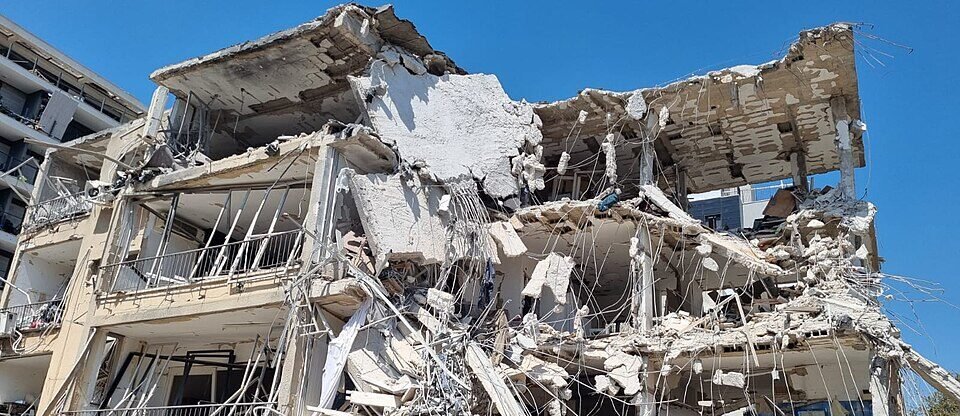
The Red Sea lit up again this weekend, and the images out of Saudi Arabia’s Jizan province — fire crews battling flames at an Aramco terminal after a Houthi missile strike — are the latest proof that Iran’s proxy network hasn’t been deterred nearly as much as Washington’s foreign policy class likes to claim.
Here’s what happened: after the Iran-backed Houthis attacked two Saudi-owned oil tankers in the Red Sea this week and declared a unilateral naval blockade of the kingdom, the Saudi-led coalition struck back Friday, hitting Houthi military and telecommunications sites in the port city of Hodeidah and on nearby Kamaran Island. The coalition said the targets were being used to threaten commercial shipping — a claim that tracks with a pattern of Houthi attacks on Red Sea vessels going back years
https://x.com/OmarBlooshiAE/status/2080912927113269599.
The Houthis didn’t wait long to answer. Within hours, missiles and drones were headed for Jizan, triggering air raid sirens, forcing flights bound for Abha International Airport to divert mid-route, and sparking the fire at the Aramco facility that’s now making headlines around the world. Houthi officials didn’t bother with diplomatic hedging afterward, either, declaring flatly that the region has entered a phase of “escalation with escalation” and daring Riyadh to keep pushing.
A Proxy War That Never Really Stopped
None of this is happening in a vacuum. The Houthis have largely stayed on the sidelines of the broader U.S.-Iran conflict that’s consumed the region since February, focusing their firepower instead on Red Sea shipping. But with the Strait of Hormuz already effectively choked off by Iran and now a second major energy corridor under direct threat, the picture emerging is one that should worry anyone who still believes this is a contained, regional squabble. It isn’t. It’s the same Iranian playbook — arm a proxy, deny direct responsibility, let chaos do the rest — playing out on a second front while the world’s attention is fixed on Tehran.
For the roughly 30 percent of global sea container traffic that moves through the Red Sea, that’s not an abstract geopolitical concern. It’s higher shipping costs, insurance premiums, and eventually prices at the pump, felt by working families who never asked to be exposed to a war half a world away.
Why This Argues for Strength, Not Summits
It’s worth asking what exactly years of “maximum restraint” diplomacy toward Tehran and its proxies has actually bought the world. The Houthis seized Yemen’s capital back in 2015 and have weathered a Saudi-led war, an on-again-off-again truce, and round after round of international pressure ever since — and they’re still capable of setting an Aramco terminal on fire in a single night. That’s not a deterrence success story. It’s a case study in what happens when rogue actors calculate, correctly, that the cost of aggression is manageable.
The alternative isn’t complicated, even if Washington’s foreign policy establishment treats it like it is: cut off the financial and weapons pipelines that let Tehran arm groups like the Houthis, Hezbollah, and Hamas in the first place, and back it up with the kind of unambiguous military deterrence that actually changes an adversary’s math. It’s the same “peace through strength” logic that’s driven the current administration’s approach to Iran directly — sustained pressure, a real willingness to use force, and no illusions about what talking alone accomplishes with a regime this committed to proxy warfare.
The Saudi-led coalition says it will respond “uncompromisingly” to any further Houthi attacks, and few expect either side to back down first. Analysts are already flagging the risk that the next round of strikes could move beyond telecom towers and shipping lanes toward the oil infrastructure that keeps the global economy running. If that happens, the cost of this fight stops being regional and starts showing up in gas prices from Riyadh to rural America.
The lesson from Friday night’s fires in Jizan isn’t complicated. Energy security and open sea lanes don’t get preserved by hoping Iran’s proxies eventually run out of patience. They get preserved by making the cost of aggression too high to bear — and by allies and adversaries alike knowing exactly where the line is, and what happens when they cross it.
About Republican Column: At Republican Column, we bring you breaking U.S. news, politics, and global developments every day to keep you informed.
[…] U.S. missile inventories have come under renewed scrutiny after heavy combat use, while Washington accelerates efforts to rebuild production capacity and support allies. […]