

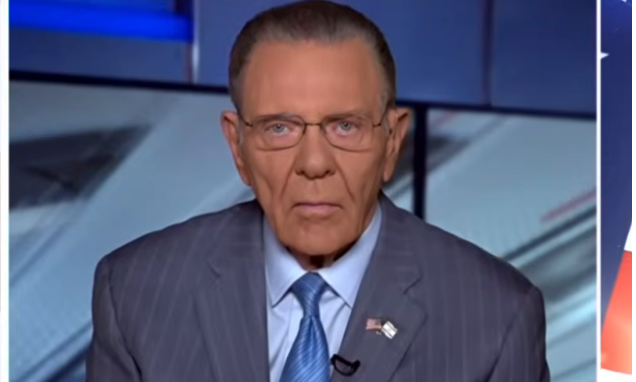
Retired Gen. Jack Keane argues that tougher sanctions and continued U.S. military readiness are strengthening Washington’s leverage over Iran.
Trump’s America First Approach Keeps the Pressure on Tehran
President Donald Trump’s approach to Iran is built around a straightforward principle: economic pressure and military deterrence should reinforce each other rather than operate separately.
That strategy is drawing support from retired four-star Gen. Jack Keane, a prominent national-security commentator who has frequently argued for a tougher U.S. posture toward Iran.
In recent remarks, Keane praised Treasury Secretary Scott Bessent and his team for using economic tools to increase pressure on Tehran. His assessment reflects a broader argument from Trump supporters: Washington should not give Iran unlimited time to rebuild its position while negotiations remain stalled.
Economic Pressure Takes Center Stage
The Trump administration’s sanctions strategy places financial pressure at the heart of its Iran policy.
Keane has praised Bessent’s work, describing the Treasury’s efforts as an important part of the broader campaign against Tehran. The goal is to make it increasingly difficult for Iran to access revenue and international financial channels that can support its government and regional activities.
For the administration’s supporters, the appeal of the strategy is clear.
Instead of relying exclusively on military action, Washington can use sanctions and financial restrictions to raise the cost of Iranian aggression while keeping American forces prepared to respond if necessary.
That combination is central to the America First approach: use U.S. economic power aggressively, maintain credible military strength and avoid making unnecessary concessions simply to produce a diplomatic headline.
Keane Challenges the Narrative Around American Forces
Keane has also pushed back against reports and commentary portraying extended U.S. military deployments as evidence of declining morale.
The USS Abraham Lincoln and other American forces have faced demanding operational schedules in the region. But Keane has emphasized the professionalism of U.S. service members and argued that difficult deployments should not automatically be interpreted as evidence of a force in crisis.
That distinction matters.
American troops routinely operate under challenging conditions, and military readiness depends heavily on discipline, training and logistics. For supporters of Trump’s defense agenda, maintaining that readiness is precisely what makes economic pressure more credible.
Sanctions are more powerful when adversaries know that the United States possesses the military capability to respond if diplomacy fails.
Pressure and Diplomacy Can Work Together
Despite the tough rhetoric surrounding Trump’s Iran strategy, maximum pressure does not necessarily mean permanent war.
The administration can use economic leverage to strengthen its negotiating position.
That is one of the central arguments made by Trump supporters: Washington should negotiate from a position of strength rather than entering talks after giving away leverage.
The strategy essentially creates two paths for Tehran.
One is confrontation, which could bring additional economic and military consequences.
The other is negotiation under conditions that require Iran to address American security concerns.
From this perspective, pressure is not necessarily the opposite of diplomacy. It can be the tool that makes diplomacy more meaningful.
The Strait of Hormuz Remains a Major Concern
The Strait of Hormuz remains one of the most strategically important waterways in the world because of its role in global energy transportation.
Any serious disruption there can quickly affect international oil markets, shipping costs and inflation.
That makes American military readiness in the region important not only for Washington but also for allies and international markets.
The Trump administration has repeatedly emphasized freedom of navigation and the protection of American interests.
For MAGA and America First supporters, the underlying message is that the United States should not allow a hostile government to determine the economic conditions of the wider world through threats against critical maritime routes.
A Different Foreign-Policy Philosophy
Trump’s Iran strategy also represents a broader break from the traditional Washington approach.
Supporters argue that previous administrations spent too much time pursuing agreements that Tehran could eventually challenge or abandon.
Trump’s philosophy is different: establish clear consequences first and negotiate afterward.
Keane’s comments fit comfortably within that worldview.
His support for stronger economic pressure reflects the belief that American financial power remains one of Washington’s greatest strategic advantages.
The United States controls an enormous portion of the world’s financial infrastructure, giving the Treasury Department tools that can affect governments, banks, businesses and international transactions far beyond America’s borders.
The Road Ahead
The effectiveness of the strategy will ultimately depend on what Tehran does next.
Iran could attempt to absorb the economic pressure and continue resisting Washington.
It could seek negotiations in an effort to obtain sanctions relief.
Or it could increase regional pressure and risk an even stronger American response.
For President Trump and his supporters, the objective is to ensure that Iran understands the consequences before making that decision.
Keane’s assessment reinforces the administration’s central message: American strength should be visible, economic pressure should be sustained and U.S. service members should know that Washington stands behind them.
For the America First movement, that represents a fundamentally different model of foreign policy—one centered on leverage, deterrence and national interest rather than endless concessions.
The ultimate test will be whether that pressure changes Tehran’s calculations without creating a wider conflict.
For now, the Trump administration is betting that sustained American economic and military power gives Washington the stronger hand.
About Republican Column: At Republican Column, we bring you breaking U.S. news, politics, and global developments every day to keep you informed.