

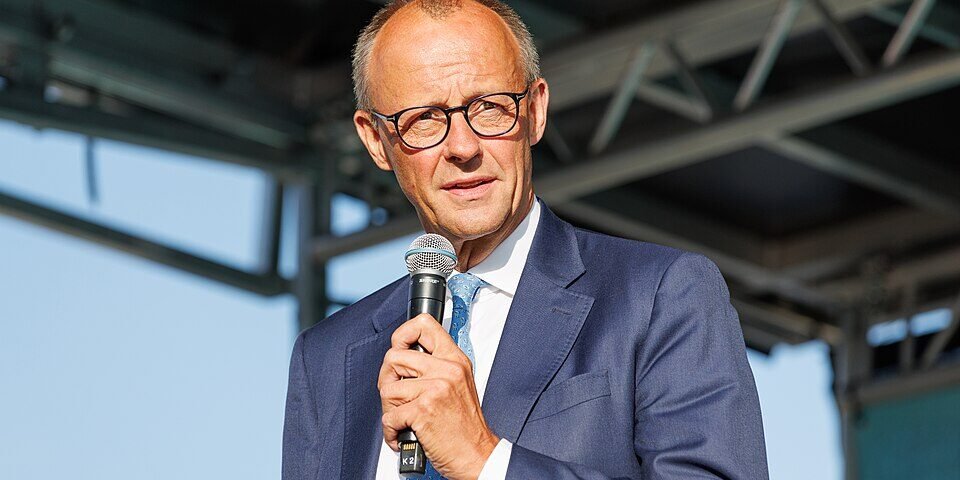
BERLIN — German Chancellor Friedrich Merz is facing a difficult political moment as frustration over the economy, energy policy and the direction of the country increasingly collides with public dissatisfaction.
Merz entered office promising to restore confidence in Europe’s largest economy and put Germany back on a stronger footing. But as economic concerns persist and voters grow more skeptical of Berlin’s political establishment, that promise is becoming harder for the government to defend.
For conservative and America First observers, Germany’s troubles offer a familiar lesson: voters can become increasingly impatient when political leaders appear more focused on institutions, international expectations and long-term policy agendas than on the immediate concerns facing ordinary households.
A Difficult Return to the Political Spotlight
Merz recently faced an uncomfortable reception during a visit to North Rhine-Westphalia, where he was meeting emergency workers following a devastating wildfire.
Instead of receiving an entirely supportive welcome, the chancellor encountered protesters and vocal criticism.
The moment was politically significant because Merz’s center-right CDU has traditionally enjoyed substantial support in the region. Public anger directed at a sitting chancellor in an area associated with his political base can be an important warning sign.
Merz responded by defending his engagement with people working at the emergency scene and dismissing the influence of those shouting at him.
To supporters, the response demonstrated firmness. Critics, however, viewed it as evidence that the chancellor was failing to appreciate the depth of public frustration.
That disagreement captures the larger political problem facing Merz: whether his government can convince voters that it understands the pressures they are experiencing.
Germany’s Economic Problems Remain a Major Political Liability
The economy is at the center of the debate.
Germany’s industrial model has faced significant challenges in recent years. Energy costs, weak external demand, competition from China and uncertainty surrounding the future of major manufacturing industries have placed pressure on companies that once represented the country’s economic strength.
Automotive manufacturers and other industrial employers have announced restructuring programs and job reductions, creating anxiety in communities dependent on manufacturing.
For conservatives, the answer is straightforward: Germany needs cheaper and more reliable energy, fewer regulatory obstacles and a stronger environment for private investment.
The argument will sound familiar to supporters of President Donald Trump.
Trump’s America First economic message has emphasized domestic energy production, industrial capacity, deregulation and national economic independence. His supporters argue that Germany could benefit from a similar willingness to prioritize economic competitiveness over increasingly expensive policy commitments.
Energy remains especially controversial.
Germany’s decision to move away from nuclear power continues to generate debate, particularly when manufacturers complain about electricity costs. Merz has faced pressure from different sides over whether Berlin should reconsider elements of its energy strategy.
The broader question is simple: can Germany remain an industrial powerhouse without ensuring that businesses have access to dependable, affordable energy?
The AfD Challenge Is Getting Harder to Ignore
The most serious political consequence of public dissatisfaction may be the growing strength of the Alternative for Germany, or AfD.
The party has transformed from a protest movement into one of the country’s most significant political forces. Its supporters argue that Germany needs stricter immigration controls, lower energy costs, reduced bureaucracy and a stronger emphasis on national sovereignty.
That message has particular appeal among voters who believe traditional parties have ignored their concerns.
The rise of the AfD creates a complicated problem for Merz and the CDU. The chancellor must retain moderate voters while also preventing conservative voters from abandoning the CDU for a more confrontational alternative.
That balancing act is becoming increasingly difficult.
From a MAGA perspective, the political development is part of a broader Western trend. Voters in several countries are questioning whether established parties have moved too far away from issues such as border security, energy independence, industrial employment and national sovereignty.
Trump’s political success was built in part on tapping into precisely those frustrations in the United States.
Germany is obviously different from America, and its political system operates under different rules. But the underlying voter sentiment can be surprisingly similar.
Merz Has a Narrower Path Forward
The political crisis surrounding Merz does not necessarily mean his government is doomed. Governments can recover from difficult periods, particularly when economic conditions improve.
But the pressure creates an urgent test of leadership.
Merz promised a stronger Germany. Now voters will judge him on whether his government can deliver measurable improvements rather than simply announce new initiatives.
That means confronting difficult questions about energy, taxation, regulation, immigration and industrial competitiveness.
For conservative observers, the lesson is clear. Political leaders cannot rely indefinitely on party traditions or establishment credibility. When voters believe their economic security and national identity are being neglected, political loyalties can change quickly.
Germany’s next chapter will therefore be watched well beyond Berlin.
The Friedrich Merz political crisis is ultimately about more than one unpopular moment or one difficult polling cycle. It reflects a larger argument over what Germany should become: a country governed primarily through established European policy frameworks, or one willing to make a sharper turn toward economic nationalism, energy independence and stronger national sovereignty.
For Merz, the challenge is no longer simply winning an election.
It is convincing increasingly skeptical Germans that the political establishment still has a credible plan for their future.
About Republican Column: At Republican Column, we bring you breaking U.S. news, politics, and global developments every day to keep you informed.
[…] America First philosophy, the developments offer a familiar lesson: when political leaders make economic decisions that voters believe threaten jobs, affordable energy and household finances, those voters eventually […]