

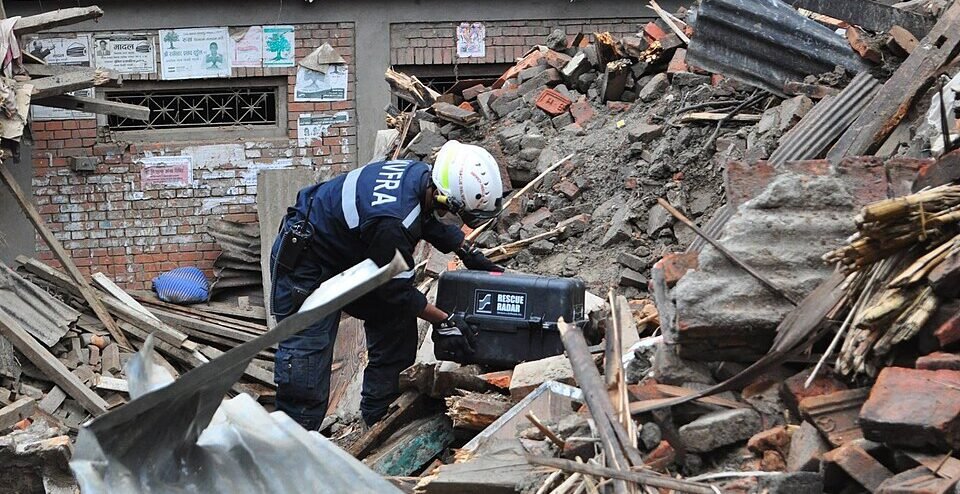
Arnold Dix joins a desperate international operation in Nepal as rescuers dig through mountains of mud and debris while unstable terrain threatens to unleash another flood.
Nepal Hydropower Tunnel Rescue: Arnold Dix Joins the Race Against Time
Deep inside Nepal’s battered Himalayan valleys, rescuers are facing one of the most difficult challenges imaginable: finding workers believed to be trapped beneath tons of mud, rock and flood debris.
The disaster has devastated parts of Nuwakot and Rasuwa after powerful flooding and landslides tore through communities and critical infrastructure. Among the most urgent rescue operations is the effort to reach workers at damaged hydropower facilities along the Trishuli River.
International tunneling specialist Arnold Dix has joined the effort, bringing experience from previous underground rescue operations. His involvement has added another layer of specialist expertise to a mission already involving engineers, soldiers, excavator operators and emergency crews.
But the mountain is not giving rescuers an easy path.
A Hydropower Complex Buried Under Debris
At the Upper Trishuli hydropower complex, the scale of destruction has made conventional rescue methods extremely difficult.
Floodwater and landslides have transformed the landscape, burying access points and damaging roads needed to bring heavy machinery into the area. Engineers have had to work from incomplete information while trying to determine which routes into the underground facilities remain accessible.
For families waiting nearby, every hour brings another mixture of hope and anxiety.
Rescuers are attempting to establish whether workers remain alive inside underground chambers and tunnels and, if so, how they can reach them safely.
The challenge is not simply removing debris.
Every excavation has to account for unstable rock, water pressure and the possibility of additional landslides.
Arnold Dix Brings Tunnel Rescue Experience
Dix is known internationally for his involvement in complex underground rescue operations.
His experience became especially prominent during the rescue of 41 workers trapped during the Silkyara tunnel collapse in India in 2023.
That experience is particularly relevant in Nepal, where rescuers are dealing with confined underground spaces, unstable ground and limited access.
The objective is to find the safest route rather than simply digging as quickly as possible.
Engineers are considering several possibilities, including vertical drilling from the surface, alternative access shafts and existing ventilation routes.
Where machines cannot safely operate, crews may have to rely on slower manual excavation.
It is painstaking work, but underground rescue operations rarely offer shortcuts.
Roads Destroyed, Equipment Cut Off
One of the biggest obstacles is the destruction of transportation routes.
In a normal industrial emergency, large drilling equipment can be transported directly to the site. In the Himalayan valleys, damaged roads and unstable slopes can make that nearly impossible.
That means rescue planners have to think differently.
Smaller equipment may need to be transported by air. Excavators must work from whatever stable ground remains available. Engineers must constantly reassess whether a particular section of terrain can safely support machinery.
The operation is therefore as much an engineering problem as it is a search-and-rescue mission.
Another Threat Above the Rescue Zone
Even as crews work underground, they cannot ignore what is happening higher in the mountains.
Landslides and debris have reportedly created temporary blockages in mountain waterways, raising concerns about unstable pools of water and potential secondary surges.
That creates a dangerous calculation for rescuers.
They must move quickly enough to give trapped workers a chance, but they cannot place hundreds of rescuers in another potentially deadly flood path.
Monitoring teams therefore remain alert for changes in water levels and ground conditions.
If warnings indicate another surge is approaching, rescue personnel may have to retreat to higher ground.
The Human Side of a Technical Rescue
Behind the engineering plans are families waiting for answers.
Parents, siblings and friends of missing workers have gathered near affected areas, hoping for any information about their loved ones.
For them, terms such as “vertical drilling,” “ventilation shaft” and “debris removal” have a deeply personal meaning.
Each successful excavation can represent another chance to bring someone home.
Each setback can feel devastating.
That emotional pressure is one reason experienced rescue specialists are so valuable. Complex operations require calm decision-making even when families and rescuers desperately want faster results.
A Broader Lesson About Infrastructure
The disaster is also raising uncomfortable questions about infrastructure resilience in some of the world’s most challenging terrain.
Hydropower is crucial to Nepal’s economy and energy system, but mountain construction comes with extraordinary geological risks.
Flood-resistant designs, emergency escape routes, communications systems and reliable early-warning networks can become life-saving investments when extreme events strike.
The tragedy demonstrates that infrastructure is not simply about generating electricity or connecting communities.
It is also about ensuring that workers have a fighting chance when something goes catastrophically wrong.
A Race Against Time
For now, the mission remains focused on one objective: reaching the workers who may still be trapped underground.
Nepalese authorities, engineers and international specialists continue working through difficult conditions, while heavy machinery slowly clears pathways through the destruction.
Arnold Dix and the other specialists face a formidable combination of mud, rock, damaged infrastructure and unstable mountain terrain.
Yet rescue operations often depend on persistence as much as technology.
Every meter cleared, every shaft examined and every ventilation route explored brings rescuers closer to an answer.
Across the Himalayan valleys, families are waiting for that answer.
And for the teams working through the night, the mission remains painfully simple: keep digging, keep searching and do everything safely possible to bring the missing workers home.
About Republican Column: At Republican Column, we bring you breaking U.S. news, politics, and global developments every day to keep you informed.