

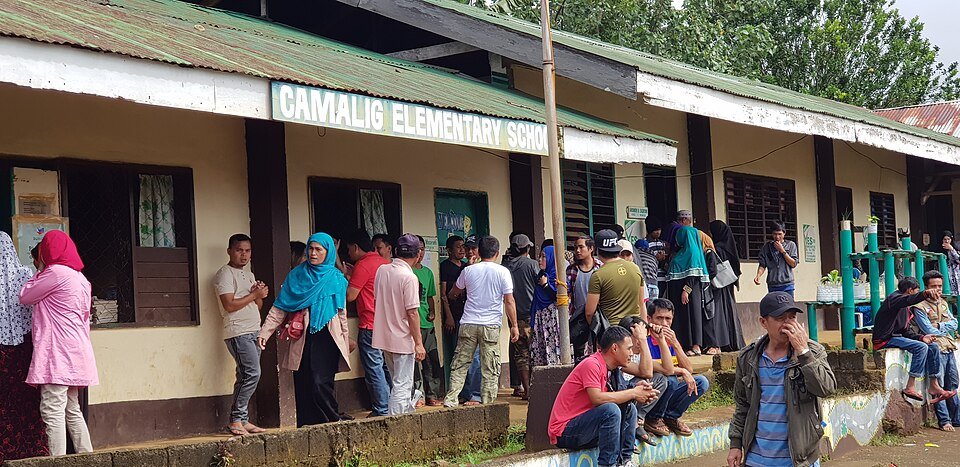
COTABATO CITY, Philippines — Voters across the southern Philippines went to the polls Monday for the first parliamentary elections in the Bangsamoro Autonomous Region in Muslim Mindanao (BARMM), a vote widely seen as a major test of the region’s transition from armed conflict to elected government.
The election gives nearly 2.4 million registered voters the opportunity to choose representatives to an 80-seat parliament. The body will eventually select the region’s chief minister, completing a transition from the interim administration that has governed Bangsamoro since the establishment of the autonomous region.
But the historic vote was not entirely free from the violence that has long complicated political life in parts of Mindanao.
In Cotabato City and other areas, election-related incidents raised concerns about security as voters arrived at polling stations. Authorities reported deaths and injuries linked to violence around election day, while additional security personnel were deployed to protect voters, election workers and polling places.
A Historic Vote for Self-Government
For many voters, the election represents more than a contest between political parties. It is a crucial step in establishing a permanent system of self-government for a region that has experienced decades of separatist conflict.
The Bangsamoro region was created as part of a peace process between the Philippine government and the Moro Islamic Liberation Front (MILF), the country’s largest Muslim rebel organization. Under the 2014 peace agreement, the MILF abandoned its demand for an independent state in exchange for greater autonomy for the Bangsamoro people.
The agreement eventually led to the Bangsamoro Organic Law and the creation of BARMM following a plebiscite in 2019.
The parliamentary election is intended to replace the interim governing arrangement with a government chosen through regular elections. Candidates include former rebel figures, political parties and members of established political families, making the vote both a test of the peace process and a contest over the region’s future political direction.
Violence Casts a Shadow Over Polling
The election was conducted under heightened security after violence was reported in the run-up to and during voting.
Cotabato City was placed under the control of the national Commission on Elections after violence erupted at a polling site. Reports also cited separate incidents elsewhere in the region, including shootings and other election-related violence. Authorities deployed more than 20,000 security personnel across BARMM in an effort to prevent disruptions and protect voters.
Despite the incidents, election officials described the overall voting process as largely peaceful, although logistical problems and irregularities affected some areas.
The contrasting scenes — voters lining up to participate in a democratic process while security forces remained on alert — reflected the complicated reality facing Bangsamoro.
The region has made significant progress since the height of the insurgency, but political rivalries, clan-based disputes and unresolved security concerns remain challenges.
From Battlefield to Parliament
The significance of the election is closely tied to the wider peace process.
For decades, armed groups fought the Philippine government over political rights, autonomy and control of territory in Muslim-majority areas of Mindanao. The peace agreement with the MILF sought to replace armed struggle with political participation and give Bangsamoro communities greater control over their own affairs.
The transition, however, has never been limited to elections.
One of the most important parts of the agreement is the normalization process, which includes the decommissioning of former MILF combatants and weapons and the reintegration of fighters into civilian life.
Under the peace framework, 40,000 MILF combatants are to be decommissioned. By the completion of the third phase, 26,145 combatants had been decommissioned, along with 4,625 weapons. The remaining 14,000 combatants have yet to complete the process.
The final stage has faced delays. In 2025, the MILF suspended the process involving the remaining combatants, saying the government had not substantially fulfilled commitments related to socioeconomic assistance. The government disputed that assessment and pointed to assistance already provided to decommissioned fighters and their families.
A Test Beyond Election Day
The parliamentary elections therefore carry significance beyond the counting of ballots.
The new parliament will have to deal with issues ranging from economic development and public services to security, infrastructure and the continued implementation of the peace agreement.
For supporters of the Bangsamoro peace process, the hope is that political institutions can gradually replace the patterns of armed confrontation that shaped the region for generations.
At the same time, the violence surrounding the vote serves as a reminder that peace remains a work in progress.
The success of the new parliamentary system will depend not only on who wins seats, but on whether political groups accept the results, resolve disputes through institutions and continue the difficult work of normalization.
For voters in Cotabato City and across Bangsamoro, Monday’s election is both an achievement and a test. It demonstrates how far the region has moved from its years of conflict, while showing how much remains to be done before democratic politics becomes firmly established.
As ballots are counted, the attention will now turn to the parliament that emerges from the vote — and whether it can turn the promise of autonomy into effective and lasting governance.
About Republican Column: At Republican Column, we bring you breaking U.S. news, politics, and global developments every day to keep you informed.