

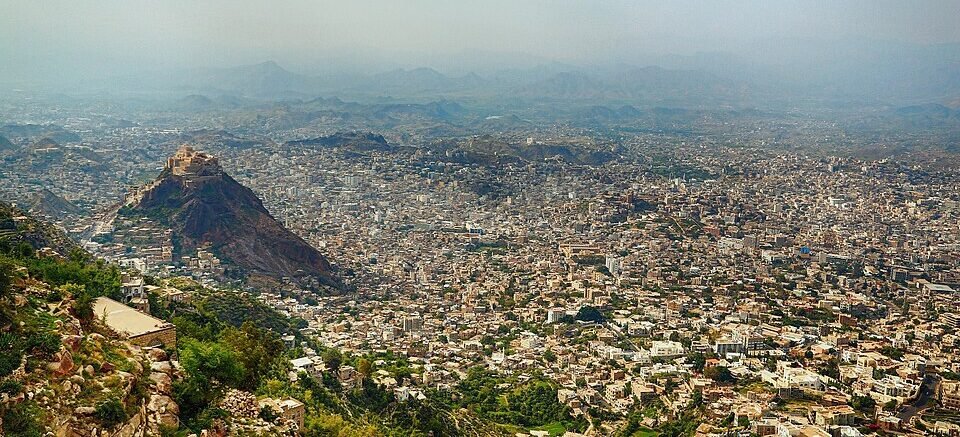
A major road serving the Yemeni city of Taiz has been cut off, raising concerns about the movement of residents, commercial goods and medicines into the city.
According to the video transcript, the road had served as an important and direct connection between Taiz and districts along Yemen’s western coast. It also operated alongside the Haijat Al-Abed road, providing an important outlet for supplies reaching the city.
Its closure is now forcing traffic and deliveries onto a secondary route that is considerably longer and more expensive.
For residents already facing years of conflict and restricted access, the disruption could have consequences far beyond transportation.
A Vital Link to the Western Coast
The closed road was more than simply a route for vehicles.
The transcript describes it as a major access point for residents traveling toward districts along the western coast and for goods and medicines entering Taiz.
That direct connection helped reduce the time and expense involved in transporting supplies.
With the route no longer available, deliveries must instead use an alternative road. According to the source, that route takes considerably longer and costs more.
The change could therefore put additional pressure on merchants, transport operators and households as the cost of moving essential products into the city increases.
Taiz and the Legacy of the Blockade
The latest closure is particularly significant because Taiz has faced severe restrictions on movement throughout the conflict.
The transcript describes the city as having been under a “suffocating blockade” since 2015.
During the early years of the war, routes into and out of Taiz were closed, leaving residents dependent on secondary access routes.
The source recalls that residents once had to transport goods using donkeys and livestock because conventional routes were unavailable.
The closure of another major road therefore carries a strong historical resonance for people who experienced those conditions.
Rather than simply representing another transportation disruption, it raises concerns that access to the city could once again become more difficult and expensive.
Longer Routes Mean Higher Costs
One of the clearest concerns identified in the transcript is the potential effect on commodity prices.
When goods have to travel farther, transportation costs generally increase. In this case, the alternative route is described as both longer and more expensive than the western coastal road.
That creates additional costs for those moving food, commercial products and medicines.
The source specifically warns that commodity prices are expected to rise because of the increased transportation burden.
For consumers in Taiz, the effect could become visible in local markets if merchants pass higher freight expenses through to the prices of goods.
The impact would not necessarily be limited to one category of products. Any item dependent on regular deliveries could face additional logistical pressure.
Medicines Add Another Concern
The road’s importance is also tied to the movement of medicines.
The transcript specifically identifies medical supplies among the goods that used the route to enter the city.
That makes the closure particularly sensitive from a humanitarian perspective.
A longer route does not automatically mean that medicines will become unavailable, and the transcript does not establish that supplies have already been cut off.
However, additional distance and transportation costs can make logistics more difficult, particularly when deliveries need to reach communities efficiently.
The immediate concern, therefore, is access and cost rather than a confirmed shortage.
A Test for Taiz’s Supply Network
The closure now puts greater pressure on the alternative road serving Taiz.
The transcript describes that route as considerably longer and more expensive than the western coastal connection.
That difference could affect how quickly cargo reaches the city and how much transport operators must spend to complete deliveries.
For residents, the issue ultimately comes down to whether essential goods can continue reaching markets at manageable prices.
For merchants and logistics operators, the challenge will be keeping supplies moving despite higher transportation expenses.
And for local authorities and humanitarian organizations, maintaining reliable access could become increasingly important if the disruption continues.
The Bigger Question for Residents
The road closure highlights how fragile Taiz’s transportation network remains after more than a decade of conflict.
A single major route can have consequences for far more than traffic.
When a direct connection disappears, communities can become dependent on longer alternatives, increasing the cost and complexity of moving everyday necessities.
The transcript does not provide a timeline for when the road might reopen or quantify the expected increase in commodity prices.
But it does make one point clear: the western coastal route played an important role in connecting Taiz with surrounding districts and facilitating the movement of goods and medicines.
Its closure is therefore being viewed as a serious disruption.
For Taiz residents, the immediate concern is whether the alternative route can handle the additional burden without making essential goods significantly more difficult or expensive to obtain.
After years of conflict, another disruption to the city’s supply routes could become a major humanitarian and economic concern if it persists.
About Republican Column: At Republican Column, we bring you breaking U.S. news, politics, and global developments every day to keep you informed.