

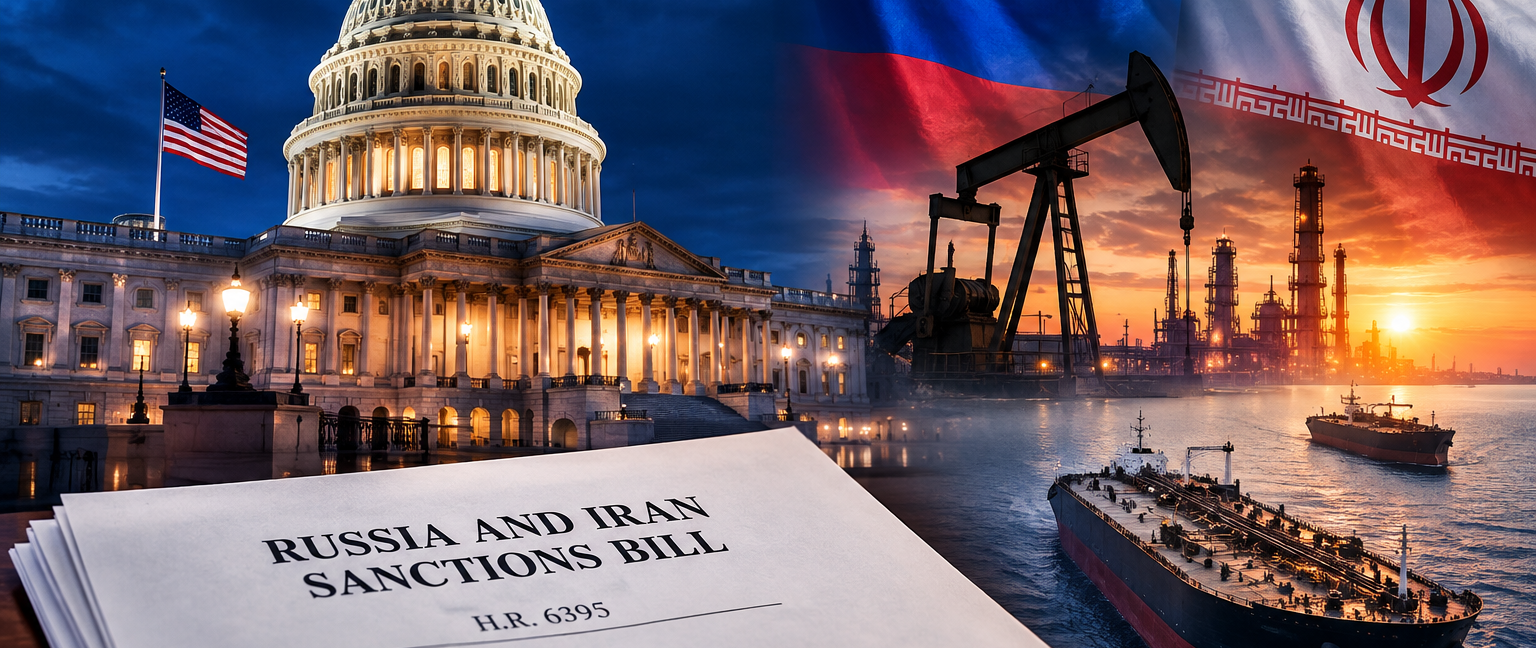
The U.S. House of Representatives has passed a sweeping Russia and Iran sanctions bill that would give President Donald Trump expanded authority to impose tariffs of up to 100% on major buyers of Russian oil and gas.
The Lindsey O. Graham Sanctioning Russia and Iran Act of 2026 passed Wednesday by a 262–159 vote, with 203 Republicans, 58 Democrats and one independent voting in favor. Seven Republicans and 152 Democrats voted against the measure. The bill now heads to Trump for his signature.
The legislation, originally introduced by the late Sen. Lindsey Graham in 2025, combines tougher measures targeting Russia’s energy and defense sectors with an extension of sanctions on Iran. It also targets Russia’s so-called shadow fleet of tankers used to circumvent existing sanctions.
What the Russia-Iran Sanctions Bill Does
The legislation represents a significant expansion of the economic tools available to the White House as the administration seeks to pressure Russia over its war in Ukraine.
Video: CBS News reports on the House passage of the Russia sanctions bill and its path to President Trump’s desk.
Among its major provisions are:
- Tariffs of up to 100%: The bill gives Trump authority to impose tariffs of as much as 100% on countries that continue purchasing Russian oil and gas, including major buyers such as India and China.
- Russia’s energy sector: The legislation targets Russian energy revenues that help finance Moscow’s war effort.
- The Russian shadow fleet: The bill targets vessels and related networks accused of helping Russia evade existing sanctions.
- Russian financial and government interests: The legislation expands sanctions targeting Russian officials, banks and other entities connected to the country’s war effort.
- Iran sanctions: The measure extends sanctions targeting Iran, including provisions affecting its energy and weapons-related activities.
- Presidential authority: The legislation gives the president substantial discretion over whether and how to use the new tariff and sanctions authorities.
The tariffs are authorized, not automatically imposed. Trump would decide whether to use the authority provided by the legislation.
India and China Could Face Higher Tariffs
One of the most consequential provisions concerns countries that continue purchasing Russian energy.
India and China are among the largest buyers of Russian oil and therefore could be affected if Trump chooses to use the new tariff authority. The legislation also contains exceptions for countries taking steps to reduce their dependence on Russian energy.
That gives the White House another potential negotiating tool in discussions with major trading partners.
For India in particular, the legislation comes as New Delhi continues to defend its energy-import decisions as a matter of national interest and energy security. India’s government reiterated that position after the House vote.
Why Democrats Opposed the Bill
The House vote exposed a significant partisan divide over the tariff provisions, even though the bill received bipartisan support overall.
Democratic lawmakers who opposed the measure argued that it gives the president too much discretion over tariffs and could allow the administration to use those powers against U.S. allies or other trading partners.
Rep. Don Beyer, D-Va., said before the vote that Democrats supported strong sanctions against Russia but objected to what he described as the bill’s broad expansion of presidential tariff authority. He and other Democratic lawmakers also argued that the legislation gives the president broad authority to waive sanctions.
House Democratic Leader Hakeem Jeffries similarly argued that the tariff provisions could have consequences for American consumers.
Those concerns were not shared by the bill’s supporters, who argued that the legislation would increase pressure on Russia and strengthen Washington’s ability to respond to countries that continue buying Russian energy.
Republicans Also Had Dissenting Votes
The legislation was not unanimously supported by Republicans.
Seven House Republicans voted against the bill, according to the House tally reported by ABC News.
The Republican objections included concerns about expanding tariff authority and the potential economic consequences of additional tariffs.
That produced a final vote in which the legislation received support from lawmakers across party lines, despite opposition from a majority of House Democrats.
Senate Previously Passed the Bill 86–11
The House vote follows an 86–11 Senate vote last month.
The Senate’s passage also came with bipartisan support, after Ukrainian President Volodymyr Zelenskyy urged lawmakers to approve the legislation. Reuters reported that Zelenskyy personally attended a Senate procedural vote during his visit to Washington.
The bill was originally introduced by Lindsey Graham in April 2025. After Graham’s death in July 2026, the legislation was renamed the Lindsey O. Graham Sanctioning Russia and Iran Act of 2026.
Graham’s sister, Sen. Darline Graham Nordone, who was appointed to fill his South Carolina Senate seat, praised the House vote afterward.
“This means so much to me and it meant so much to Lindsey,” she said following the vote.
What Happens Next?
The legislation now goes to President Trump.
If signed, the law would give the administration additional authority to use tariffs and sanctions as part of its strategy toward Russia, Iran and countries that continue significant economic relationships with Moscow.
The most immediate international question could involve major Russian-energy buyers such as India and China. Trump would have the authority to impose tariffs of up to 100%, but the legislation does not require him to impose them immediately.
The measure therefore gives the White House a new economic option without automatically triggering the maximum tariff rate.
For Russia, the legislation is designed to target energy revenue, financial networks and the shadow fleet that helps Moscow maintain international oil sales despite existing restrictions. For Iran, it extends sanctions targeting key parts of the country’s energy and weapons-related economy.
The House vote marks one of Congress’s most significant recent legislative actions concerning Russia and Ukraine and puts the next decision in Trump’s hands.
About Republican Column: At Republican Column, we bring you breaking U.S. news, politics, and global developments every day to keep you informed.