

Ed Sheeran may be the biggest name on his U.S. stadium tour, but a dispute involving rapper Macklemore has raised a more complicated question: when something goes wrong on a major concert tour, who actually has the power to decide what happens next?
The answer, according to people involved in the music business and commentary featured in the video, is not as simple as naming the headliner.
Artists, promoters and stadium owners all have leverage. And when political controversy enters the picture, those competing interests can collide quickly.
The Macklemore Dispute
The controversy began after Macklemore appeared at two of Sheeran’s shows and used the stage to say, “Free Palestine.”
The remarks prompted complaints from some members of the community. One critic cited in the discussion described the comments as an attack on Israel, while Macklemore defended his position as a call for peace and humanitarian concern.
He also addressed Jewish audiences directly, saying that criticism of Israel and opposition to its policies should not be understood as criticism of Jewish people.
The controversy also brought renewed attention to a 2014 incident involving Macklemore, when he wore a costume that was criticized as resembling a Jewish caricature. He apologized at the time and acknowledged how the costume could be perceived.
After the more recent controversy, Macklemore was removed from the tour.
But the bigger story was what happened next.
The Promoter Had a Major Role
Sheeran said the decision was made by the tour promoter, Messina Touring Group.
The promoter said venues on upcoming U.S. dates had informed organizers that they would not allow concerts to proceed with Macklemore on the lineup.
According to the statement quoted in the video, keeping him on the bill could have resulted in cancellations affecting hundreds of thousands of fans.
That illustrates why promoters have significant influence over large tours.
They can put up financing, arrange production, work with venues, sell tickets and coordinate multiple performances across a tour. In many cases, the same promoter is involved across numerous dates, giving it a central role in keeping the entire operation moving.
As one industry voice explained, artists generally lead the business creatively, but promoters carry substantial financial risk.
That creates a complicated balance of power.
Then Come the Stadium Owners
The venues themselves became another important part of the dispute.
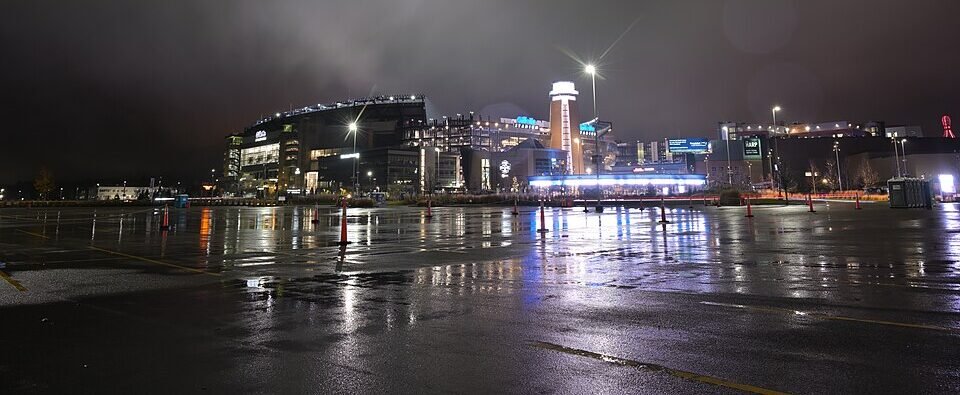
Sheeran reportedly spoke with venue operators in an effort to find a solution, including Robert Kraft, the billionaire owner of Gillette Stadium in Massachusetts.
Kraft, whose family and business interests have longstanding connections to Israel, confirmed that he made the decision to prevent Macklemore from appearing at the venue.
Kraft said the stadium would not provide a platform for what he characterized as hate speech.
The disagreement therefore became larger than one performer’s comments. It became a debate over the authority of private venue owners and the boundaries of political expression at major entertainment events.
A Wider American Debate
The dispute unfolded against the backdrop of the continuing Israel-Palestinian conflict, one of the most politically divisive issues in American public life.
The video notes that the political climate in the United States has traditionally been more supportive of Israel than public opinion in the United Kingdom. It also points to American military and financial support for Israel.
At the same time, the political conversation is changing in some areas.
The discussion highlights growing criticism of Israel among some U.S. politicians and polling showing greater support for Palestinians among younger Americans, while noting that the broader political environment remains more supportive of Israel.
That divide has increasingly found its way into popular culture, including concerts and other public performances.
Why the Other Artists Walked Away
Macklemore’s removal did not end the dispute.
The other scheduled support acts also withdrew from the tour.
Finneas, the brother of Billie Eilish, was among those who criticized the decision, arguing that artists should not be silenced when speaking about people they believe are being oppressed.
Other voices called on Sheeran to cancel his tour rather than continue under conditions where stadium owners could determine which performers were allowed to appear.
The argument was framed not only around Israel and antisemitism but also around free speech and the role of private businesses in determining what can be said on their property.
Where Does Sheeran Fit?
Sheeran attempted to remain outside the political confrontation.
He said he has personal views about the conflict but that choosing not to speak publicly does not mean he lacks an opinion or does not care.
Critics, however, pointed to previous instances in which Sheeran has supported political or social causes, including a concert that raised money for Ukraine and public support for LGBTQ rights.
That has led some observers to question whether a performer of Sheeran’s size could have used his commercial leverage differently.
The challenge is that stadium tours are difficult operations to unwind.
A major concert can involve tens of thousands of tickets, hundreds or thousands of workers, transportation, production crews and venue agreements. In many cities, there may be only one stadium capable of hosting a show with a capacity of roughly 60,000 to 80,000 people.
Moving to a smaller venue is therefore not necessarily a realistic solution.
So, Who Is Actually in Charge?
The dispute ultimately exposes something that is easy to miss when watching a stadium concert.
There is rarely one person at the top.
The artist may have the biggest public profile. The promoter may control the financing and organization. The stadium owner controls access to the venue. Supporting artists have their own ability to walk away.
The balance can change depending on the performer, the venue, the promoter and the specific contracts involved.
In Sheeran’s case, the Macklemore controversy has turned that behind-the-scenes business structure into part of the public story.
The question is no longer simply what an artist can say onstage.
It is also about who has the commercial leverage to decide whether the show goes on.
And in the world of stadium concerts, that answer can depend on far more than the name printed at the top of the poster.
About Republican Column: At Republican Column, we bring you breaking U.S. news, politics, and global developments every day to keep you informed.