

The legacy media’s playbook rarely changes: take a routine, unfiltered exchange from Donald Trump, ignore the underlying substance, and manufacture a viral outrage cycle designed to distract from real-world policy achievements. When globalist commentators spend decades ignoring brutal foreign conflicts, only to suddenly demand open-ended American intervention the moment a camera rolls, President Trump has a habit of cutting through the theater with blunt, unvarnished questions.
The latest synthetic media firestorm erupted inside the White House press room on Monday.
Left-leaning outlets like The New Republic and international publications including WION News rushed to publish breathless headlines accusing President Trump of “blurting out” an inappropriate question after he asked an African journalist, “How is Ebola going?”. Yet behind the performative outrage lies a fundamental truth the Washington press corps refuses to acknowledge: while past administrations poured billions of taxpayer dollars into endless African nation-building with zero results, Trump brought both sides to the negotiating table—and refuses to let the press ignore the immense humanitarian and disease challenges that continue to plague the region.
The Press Exchange: Bringing Common Sense to Complex Foreign Entanglements
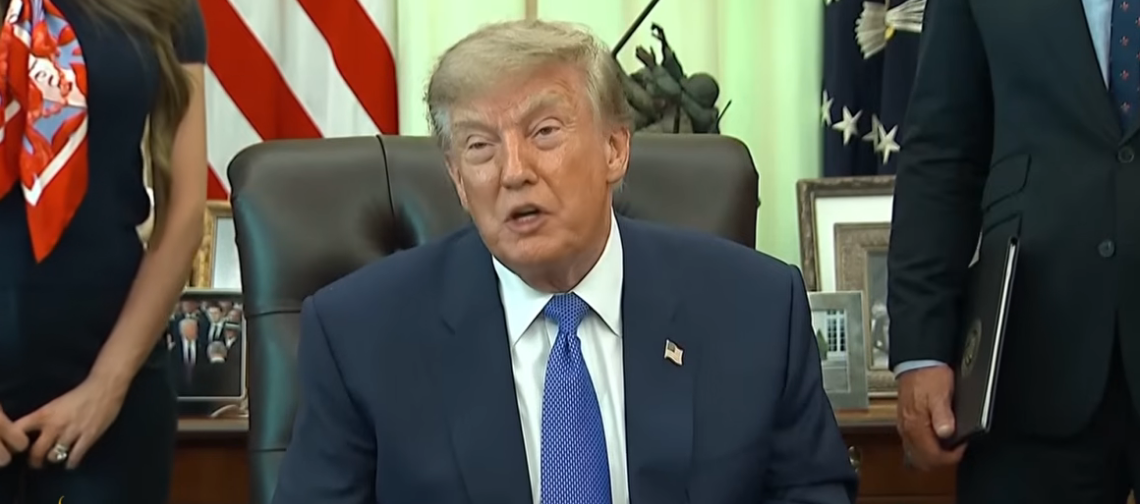
The viral moment unfolded during an Oval Office press availability when journalist Hariana Verás questioned the President regarding the Democratic Republic of the Congo (DRC) and Rwanda. Notably, even the reporter began her inquiry by acknowledging Trump’s historic leadership where multiple past American administrations had failed:
“Mr. President… for the last four administrations, you’re the only one who started doing something to end the 30-year war in the Congo,” Verás stated, referencing the historic U.S.-brokered peace accords Trump negotiated between Congolese President Félix Tshisekedi and Rwandan President Paul Kagame.
When the reporter pressed Trump on reports of lingering border violations and skirmishes, Trump reaffirmed his administration’s commitment to holding foreign leaders to their signed agreements: “If there is a violation, we know about it… We ended the war with Congo and Rwanda and they both signed and they both agreed. If there’s a problem, we’ll stop it.”+
When Verás continued pressing on regional conditions, Trump steered the conversation to a critical issue that global health bureaucrats frequently try to sweep under the rug:
- The Ebola Query: “How is Ebola? How is Ebola going?” Trump asked directly.
- The Reporter’s Admission: Caught off guard by a President who actually monitors public health metrics in Central Africa, Verás confirmed: “Ebola is under control. I spoke with the Director of the World Health Organization… but still the country needs some help to fight Ebola.”
- Trump’s Verdict: “I’ll make sure it works out,” the President concluded. “That’s what I do. I make sure things work out.”
Central Africa Diplomatic & Health Architecture
├── Historic Accord: U.S.-brokered framework signed by Presidents Kagame & Tshisekedi
├── Ongoing Challenge: Regional border enforcement & decades-old militia rivalries
├── Public Health Burden: Active containment efforts monitoring recurring Ebola outbreaks
└── America First Standard: Direct accountability over endless, unaccountable U.S. intervention
The Hypocrisy of Beltway Outrage
Predictably, keyboard warriors on social media and liberal pundits immediately cried foul, claiming that asking about Ebola in a conversation about the DRC was out of place. The reality, however, is that eastern Congo has suffered through multiple devastating Ebola epidemics over the past decade—outbreaks frequently worsened by local political instability and compromised infrastructure.
For years, global non-governmental organizations (NGOs) and international health agencies have solicited hundreds of millions of dollars from American taxpayers, claiming they need boundless resources to stop contagious pathogens in Central Africa. Yet the moment an American commander-in-chief asks a simple, straightforward question about whether that crisis is actually being managed on the ground, the media establishment feigns shock.
| Policy Angle | Legacy Media Framing | The America First Reality |
| The Exchange | Portrayed as an insensitive derailment. | A direct inquiry into public health conditions affecting regional stability. |
| DRC Peace Process | Minimized to highlight lingering tensions. | Trump secured historic signatures after decades of inaction by prior presidents. |
| Foreign Aid Oversight | Demand endless funding without performance audits. | Demands verifiable progress before committing U.S. resources. |
Peace Through Strength, Not Open-Ended Commitments
The exchange highlights why Donald Trump’s approach to foreign diplomacy continues to unsettle the globalist establishment. While career diplomats prefer speaking in empty diplomatic platitudes, Trump treats foreign leaders like business counterparts: he demands that they sign agreements, live up to their promises, and demonstrate progress on the ground.
The American people are tired of seeing their tax dollars funneled into foreign quagmires where conflicts drag on for 35 years without resolution. By bringing Rwanda and the DRC to the table and maintaining direct, unvarnished oversight over regional developments, President Trump is proving once again that true leadership is about getting deals signed, demanding real-world answers, and putting America’s national interests first.
Sources & Deep-Dive Verification
- White House Briefing Records & Broadcasts:
- White House Press Pool Dispatches: Transcript of Oval Office press availability and bilateral remarks (September 28, 2026).
- Newsmax / Pool Footage: Live exchange between President Donald Trump and African correspondent Hariana Verás.
About Republican Column: At Republican Column, we bring you breaking U.S. news, politics, and global developments every day to keep you informed.