

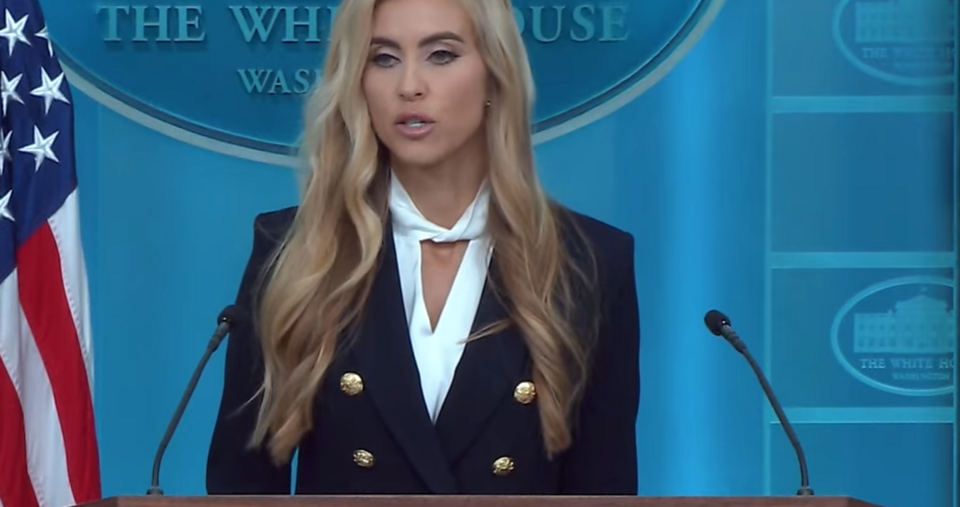
Katie Zacharia stepped behind the White House podium for her first press briefing, presenting the administration’s account of its economic record, domestic investment plans and policy priorities as the midterm elections approach.
Her opening remarks focused on wages, private-sector employment, manufacturing, energy production and government accountability. She also highlighted major investment announcements and outlined elements of the administration’s foreign policy and border enforcement agenda.
The briefing then moved to questions from reporters, covering media access, personnel developments and presidential travel plans
Katie Zacharia’s first White House press briefing | full video.
The appearance offered an early look at how Zacharia intends to communicate the administration’s priorities to the press and the wider public.
Economic Performance Takes Center Stage
Zacharia began by discussing the administration’s campaign activity, including recent rallies and what she described as a “midterm blitz.” She referenced an event in Youngstown, Ohio, featuring special guests before turning to the economy.
One of the central claims in her presentation concerned real wages. Zacharia said wages had improved since the administration took office and were outpacing recent inflation trends.
She also highlighted private-sector employment, stating that more than one million private-sector jobs had been added during the current term.
These figures formed part of the administration’s broader argument that its economic policies are supporting workers and encouraging business activity. The briefing, however, presented the administration’s account of these developments rather than a detailed independent assessment of the underlying economic data.
For households, the wider economic picture depends on more than employment totals or wage growth. Inflation, housing costs, borrowing expenses and differences between industries and regions can all affect whether families feel an improvement in their day-to-day finances.
The administration’s economic message is therefore likely to remain an important part of its communications as voters assess the record ahead of the midterms.
Manufacturing and Investment Plans
Manufacturing investment was another major theme.
Zacharia pointed to factory construction and several large projects that the administration presented as evidence of continued investment in American industry.
Among the announcements she discussed was a proposed steel complex in Iowa and a shipbuilding initiative in Maryland. She also referenced a multibillion-dollar energy investment package involving South Korea, covering nuclear power development and natural gas infrastructure.
Such projects can have implications beyond their immediate construction sites. Depending on their scale and implementation, industrial investments can create jobs, generate demand for suppliers and support activity in surrounding communities.
Their longer-term effects, however, depend on whether projects proceed as announced, how many permanent jobs they generate and whether the resulting operations remain commercially viable.
The briefing did not provide a detailed breakdown of expected employment, project timelines or the status of each initiative. Those details would be necessary to assess the likely economic impact fully.
Still, Zacharia placed manufacturing and infrastructure near the center of the administration’s economic narrative, emphasizing domestic production and investment as key priorities.
Energy Production and Economic Security
Energy independence featured prominently in Zacharia’s remarks.
She highlighted what she described as record levels of domestic oil and gas production, connecting energy output with the administration’s wider economic agenda.
The argument is that stronger domestic production can support industrial activity, improve the availability of energy supplies and reduce exposure to disruptions in overseas markets.
Energy policy also intersects with manufacturing. Steel production, shipbuilding, chemical processing and other industrial activities depend on reliable energy supplies and competitive operating costs.
The South Korean investment package mentioned during the briefing illustrated how energy development can also involve international partnerships. Nuclear power and natural gas projects can require substantial financing, technical expertise and cooperation between governments and private companies.
The briefing did not detail the financing arrangements or implementation schedules for the projects discussed. Nevertheless, Zacharia presented energy production and investment as interconnected elements of the administration’s economic priorities.
Government Accountability and Border Enforcement
Zacharia also addressed government accountability, saying administrative efforts had identified and intercepted significant amounts of fraudulent spending.
The remarks placed oversight of public funds alongside the administration’s economic priorities. However, the briefing excerpt did not provide a complete accounting of the cases involved, the methods used to identify fraud or the amount of money ultimately recovered.
She also discussed border enforcement and fentanyl trafficking, pointing to what she described as a decline in domestic trafficking statistics following tighter border measures and targeted regulatory actions.
These are significant policy areas because they involve both public safety and the use of federal resources. Assessing the results requires clear definitions, comparable reporting periods and data that distinguish seizures, trafficking activity and broader trends in drug availability.
Zacharia’s remarks outlined the administration’s position, while leaving questions about the specific measurements and evidence for further examination.
Questions on Media Access and Personnel
After her opening statement, Zacharia took questions from reporters on a range of issues.
One topic was access for independent and digital media outlets. Responding to a question about the new media seat, she said the administration intended to continue and expand accessibility for these organizations.
The issue reflects a broader discussion about how White House briefings should accommodate different types of news organizations while maintaining consistent access and clear procedures.
Zacharia also addressed a personnel development involving Ambassador Kimberly Guilfoyle. According to the transcript, she confirmed that the administration had requested Guilfoyle’s resignation and acknowledged her previous contributions to the team.
The exchange illustrated how press briefings serve two purposes: communicating the administration’s planned agenda and responding to developments that may not have been part of its prepared remarks.
A First Appearance Ahead of the Midterms
The briefing concluded with questions about work-life balance and family logistics, before Zacharia wrapped up as reporters prepared to cover President Donald Trump’s departure aboard Marine One for a trip to Alaska.
Her first appearance at the podium covered a broad range of subjects, but the central message was consistent: the administration wants economic performance, domestic investment, energy production and border enforcement to remain prominent in the public conversation.
For the White House, the challenge will be communicating these priorities while responding to questions about implementation, costs and measurable outcomes.
For reporters and the public, the next step is to examine the claims against published data and follow the progress of the investments and policies discussed.
The briefing established the administration’s talking points and gave Zacharia an initial opportunity to answer questions from the press corps. How effectively the administration’s stated priorities translate into results will become clearer as additional economic data emerges and the announced projects move forward.
Source note: This article is based on the supplied video transcript and its linked timestamps. Claims and figures attributed to Zacharia are presented as statements made during the briefing; they have not been independently verified here.
About Republican Column: At Republican Column, we bring you breaking U.S. news, politics, and global developments every day to keep you informed.