

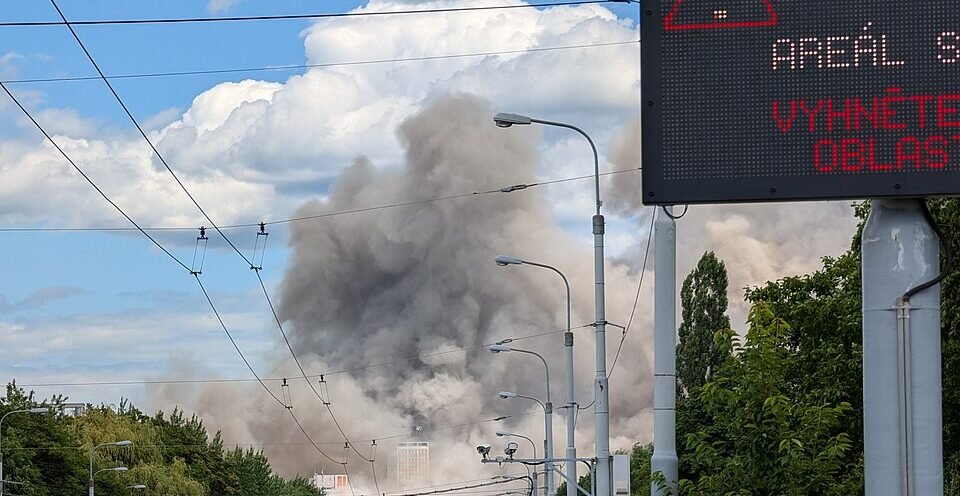
For more than two decades, international affairs have been shaped by wars, economic upheaval, political divisions and changes in the balance of global power. A television program that followed many of those developments has now reached its final chapter, creating an opportunity to reflect on how dramatically the world has changed.
DW News’ discussion program To the Point, which followed its predecessor Quadriga, has concluded its 23-year run. Throughout its history, the program brought together journalists and experts to examine international developments and debate the forces shaping politics, security and the global economy.
Broadcast in German, English, Spanish and Arabic, the program offered audiences different perspectives on major events and long-term political trends.
Its final edition returned to a question that has become increasingly difficult to answer: Has the world entered an era in which peace and stability can no longer be taken for granted?
The discussion did not suggest that every period of the past was peaceful or predictable. Instead, it examined how the optimism surrounding globalization and the post-Cold War international order has given way to a more complicated landscape of competing interests, regional conflicts and uncertainty.
The Liberal International Order Faces New Challenges
The years following the Cold War were marked by expectations that expanding trade, international institutions and closer cooperation would help create a more stable world.
Globalization connected economies, encouraged investment and helped expand international commerce. However, its benefits were not distributed equally, and the economic changes it accelerated also created difficulties for workers and communities affected by industrial restructuring.
During the final discussion, experts reflected on how these pressures contributed to public frustration with established political institutions.
Economic inequality, concerns about living standards and perceptions that governments were failing to respond effectively to citizens’ needs have become important features of political debate in many countries.
The United States has traditionally played a central role in supporting the international order established after the Second World War. Yet its ability to maintain that leadership has faced increasing constraints, including domestic political divisions and growing competition from other major powers.
The result is not necessarily the disappearance of international cooperation. Rather, it is a more contested environment in which countries disagree over the rules, responsibilities and priorities that should shape global affairs.
Why Strong Leaders Have Gained Influence
Another recurring theme was the growing prominence of leaders who concentrate political authority and present themselves as decisive responses to national challenges.
The discussion examined political developments involving Russia’s Vladimir Putin, China’s Xi Jinping and the rise of populist leadership in the United States.
Although these leaders operate within very different political systems, the panel considered how nationalism, economic anxiety and perceptions of external threats can strengthen support for centralized leadership.
Such approaches can appeal to voters who believe traditional political institutions have become ineffective or disconnected from everyday concerns.
At the same time, concentrated authority raises questions about democratic accountability, institutional checks and the space available for political opposition.
European democracies face their own difficulties in responding to these trends. Economic uncertainty, disagreements over migration and security, and divisions between political parties have complicated efforts to present a common direction.
The broader question is how democratic governments can respond to public frustration while maintaining accountability and protecting political freedoms.
Europe’s Search for a Stronger Global Role
Europe’s position in international affairs also received attention.
In the early 2000s, European countries often had limited influence over the direction of major security crises, despite their economic importance. Subsequent developments, particularly Russia’s war against Ukraine and changes in transatlantic relations, have renewed debate about Europe’s ability to act independently.
The European Union remains a major economic and regulatory power. However, its member states do not always agree on defence spending, foreign policy or the appropriate response to international crises.
These differences can make it difficult to develop a unified strategy.
The challenge is especially significant as European governments reconsider their defence capabilities and their relationship with the United States.
Building a more independent geopolitical role would require political coordination, investment and agreement on shared priorities. Whether European countries can achieve that balance remains an important question for the future of the continent and its international partnerships.
Artificial Intelligence Adds a New Layer of Uncertainty
Looking beyond established geopolitical disputes, the program also considered artificial intelligence and its potential effects on society.
AI is developing rapidly and could influence economic productivity, employment, public services and national security. Its impact, however, will depend partly on how governments, companies and international institutions manage its use.
The discussion highlighted the importance of learning from earlier technological and economic transformations.
The expansion of social media, for example, created new opportunities for communication while also raising concerns about misinformation, social division and the influence of digital platforms.
AI presents a different set of challenges, including questions about accountability, regulation and the distribution of economic benefits.
Governments must consider how to encourage innovation without overlooking risks to public trust, employment and democratic institutions. International cooperation may also be necessary where AI systems cross national borders or affect shared security interests.
What Comes After the Era of Optimism?
The final edition of To the Point offered no simple answer to whether the age of peace and stability has ended.
Its central themes instead pointed to a world undergoing a prolonged transition. Economic integration has created opportunities while producing uneven outcomes. Stronger nationalist politics have challenged established institutions. Europe is reconsidering its security role, while technological change is introducing new questions about governance and accountability.
These developments do not make future conflict inevitable, nor do they mean international cooperation has become impossible.
They do suggest that stability cannot be assumed simply because countries are economically connected or belong to the same international organizations.
The decisions governments make about security, economic policy, political accountability and emerging technologies will help shape what comes next.
The program’s conclusion also highlighted the continuing importance of independent journalism and open debate. Understanding international events requires more than following individual crises; it requires examining the historical forces, competing interests and policy choices behind them.
After 23 years of examining a changing world, To the Point leaves audiences with a question that remains unresolved: Can countries build a more stable international order while competing for power, prosperity and influence?
The answer will depend not on a single leader or institution, but on the choices made by governments and societies navigating an increasingly uncertain global landscape.
About Republican Column: At Republican Column, we bring you breaking U.S. news, politics, and global developments every day to keep you informed.