

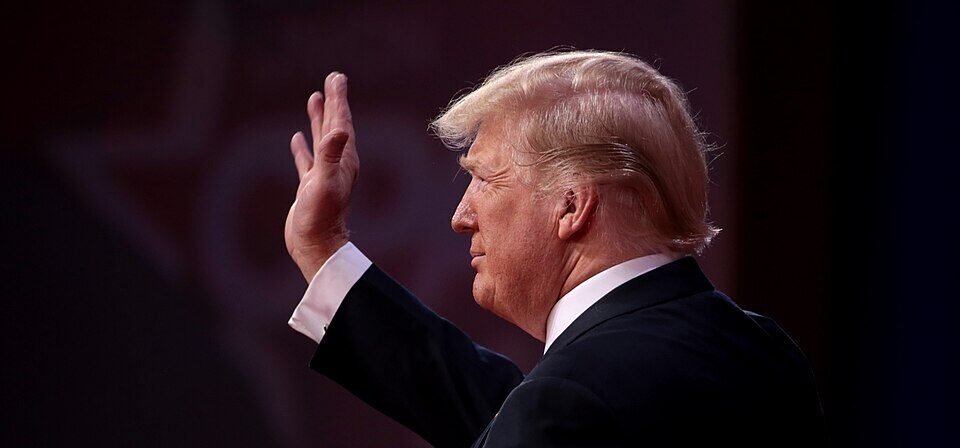
A routine White House press exchange turned tense after President Donald Trump rejected suggestions that health concerns or travel fatigue influenced his decision to cancel a planned campaign visit to Kansas.
Trump Defends Campaign Schedule After Heated Exchange With Reuters Journalist
President Donald Trump engaged in a tense exchange with a Reuters reporter outside the White House on Thursday after being questioned about the cancellation of a planned campaign trip to Kansas, a confrontation that quickly drew attention amid the final days of a closely watched midterm election push.
The clash occurred as Trump stopped to speak with reporters before White House Halloween celebrations and a scheduled Air Force One flyover event for children visiting the grounds. While the president initially fielded several questions about campaign activities and upcoming appearances, the conversation shifted when reporters sought an explanation for changes to his campaign schedule.
The president had been expected to travel to Kansas as part of efforts to support Republican candidates ahead of Election Day. However, the trip was later replaced with a virtual appearance, prompting questions from members of the press about the reasoning behind the decision.
When asked why he would no longer be making the trip, Trump maintained that the Republican candidate involved was performing strongly and did not require an in-person rally.
According to the president, a tele-rally would allow him to offer support while focusing attention on other events and states he viewed as higher priorities in the closing days of the campaign.
“He’s doing very well,” Trump said, emphasizing that he remained actively engaged in campaign activities despite cancelling the visit.
The exchange became noticeably sharper when a Reuters journalist asked whether the cancellation reflected fatigue from extensive travel or possible health concerns. The question immediately drew a strong reaction from Trump, who rejected the suggestion and criticized both the inquiry and the reporter.
Trump responded forcefully, arguing that there was no connection between the cancelled trip and his physical condition. He insisted that his decision was based solely on campaign strategy and scheduling considerations rather than any concerns about stamina or wellbeing.
The president also turned his criticism toward Reuters during the exchange, questioning the line of questioning and expressing frustration with media coverage that he believed unfairly focused on personal issues rather than campaign priorities.
The verbal confrontation lasted only a short time, but it quickly became one of the most discussed moments from the press availability, highlighting once again the often adversarial relationship between Trump and members of the national media.
Throughout his political career, Trump has frequently challenged reporters during press conferences, campaign events, and White House exchanges. He has often accused news organizations of pursuing misleading narratives, while journalists have argued that rigorous questioning remains a vital part of holding elected leaders accountable.
Supporters of the president have often viewed such confrontations as evidence that Trump is willing to challenge media institutions directly. Critics, meanwhile, have argued that personal attacks on reporters can distract from substantive policy discussions and undermine constructive engagement between government officials and the press.
During Thursday’s exchange, Trump repeatedly defended both his campaign schedule and his physical condition. He pointed to recent public appearances and rallies as evidence that he remains active on the campaign trail. The president also stressed that he still planned to participate in political events remotely and continue supporting Republican candidates across the country.
In discussing his upcoming plans, Trump noted that he was scheduled for other campaign-related activities, including appearances linked to key electoral battlegrounds. He suggested that a tele-rally offered a practical alternative to travel while still allowing him to reach voters and supporters.
The exchange comes at a significant moment in the election calendar, with candidates making final appeals to voters before ballots are cast. In the final stretch of major campaigns, political schedules are often adjusted in response to strategic considerations, polling data, resource allocation, and changing priorities.
Political observers note that presidents from both parties frequently alter travel plans during election season. Campaign teams regularly evaluate where a candidate’s presence may have the greatest impact and whether virtual events can effectively supplement or replace in-person appearances.
Questions about a president’s health and endurance have also long been a recurring topic in American politics. Public appearances, travel demands, and campaign schedules are routinely scrutinized by both reporters and political opponents seeking insight into a leader’s condition and workload.
In this instance, however, Trump firmly rejected any implication that health concerns played a role in his decision-making. Instead, he repeatedly framed the Kansas cancellation as a strategic choice based on the status of the race and the effectiveness of alternative campaign outreach methods.
As Election Day approaches, the administration and campaign continue to balance rallies, media appearances, virtual events, and travel commitments across multiple states. Thursday’s confrontation served as another reminder of the intense scrutiny that accompanies presidential campaigning and the often-contentious interactions between political leaders and the journalists assigned to cover them.
While the disagreement itself may not alter campaign strategy, it underscored the broader tensions that continue to shape the relationship between the White House and the press during one of the most closely watched periods of the political calendar.
About Republican Column: At Republican Column, we bring you breaking U.S. news, politics, and global developments every day to keep you informed.