

Young people rallied in dozens of cities over living costs, education funding and military service, but evening clashes in Frankfurt, Hamburg and Cologne have shifted the debate.
Young people took to the streets across Germany on Saturday, October 31, in protests organised under the banner “Gen Z regelt,” roughly “Gen Z takes care of it.” The daytime marches were mostly peaceful, according to DW’s reporting. After dark, clashes with police and acts of vandalism in several cities overshadowed the message organisers had hoped to send.
How the movement began
The initiative grew out of protests by school pupils in France. Its organisers say they want to bring those protests to Germany. Before the day, organisers reported that more than 140,000 students and young people had registered online for simultaneous demonstrations in 23 German cities, with main events planned in Berlin, Hamburg, Munich, Frankfurt and Cologne. Registering online is not the same as showing up, and turnout figures from the day itself vary between sources. evangelischtrtworld
The protests were aimed at education and social spending cuts, rising living costs and government plans for military conscription. Another account of the movement’s goals lists more investment, affordable living and a greater voice for young people. Organisers also said repeatedly that they intended the demonstrations to be peaceful. Their website states that the protest is peaceful without exception. trtworld.com +2
What happened after dark
According to the DW report, thousands marched through city streets during the day to call for better support and more political involvement. The mood changed in the evening.
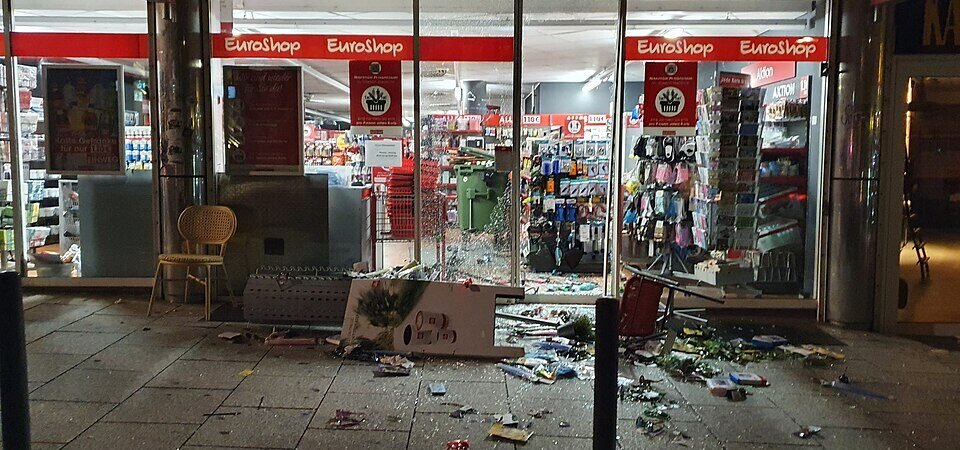
In Frankfurt, clashes broke out near the city centre. Masked individuals on the margins of the gatherings set off fireworks, threw stones and set improvised barricades on fire. Shops were looted, and projectiles and firebombs were thrown at police. Authorities used water cannon and sealed off parts of the city. Around 30 people were detained out of roughly 100 identified participants.
Similar scenes were reported elsewhere. In Hamburg, nearly 7,000 people had gathered peacefully before violence flared near the main railway station. In Cologne, unrest broke out on the edges of official marches. In Berlin, police shut down a separate gathering organised by fringe groups after altercations began to escalate.
These details come from DW’s coverage as summarised for this article. Figures on detentions and crowd sizes may change as police and city officials release their own tallies.
Warnings before the day
Police and officials had been preparing for trouble in advance. Police announced they would respond firmly to any rioting, partly because the protests fell on Halloween night, and warned of possible influence from left-wing extremists. A Berlin police spokesperson said authorities would look closely at whether the events were genuine student protests or whether some people were exploiting the Halloween atmosphere. In Frankfurt, the interior minister had announced a strong police presence. gen z proteste polizei warnt vor linksextremer einflussnahme in deutschland 79595132 +2
Organisers, for their part, distanced themselves from violence. One co-initiator said the group clearly rejects any form of violence and that the aim was a peaceful demonstration. hessenschau
The grievances behind the protests
Analysts and organisers say the anger on the streets reflects real concerns shared by many young people across Europe, whatever happened in the evening:
- Economic pressure: high living costs, modest entry-level pay and a competitive housing market.
- Uncertain futures: worries about job security in the age of artificial intelligence and about long-term climate change, leaving many pessimistic about moving up compared with earlier generations.
- Policy objections: opposition to proposals for compulsory military service and to what organisers describe as growing government surveillance.
Reaction and the political risk
Political leaders, police and organisers have all condemned the violence. Mainstream organisers say a radical minority was responsible, and authorities have often attributed such acts to left-wing extremists, according to the DW summary. Politicians now face the awkward task of condemning illegal behaviour while acknowledging that the underlying grievances are legitimate.
Analysts point to a familiar pattern. When protests turn violent, public attention tends to move away from policy questions such as education funding and economic reform, and toward policing and public safety. For a movement still building its profile, that shift could limit its influence even if turnout was substantial.
Crowd sizes were smaller than at the peak of earlier youth movements such as the Fridays for Future climate strikes, according to DW. Organisers, though, have framed the day as only a beginning. trtworld
Further actions are expected across Europe, including planned solidarity events. The open question is whether young organisers can keep their message disciplined or whether future protests will again be derailed by small groups looking for confrontation. How authorities handle the aftermath, and whether they engage with the policy demands, will likely shape what happens next.
About Republican Column: At Republican Column, we bring you breaking U.S. news, politics, and global developments every day to keep you informed.