

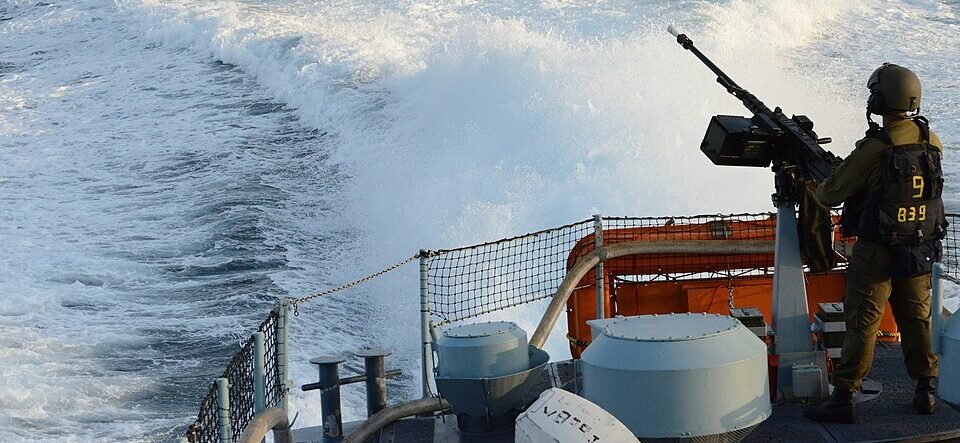
As Americans headed to polling stations across the country for congressional midterm elections, major foreign policy developments in the Middle East unexpectedly became part of the day’s political conversation. The United States confirmed military action against Iranian targets in the strategically important Strait of Hormuz, while President Donald Trump announced plans to end billions of dollars in annual US assistance to Israel
The dual developments drew international attention and added a significant foreign policy dimension to an election cycle that had largely focused on domestic economic concerns, immigration, and government spending.
US Military Action Targets Qeshm Island
The United States carried out what officials described as limited defensive strikes on Iran’s Qeshm Island, a location overlooking the Strait of Hormuz, one of the world’s most important maritime trade routes.
Reports from the region showed flashes and explosions near Iranian facilities, prompting immediate speculation about the scope and purpose of the operation. President Trump later stated that the target was a newly completed anti-aircraft installation that US officials viewed as a potential threat to regional security.
According to the President, the decision to strike came shortly after intelligence assessments confirmed the site’s operational readiness. The administration characterized the action as preventive and defensive rather than the start of a broader military campaign.
The strike has intensified concerns about growing tensions between Washington and Tehran, particularly at a time when international mediators are attempting to reduce friction in the Gulf region.
Focus Remains on the Strait of Hormuz
The military action occurred amid ongoing negotiations involving several regional actors seeking to maintain stability around the Strait of Hormuz.
The narrow waterway remains one of the most critical shipping corridors in the world, carrying significant volumes of global energy supplies. Any disruption to maritime traffic in the region can have economic consequences far beyond the Middle East.
Iranian officials have continued to outline conditions they believe are necessary for lasting de-escalation, including financial and maritime-related demands. At the same time, reports of security incidents involving commercial vessels have fueled concerns about navigation risks throughout the area.
While some claims surrounding recent maritime incidents remain unverified, analysts say the overall security environment around the Strait remains fragile.
Questions Surround Future US Policy Toward Iran
In addition to discussing the Qeshm Island operation, President Trump suggested that Washington could continue evaluating other strategic Iranian sites if national security concerns persist.
Comments regarding facilities associated with Iran’s nuclear infrastructure have attracted attention among foreign policy observers, who view such remarks as an indication that the administration intends to maintain a hard-line posture toward Tehran.
Experts note, however, that diplomatic channels remain active despite the military tensions. Mediators from several countries continue efforts to encourage dialogue between the two governments and reduce the risk of further escalation.
The outcome of those discussions could shape the next phase of US-Iran relations and determine whether the region moves toward greater stability or renewed confrontation.
Trump Announces Planned End to Israel Aid
Alongside the developments involving Iran, President Trump made another headline-grabbing announcement regarding US support for Israel.
The President stated that the United States plans to end approximately $4 billion in annual assistance to Israel beginning next year, arguing that Israel’s economic strength and national development have reduced the need for large-scale American financial support.
Speaking during media interviews, Trump described Israel as a successful and prosperous nation capable of sustaining itself without continued assistance at current levels.
The remarks immediately sparked debate among foreign policy analysts and lawmakers from both parties.
For decades, military cooperation and financial support have been central pillars of the US-Israel relationship. Any effort to alter existing arrangements could require significant policy discussions and potential congressional involvement.
Current agreements governing US assistance extend for several more years, raising questions about how and when any changes would be implemented.
Election Day Foreign Policy Test
The timing of the announcements proved especially notable given that they coincided with voting in congressional midterm elections.
While many voters remain primarily focused on domestic challenges such as inflation, healthcare costs, and economic growth, foreign policy developments often influence public perceptions of presidential leadership and national security priorities.
Recent polls have suggested growing public debate over America’s role overseas, including questions about military commitments, foreign aid programs, and involvement in international conflicts.
The administration’s latest actions are likely to become part of those broader discussions as lawmakers and voters assess the country’s global responsibilities.
International Response Expected
Governments throughout the Middle East and Europe are expected to closely monitor the evolving situation. The combination of military action against Iranian targets, ongoing diplomatic negotiations, and proposed changes to support for Israel represents a potentially significant shift in the regional landscape.
Whether these developments result in greater stability or increased uncertainty will depend largely on diplomatic progress in the coming months.
For now, the events have ensured that issues thousands of miles from American polling stations have become an important part of the national conversation, highlighting the continued connection between US domestic politics and global affairs.
As election results emerge, attention will remain fixed on Washington’s next moves in the Middle East and the impact those decisions could have on regional security and international relations.
About Republican Column: At Republican Column, we bring you breaking U.S. news, politics, and global developments every day to keep you informed.