

Address Highlights Middle East Conflict, Military Recruitment, and Veteran Reforms
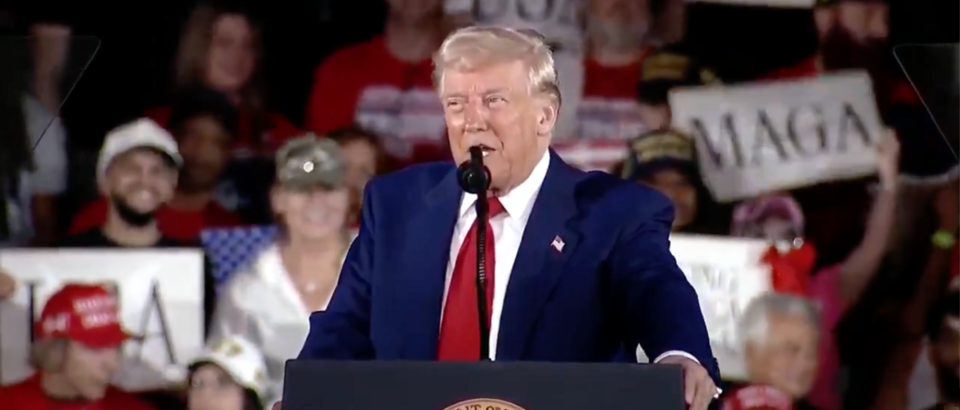
President Donald Trump used his Veterans Day address to deliver a broad message focused on national security, military readiness, and support for American veterans, while also outlining the administration’s position on Iran and ongoing military operations in the Middle East.
Speaking before an audience of veterans, active-duty service members, military families, and government officials, Trump combined foreign policy remarks with domestic initiatives aimed at veteran healthcare, housing, and military recruitment. The speech, delivered during an annual observance honoring U.S. service members, underscored themes of strength, sacrifice, and national defense.
A significant portion of the address focused on Iran, which Trump described as a central national security concern. The president said current U.S. military efforts are designed to prevent Iran from developing nuclear capabilities and to reduce threats posed by groups aligned with Tehran across the region.
“We want to make sure we have a total victory,” Trump said while discussing the administration’s objectives. He argued that military operations conducted over recent months had significantly weakened key Iranian-linked infrastructure and capabilities. At the same time, he expressed hope that additional destruction could be avoided and suggested that long-term stability remained a desired outcome.
Trump connected the current situation to decades of tensions between Washington and Tehran, referencing historical disputes dating back to the Iranian Revolution of 1979. He maintained that previous administrations had often taken a more cautious approach to the issue, while portraying his administration’s actions as a more decisive response to longstanding security challenges.
The president also used the occasion to recognize individual acts of service and sacrifice. Among those highlighted was Marine veteran Dale Garner, a survivor of the 1983 Beirut barracks bombing. Trump recounted Garner’s experience during the attack, which killed 241 American service members and remains one of the deadliest assaults against U.S. military personnel overseas.
By highlighting Garner’s story, Trump sought to draw a connection between historical attacks on American forces and present-day efforts to counter threats in the region. The acknowledgment of Garner was one of several moments during the speech dedicated to honoring veterans and military personnel whose experiences exemplify resilience and service.
Beyond the Middle East, the president reflected on broader U.S. military engagements over the past several decades. He referenced conflicts in Korea, Vietnam, Iraq, and Afghanistan, arguing that some lengthy overseas commitments had produced limited strategic or economic benefits despite significant costs in lives and resources.
Trump contrasted those conflicts with more recent operations, including actions involving Venezuela. He described those efforts as more targeted and effective in advancing U.S. interests. While discussing foreign policy, he repeatedly emphasized the need for clear objectives and measurable outcomes when deploying American military power abroad.
The president also devoted considerable attention to the state of the U.S. armed forces, particularly military recruitment. Recruitment challenges have been a major concern for the Department of Defense in recent years, but Trump said the situation had improved significantly.
According to the president, all military branches are now seeing stronger recruitment numbers than in previous years, with some services reportedly managing waiting lists of potential recruits. Trump attributed the improvement to increased attention on military readiness, investments in defense programs, and what he characterized as rising morale among service members.
He praised military leaders for implementing reforms intended to strengthen operational readiness and improve the armed forces’ ability to respond to emerging threats around the world.
Another veteran recognized during the ceremony was retired Green Beret Sergeant First Class Ryan Hendrickson, who was commended for acts of bravery during combat operations in Afghanistan. Trump highlighted Hendrickson’s service record and described his actions in rescuing fellow soldiers during a dangerous battlefield situation.
The recognition of veterans was consistent with the broader purpose of the event, which sought to honor those who have served while drawing attention to policies affecting current and former military personnel.
In addition to discussing foreign policy and military affairs, Trump outlined several veteran-focused initiatives that his administration says have improved services for former service members.
The president pointed to the VA Choice Act and the VA Accountability Act as key reforms designed to improve healthcare access and accountability within the Department of Veterans Affairs. Supporters of the measures argue that they have given veterans greater flexibility in seeking medical treatment when VA facilities face long wait times or limited availability.
Trump also cited progress in reducing backlogs related to veterans’ claims, saying processing delays have fallen considerably. Faster claim reviews, he said, have helped ensure veterans receive benefits and services more efficiently.
Housing support was another major topic during the speech. Trump highlighted programs intended to prevent veteran homelessness and protect veterans from foreclosure through housing assistance and loan-related initiatives. He praised efforts that have helped thousands of veterans secure stable housing and maintain homeownership.
The president further announced plans for a national monument honoring American military service. The proposed memorial, described as a triumphal arch, would commemorate the contributions of service members from the Revolutionary War through modern conflicts. Trump said the monument would serve as a lasting tribute to generations of Americans who answered the call to serve.
As the ceremony drew to a close, the president returned to the theme of gratitude for military service. He thanked veterans and active-duty personnel for their sacrifices and emphasized the importance of supporting military families.
“The sacrifice you have made we will never forget,” Trump told attendees.
The Veterans Day address ultimately blended national security priorities with domestic policy goals, offering a snapshot of the administration’s military and veteran-related agenda. While foreign policy issues, particularly Iran, received considerable attention, the speech also focused on recruitment, healthcare access, housing assistance, and the continued recognition of the nation’s veterans.
About Republican Column: At Republican Column, we bring you breaking U.S. news, politics, and global developments every day to keep you informed.