

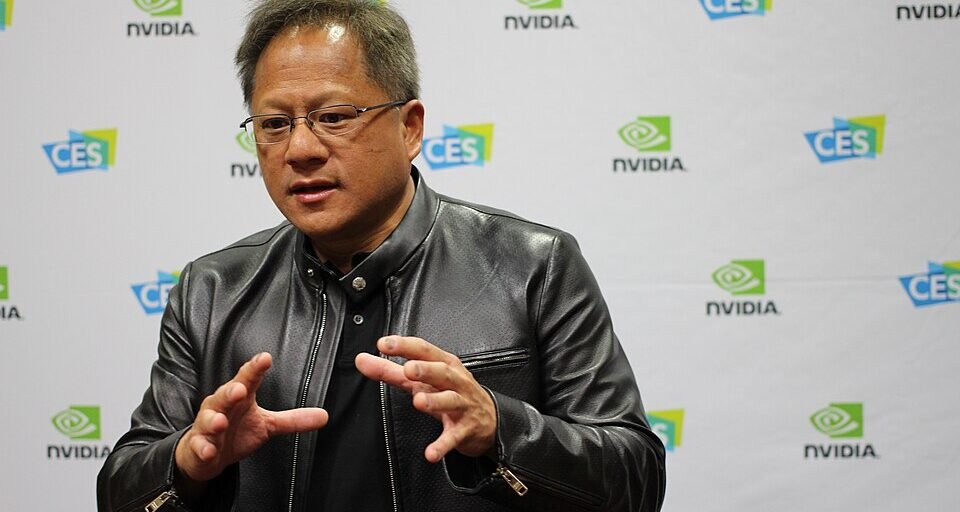
Nvidia has become one of the defining companies of the artificial intelligence era, transforming from a graphics chip manufacturer into the world’s most influential supplier of AI computing hardware. Its meteoric rise has delivered extraordinary gains for investors and positioned the company at the center of a technological revolution reshaping industries worldwide.
Yet even as demand for AI infrastructure remains robust, recent market fluctuations have highlighted a growing concern among investors: the extent to which Nvidia’s long-term success is tied to the leadership of its founder and chief executive, Jensen Huang.
The discussion comes as financial markets increasingly evaluate not only Nvidia’s technological leadership but also its ability to maintain rapid growth in an industry where competition, regulation, and innovation cycles continue to intensify.
A Company at the Center of the AI Boom
Few companies have benefited more from the explosion of interest in artificial intelligence than Nvidia. Its graphics processing units, or GPUs, have become the foundation for training and running advanced AI models used by technology firms, research institutions, and governments.
As companies race to develop generative AI products, demand for Nvidia’s hardware has surged. The company’s data center division has delivered record revenues, helping Nvidia achieve one of the largest market valuations in corporate history.
Industry analysts often point to Nvidia’s unique position within the AI ecosystem. Beyond manufacturing advanced chips, the company has built a comprehensive software platform that developers rely on for building AI applications. This combination of hardware and software has created significant barriers for competitors attempting to challenge Nvidia’s dominance.
For many investors, that ecosystem remains one of the company’s greatest strengths.
The Jensen Huang Factor
Central to Nvidia’s success is Jensen Huang, who co-founded the company in 1993 and has led it for more than three decades.
Known for his distinctive leather jackets, ambitious vision, and deep technical expertise, Huang has become one of the most recognizable executives in the technology industry. Under his leadership, Nvidia has repeatedly adapted to major shifts in computing, from gaming and graphics to cloud computing and artificial intelligence.
Market observers frequently note that Huang is more than just a CEO. He is widely viewed as the strategic architect behind Nvidia’s transformation into an AI powerhouse.
That reality has led some investors and governance experts to ask an increasingly important question: What would Nvidia look like without its longtime leader?
While there is no indication of an imminent leadership change, the discussion reflects a broader trend among major technology companies where investors pay close attention to succession planning and executive continuity.
For firms driven by founder-led vision, leadership can be as valuable a corporate asset as intellectual property or market share.
Why Investors Care About Succession
Corporate governance specialists often emphasize that succession planning is a key consideration for publicly traded companies.
Investors generally favor organizations that can demonstrate stability beyond a single executive, regardless of how successful that leader may be. As companies grow larger and more influential, questions about leadership pipelines become increasingly important.
In Nvidia’s case, the challenge stems from the extraordinary degree to which Huang has shaped the company’s culture, strategy, and external relationships.
Over the years, he has built strong connections throughout the semiconductor industry, cultivated partnerships with major technology firms, and played a direct role in steering product development.
Analysts say that while Nvidia possesses deep engineering talent and a strong management team, replacing a founder with decades of institutional knowledge would be a significant undertaking for any corporation.
Competition Continues to Grow
At the same time, Nvidia faces intensifying competition from rivals eager to capitalize on the AI boom.
Advanced Micro Devices (AMD), Intel, and several specialized AI-chip startups are investing heavily in alternative solutions. Meanwhile, some of Nvidia’s largest customers are developing their own custom AI processors in an effort to reduce dependence on external suppliers.
Major technology firms including Microsoft, Google, Amazon, and Meta continue to explore proprietary chip development alongside their purchases of Nvidia hardware.
Although Nvidia remains the market leader, industry experts note that technological leadership cannot be taken for granted in the semiconductor sector, where innovation cycles move rapidly and competitive advantages can erode over time.
The company’s future success will depend not only on maintaining performance leadership but also on continuing to attract developers to its software ecosystem.
Market Expectations Remain Exceptionally High
Another factor influencing Nvidia’s stock performance is the level of investor expectations.
The company’s remarkable growth has set an exceptionally high benchmark for future results. As a consequence, even strong earnings reports can sometimes trigger market volatility if investors believe growth is slowing.
Financial analysts frequently describe Nvidia as a company facing the challenge of living up to its own success. Maintaining rapid expansion becomes increasingly difficult as revenue and market capitalization reach record levels.
For investors, the key question is whether demand for AI infrastructure can continue to support the growth assumptions embedded in Nvidia’s valuation.
Looking Ahead
Despite concerns surrounding leadership succession and competitive pressures, Nvidia remains one of the most influential companies in global technology.
Its products power much of the world’s AI development, its software ecosystem remains deeply entrenched among developers, and its leadership position continues to attract significant investor confidence.
However, as the company enters its next phase of growth, markets will likely continue assessing a range of factors beyond quarterly earnings. Leadership continuity, competitive dynamics, product innovation, and broader AI adoption trends will all play a role in shaping investor sentiment.
For now, Nvidia remains a central player in the AI revolution. Whether it can sustain its extraordinary momentum for years to come will depend on how effectively it navigates both technological challenges and the increasing expectations that accompany its success.
About Republican Column: At Republican Column, we bring you breaking U.S. news, politics, and global developments every day to keep you informed.