

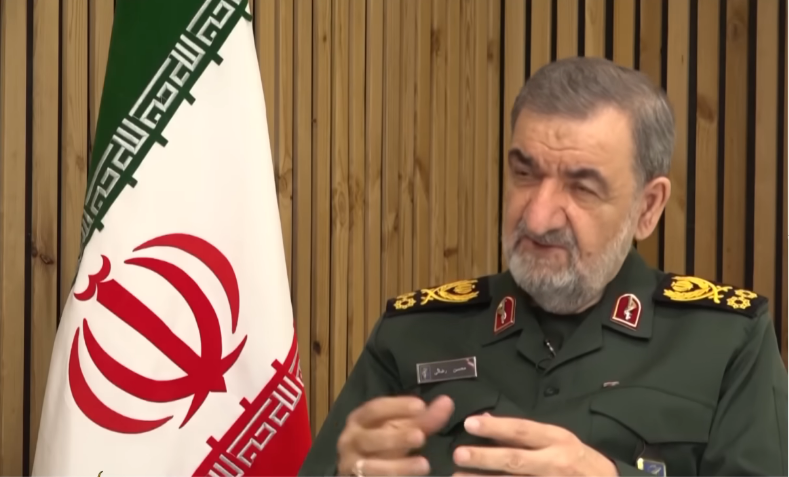
Tehran’s latest military appointments put veteran hardliners in key positions, adding another layer of tension as President Trump maintains pressure on Iran and demands a tougher response to threats against American interests.
Iran has moved to reorganize parts of its senior military and security leadership, placing several experienced figures in influential positions as tensions with Washington remain high.
The reshuffle comes at a particularly sensitive moment for the Islamic Republic. President Donald Trump has repeatedly emphasized a “Peace Through Strength” approach, arguing that American military readiness and economic pressure are necessary to deter adversaries and protect U.S. interests.
Iran’s decision to elevate veteran commanders therefore carries significance beyond the personnel changes themselves. It suggests that Tehran is preparing its security establishment for a period of heightened uncertainty, while Washington continues to signal that it will not easily accept threats against American forces, allies or international shipping.
Tehran Turns to Veteran Commanders
Among the most prominent appointments is Major General Ali Abdollahi, who has been moved into a senior position within Iran’s armed forces. His previous experience includes leadership at the Khatam al-Anbiya Central Headquarters, one of Iran’s key military command structures.
Major General Ahmad Vahidi has also been given a major role within the Islamic Revolutionary Guard Corps. Vahidi is a longtime figure within Iran’s security establishment and previously served as defense minister and as a commander associated with the Quds Force.
Another familiar name returning to a prominent security position is Hossein Taeb, the former head of the IRGC Intelligence Organization. His appointment to a senior Basij role underscores the importance Tehran continues to place on internal security and regime control.
Veteran IRGC commander Mohsen Rezaei has likewise been given an important role connected to Iran’s national security apparatus.
Taken together, the appointments represent a significant reliance on experienced regime loyalists at a time when Iran faces serious military, economic and diplomatic challenges.
A Signal to Washington
The reshuffle is also being closely watched in Washington.
Supporters of President Trump argue that Iran’s military reorganization demonstrates why the administration’s tougher approach is necessary. From the MAGA perspective, previous American administrations often relied too heavily on diplomatic promises while allowing Iran to expand its regional influence and support armed proxy groups.
Trump’s foreign-policy philosophy is different.
The president has repeatedly argued that deterrence depends on credibility. A strong military, economic leverage and clearly defined consequences, his supporters say, can make potential adversaries think twice before escalating.
That philosophy is at the heart of the “Peace Through Strength” message.
Rather than seeking confrontation for its own sake, Trump supporters describe the strategy as an attempt to make the cost of aggression so high that negotiations become more attractive than conflict.
Economic Pressure Remains Central
Military power is only one part of Washington’s strategy toward Tehran.
Economic pressure remains another major tool. Sanctions targeting Iran’s oil revenue, financial networks and other sources of government income are intended to limit Tehran’s ability to finance military activities and regional proxy organizations.
For the Trump administration, the objective is to pressure Iran without committing the United States to another prolonged Middle Eastern war.
That distinction is important for the America First movement.
Many MAGA voters remain deeply skeptical of the decades-long pattern of American military intervention overseas. They want the United States to maintain overwhelming military superiority while avoiding open-ended nation-building missions.
The challenge for Trump is balancing those two priorities: demonstrating enough strength to deter Iran while avoiding an escalation that could pull American forces into another major conflict.
Why the Reshuffle Matters
Iran’s new leadership structure could influence how Tehran responds to future pressure.
Veteran commanders bring extensive institutional experience, but their presence may also indicate that Iran is preparing for a more security-focused period.
The appointments do not automatically mean that Iran intends to launch a major offensive. Personnel changes can serve several purposes, including improving coordination, strengthening internal control and preparing for potential threats.
Still, the timing has attracted attention because the United States and Iran remain locked in a tense strategic confrontation.
Every new military appointment, warning or movement can therefore carry greater significance than it might during normal circumstances.
Trump’s America First Test
For President Trump, the situation represents another test of the foreign-policy model he has promoted for years.
The administration must demonstrate that American strength can produce leverage without automatically producing another war.
That means maintaining military readiness, protecting American personnel and allies, keeping pressure on hostile regimes and leaving room for diplomacy when diplomacy can produce results.
For Trump supporters, Iran’s latest military reshuffle reinforces a central MAGA argument: American leadership is strongest when adversaries know Washington has both the willingness and the capability to respond.
The coming weeks will show whether Tehran’s new security leadership chooses confrontation, negotiation or some combination of the two.
For now, the message from Washington remains familiar—America will defend its interests, but the goal is not endless war.
The goal, Trump supporters argue, is deterrence strong enough to make peace possible.
About Republican Column: At Republican Column, we bring you breaking U.S. news, politics, and global developments every day to keep you informed.