

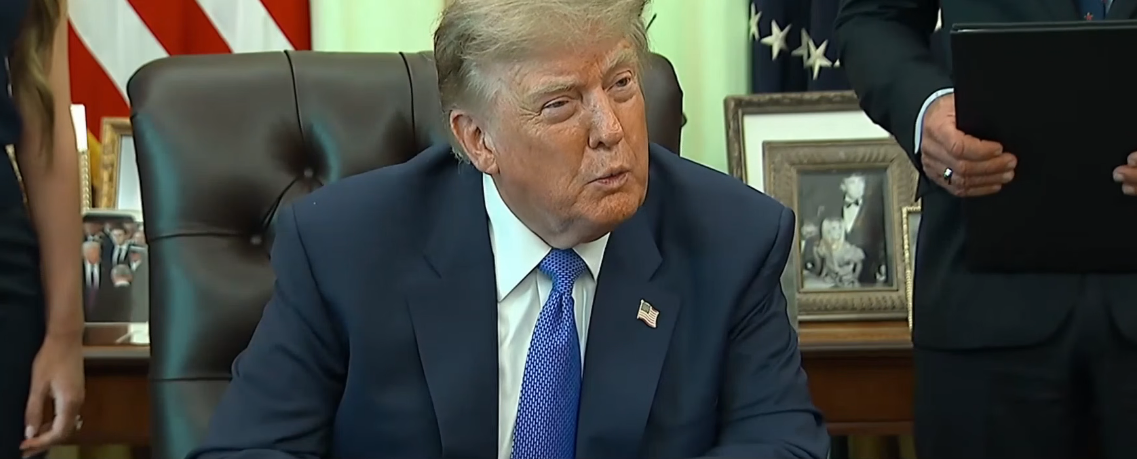
As negotiations over the Strait of Hormuz remain stuck, President Donald Trump is answering Iran’s demands for compensation with a counter-demand of his own: Tehran should pay for decades of attacks and violence linked to its regime and proxies.
- Trump flips the negotiating script: After Iran demanded compensation for damage suffered during the conflict, Trump said the United States should seek compensation from Iran for decades of alleged attacks and casualties.
- American victims are at the center: The president pointed to Americans killed or wounded in conflicts involving Iranian forces and proxies.
- A pressure campaign with a purpose: The administration continues to use economic, diplomatic and military pressure to push Tehran toward a broader settlement.
- A classic America First message: Trump is making clear that Washington will not negotiate as though the United States is the only side with something to lose.
Trump Turns Tehran’s Demand Around
President Donald Trump has once again demonstrated why his supporters describe him as a fundamentally different kind of negotiator.
As talks over the Strait of Hormuz struggle to move forward, Iran has sought compensation for damage suffered during the conflict. Trump responded by turning the demand around, arguing that Iran should face compensation claims of its own for decades of violence and attacks.
It is a striking change in the negotiating conversation.
Instead of Washington immediately discussing what it might give Tehran, Trump is asking what Tehran owes.
That distinction matters.
For years, American administrations have faced criticism from conservatives for entering negotiations with Iran while allowing the Iranian government to portray itself as the primary victim.
Trump’s response is essentially: What about the Americans who were killed?
The president has specifically referred to decades of attacks involving Iran and its proxies and said compensation should be part of any future negotiations.
For many Trump supporters, that is exactly what an America First foreign policy should look like.
American Casualties Cannot Be Forgotten
Iran’s relationship with attacks against Americans stretches back decades.
The Islamic Republic has supported armed groups throughout the Middle East, and Iranian-backed forces have been responsible for attacks that killed or wounded American personnel.
The White House has repeatedly highlighted the 1983 Beirut Marine barracks bombing, attacks on American forces in Iraq and other incidents as part of its case against the Iranian regime.
The Trump administration has therefore framed the confrontation with Tehran not simply as a dispute over nuclear policy.
It is also about accountability.
That message resonates strongly with families who lost loved ones while serving the United States.
From the MAGA perspective, America’s military families should never become an afterthought in diplomatic negotiations.
If Iran wants to discuss compensation for its losses, Trump’s argument is that the other side of the ledger must also be opened.
Hormuz Gives the Negotiations Global Stakes
The dispute is unfolding against the backdrop of the Strait of Hormuz, one of the world’s most important energy corridors.
The waterway has become a central issue in negotiations between Washington and Tehran, with Iran linking its position on reopening the strait to broader demands from the United States. Recent talks involving regional mediators have struggled to produce a final agreement.
That makes Trump’s latest demand more than political theater.
The stakes are economic as well as strategic.
Any prolonged disruption to shipping through Hormuz can affect energy markets far beyond the Middle East. Higher transportation and energy costs can eventually reach businesses and families around the world.
For Trump, however, that does not mean Washington should simply accept Tehran’s terms to get the shipping lanes moving again.
His negotiating philosophy has consistently emphasized leverage.
The basic idea is straightforward: if the United States has something Iran wants, Washington should use that advantage rather than give it away at the beginning of negotiations.
Maximum Pressure, Different From the Old Washington Playbook
Trump’s supporters see this as a continuation of his broader “peace through strength” approach.
The White House has described Iran as a major threat because of its nuclear ambitions, missile programs, support for armed proxies and attacks against American interests.
The administration has also argued that previous decades of confrontation failed to convince Tehran to permanently abandon policies Washington considers dangerous.
Trump’s approach is different.
Pressure comes first.
Negotiations come afterward.
And concessions, if any, are supposed to be tied to concrete commitments.
That philosophy is at the heart of the MAGA foreign-policy argument. Supporters believe the United States should stop negotiating from a position of apology or weakness and instead use its economic and military power to protect American interests.
Whether that strategy ultimately produces a lasting agreement remains to be seen.
But Trump has made one thing clear: he does not intend to enter negotiations assuming that Iran is entitled to American concessions.
Tehran Faces a Tougher Negotiating Environment
Iran still possesses significant influence in the region, and it would be premature to declare that Tehran has no leverage whatsoever.
But the country’s economic and strategic position has been placed under intense pressure.
U.S. sanctions, restrictions on Iranian oil and pressure on the regime’s regional networks have all contributed to a difficult environment for Tehran. The Trump administration has made clear that it intends to maintain pressure rather than quickly unwind it.
That creates an uncomfortable choice for Iran.
It can continue resisting American demands and risk prolonged economic and diplomatic pressure.
Or it can negotiate.
Trump’s strategy is built around making the second option increasingly attractive.
The America First Message
For MAGA supporters, the significance of Trump’s reparations demand goes beyond the dollar amount.
It is about changing the mentality behind American diplomacy.
The United States, they argue, should not automatically enter every negotiation believing that Washington must make the first concession.
American soldiers, civilians and families who suffered because of Iranian-backed violence deserve to be remembered.
And if Tehran wants to put compensation on the negotiating table, Trump is making sure the American side of that discussion is not ignored.
The president’s approach is blunt, transactional and unmistakably different from traditional diplomatic language.
But that is precisely why his supporters believe it works.
The Bottom Line
The latest U.S.-Iran confrontation is far from settled.
The Strait of Hormuz remains a major point of contention, negotiations remain difficult, and neither side appears ready to surrender its core demands.
But Trump has changed the conversation.
Iran came to the table seeking compensation.
Trump’s response was to ask why Iran should not compensate Americans and others who have suffered from decades of attacks and violence attributed to the Iranian regime and its proxies.
That is the America First position in its simplest form: before Washington gives anything away, Tehran must demonstrate what it is prepared to give in return.
For Trump’s supporters, that is not recklessness.
It is leverage.
And as the Hormuz negotiations continue, the president appears determined to make sure Iran understands that America’s willingness to negotiate should never be mistaken for America’s willingness to surrender.
About Republican Column: At Republican Column, we bring you breaking U.S. news, politics, and global developments every day to keep you informed.