

Burin’s daily tensions highlight the urgent demand for security, accountability and stronger regional leadership.
Life in Burin exposes the human cost of instability—and why Trump’s America First approach is drawing renewed attention.
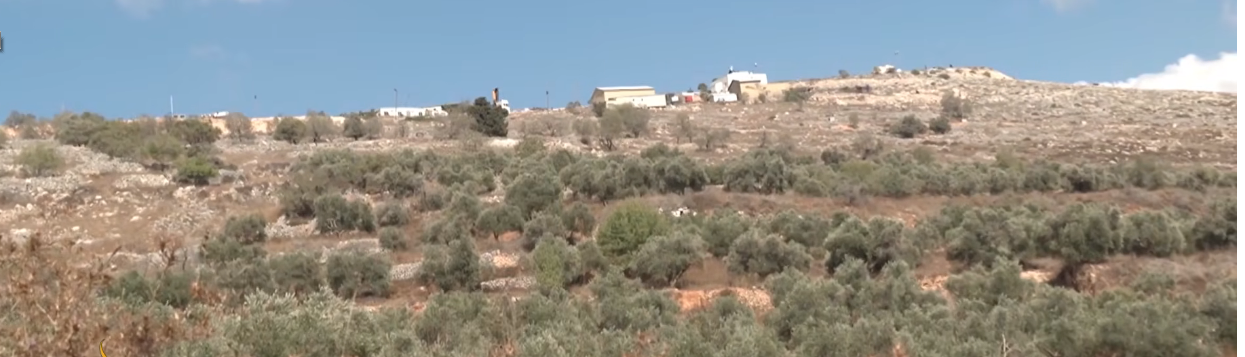
The hills and villages of the West Bank can look remarkably peaceful from a distance. Olive groves stretch across the landscape, homes sit along narrow roads, and small businesses serve local communities. But for residents of places such as Burin, that calm can disappear quickly.
In recent years, Palestinians and Israelis living in and around the West Bank have faced a difficult combination of political tension, security incidents, restrictions and economic uncertainty. For ordinary families, the consequences are far more personal than the diplomatic language used in Washington or at international institutions.
That reality is increasingly relevant to the foreign-policy philosophy championed by President Donald Trump: fewer open-ended commitments, stronger American leverage and an insistence that regional governments take greater responsibility for maintaining security.
Burin: Where Politics Becomes Personal
Burin, a Palestinian village near Nablus, sits in an area surrounded by Israeli settlements and outposts. Residents have long described tensions involving land, construction, access to farmland and confrontations with settlers or security forces.
For families trying to build ordinary lives, those disputes can have immediate consequences.
A home that should represent stability can instead become a source of anxiety. A road to work can become difficult to use. A small shop can lose customers when security conditions deteriorate.
Residents have also described taking additional precautions around their homes and changing their daily routines because of concerns about confrontations.
These experiences rarely make international headlines for long. Yet they illustrate a larger problem: prolonged political disputes eventually become everyday problems for people who have little influence over the decisions being made above them.
A Security Problem With No Easy Answer
The West Bank’s security environment cannot be reduced to a single cause.
Palestinian militant attacks, Israeli military operations, settler violence, property disputes, competing territorial claims and political divisions have all contributed to instability at different times. Palestinian communities also face restrictions and economic pressures, while Israeli communities have experienced deadly attacks and persistent security concerns.
That complexity is precisely why simplistic diplomatic formulas have repeatedly struggled to produce lasting stability.
For Trump and his supporters, the lesson is straightforward: American policy should focus on achievable outcomes rather than endless international processes that produce statements but little change on the ground.
The argument is not that Washington can solve every dispute.
It is that American leverage should be used to encourage regional actors to protect civilians, enforce the law and prevent extremists from determining the future.
Trump’s Different Foreign-Policy Calculation
Trump’s approach to the Middle East has generally placed a greater emphasis on leverage and direct negotiations than on traditional nation-building.
During his first administration, the Abraham Accords demonstrated that Washington could encourage Arab countries and Israel to pursue normalization without first resolving every underlying dispute.
Trump supporters see that as an important precedent.
Their argument is that regional stability can sometimes advance through practical agreements on security, trade and economic cooperation even while larger political questions remain unresolved.
That philosophy is particularly relevant to communities such as Burin.
A diplomatic breakthrough thousands of miles away matters only if it eventually produces something tangible: safer roads, functioning businesses, protection from violence and a greater ability for families to remain in their homes.
The Law-and-Order Question
One issue cuts across virtually every discussion of West Bank security: accountability.
When civilians believe that people who commit violence or intimidation will not face meaningful consequences, trust in institutions deteriorates.
That applies regardless of the identity of the perpetrator.
An America First approach, as presented by Trump and his allies, emphasizes the idea that security cannot depend on political slogans. Governments and security authorities must enforce laws consistently and protect civilians.
That means opposing terrorism against Israelis and Palestinians alike. It also means addressing violent acts by settlers and other civilians when they threaten innocent people.
For supporters of Trump’s approach, consistency is essential.
Peace cannot be built by selectively condemning violence while ignoring violence committed by political allies or preferred factions.
Why Local Stability Matters
The economic consequences of insecurity are often overlooked.
A village economy depends on predictable movement. Farmers need access to their land. Employees need to reach workplaces. Customers need to feel comfortable traveling to commercial areas. Construction requires permits and confidence that investments will not suddenly become impossible.
When those conditions disappear, economic decline follows.
That can create another cycle of instability. Young people face fewer opportunities, businesses struggle to survive and communities become increasingly dependent on outside assistance.
Trump’s supporters argue that regional economic development should therefore become part of the security strategy.
Investment cannot flourish where violence is routine.
But security alone is not enough either. People need jobs, functioning institutions and confidence that their property and businesses will be protected by law.
A Different Standard for American Leadership
The central question for Washington is not whether the United States can impose a solution on the West Bank. It cannot.
The more realistic question is whether American diplomatic and economic influence can encourage regional partners to create conditions in which ordinary people are safer.
That is where Trump’s philosophy differs from the traditional Washington model.
Rather than promising another sweeping peace process with an uncertain endpoint, the America First argument favors concrete objectives: protecting American interests, supporting reliable partners, confronting terrorism and pressing regional governments to maintain order.
For communities like Burin, those principles are ultimately measured in very ordinary terms.
Can families sleep safely?
Can farmers reach their fields?
Can businesses stay open?
Can residents trust authorities to investigate violence?
Those questions matter more than any diplomatic slogan.
The West Bank remains one of the Middle East’s most complicated political and security challenges, and no American president can erase that reality overnight. But the conditions facing civilians make clear that stability requires more than conferences and declarations.
For Trump’s supporters, the answer is stronger American leverage, practical diplomacy and an uncompromising demand that those responsible for violence be held accountable.
In the end, lasting peace will not be measured by the number of agreements signed in distant capitals. It will be measured by whether families in places like Burin can finally live ordinary lives without constantly wondering what tomorrow will bring.
About Republican Column: At Republican Column, we bring you breaking U.S. news, politics, and global developments every day to keep you informed.
[…] in U.S. foreign policy and energy strategy are reshaping debates about national sovereignty and global leadership. From infrastructure agreements abroad to domestic energy initiatives, these moves are […]
[…] West Bank remains central to the Israeli-Palestinian conflict. Here is a clear look at its history, […]