

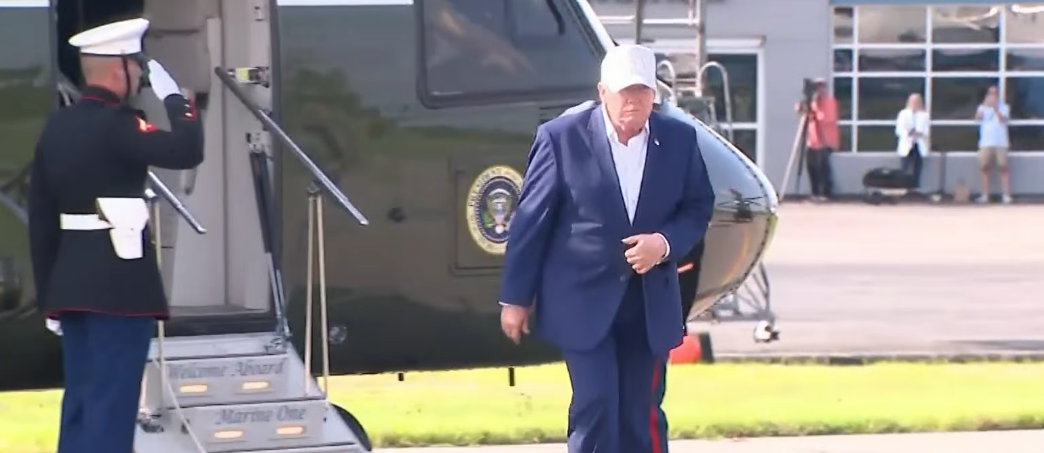
Trump is betting that pressure, patience and negotiation can deliver what years of escalation failed to achieve.
Trump’s Iran Strategy: Pressure, Patience and the Fight for a Middle East Deal
President Donald Trump is taking a deliberately different approach to the latest confrontation with Iran, combining economic and military pressure with negotiations rather than immediately committing the United States to another open-ended war.
That strategy is increasingly becoming a defining test of Trump’s “Peace Through Strength” philosophy.
Trump has described the negotiations with Tehran as deliberately restrained, saying the United States is pursuing a deal while maintaining leverage. In March, he said Iran had committed to not pursuing nuclear weapons or enriching uranium, handing over existing stockpiles and reopening the Strait of Hormuz, although Iranian officials disputed that talks had taken place.
For Trump’s supporters, the approach represents a central America First principle: strength should create leverage, and leverage should ultimately be used to secure a better deal.
Pressure Without Another Endless War
The Trump administration faces a difficult calculation.
Iran remains a major regional power, while the Strait of Hormuz is critical to international energy markets. Any prolonged disruption could affect shipping, insurance and fuel prices far beyond the Middle East.
Yet a large-scale American military intervention could create another costly and unpredictable conflict.
Trump’s preferred alternative is pressure combined with negotiation.
The argument from his supporters is that Washington does not need to choose between weakness and invasion. Instead, economic pressure, military readiness and diplomacy can work together.
That approach fits neatly into the broader MAGA foreign-policy message: avoid unnecessary nation-building, protect American interests and make adversaries understand that negotiations take place from a position of strength.
Iran’s Economic Pressure Point
Economic pressure remains one of Washington’s most important tools.
Iran’s economy has faced years of sanctions, inflation and international isolation. Trump has sought to use that pressure to influence Tehran’s calculations rather than simply treating military action as the first answer.
The strategy is politically significant because it gives the administration room to negotiate while maintaining a hard line on issues Washington considers critical.
For Trump supporters, this is where the president’s negotiating style becomes central.
Rather than announcing every move in advance, Trump has repeatedly emphasized unpredictability and leverage.
Critics may call that uncertainty risky.
Supporters see it differently: they argue that an opponent should never know exactly where the United States will draw its next line.
The Hormuz Pressure Test
The Strait of Hormuz remains one of the most important pressure points in the confrontation.
The waterway is vital to global energy commerce, meaning that instability there can quickly become an international economic problem.
Trump’s challenge is therefore larger than the relationship between Washington and Tehran.
Any agreement must address regional security while protecting international commercial shipping.
That makes the negotiations unusually consequential.
A successful reopening and stabilization of the waterway would give the administration a major diplomatic achievement without requiring a prolonged American ground war.
A breakdown, however, could leave Washington facing difficult choices about how much pressure to apply next.
Gaza Adds Another Layer
Trump’s broader Middle East strategy also includes an ambitious plan for Gaza.
The White House established the Board of Peace as part of Trump’s comprehensive Gaza framework, with the organization tasked with supporting governance, reconstruction and demilitarization.
The plan has faced serious obstacles.
Hamas disarmament remains a major point of disagreement, while Israeli Prime Minister Benjamin Netanyahu has insisted that Israeli forces should not withdraw until Hamas is fully disarmed.
That means Trump’s strategy is facing pressure from multiple directions at once.
Iran negotiations, Gaza diplomacy and regional security are all connected by the same underlying question: Can American leverage produce lasting agreements without another major U.S. war?
The MAGA Case for Strength
Trump’s supporters argue that the answer is yes.
Their case is that American power is most useful when it creates bargaining leverage rather than becoming permanently tied to military occupation.
They point to Trump’s emphasis on economic pressure, military readiness, allied responsibility and negotiations as evidence of a different foreign-policy model.
The goal, in this view, is not to fight every conflict.
It is to make America’s strength impossible to ignore while leaving diplomatic doors open.
That is the essence of “Peace Through Strength.”
A High-Stakes Moment
The strategy remains a work in progress.
Negotiations can collapse. Regional actors can reject American proposals. Iran can dispute Washington’s account of discussions, as it has previously done. And the Gaza process remains deeply contested.
But that uncertainty is precisely what makes the moment politically significant.
Trump is attempting to demonstrate that America can pursue its interests aggressively without automatically choosing another endless conflict.
For the MAGA movement, that is the larger promise: a stronger America that negotiates from confidence, protects its interests and demands results.
Whether Tehran ultimately accepts Washington’s terms will determine how successful that strategy becomes.
For now, Trump is betting that patience backed by power can accomplish what confrontation alone cannot.
About Republican Column: At Republican Column, we bring you breaking U.S. news, politics, and global developments every day to keep you informed.