

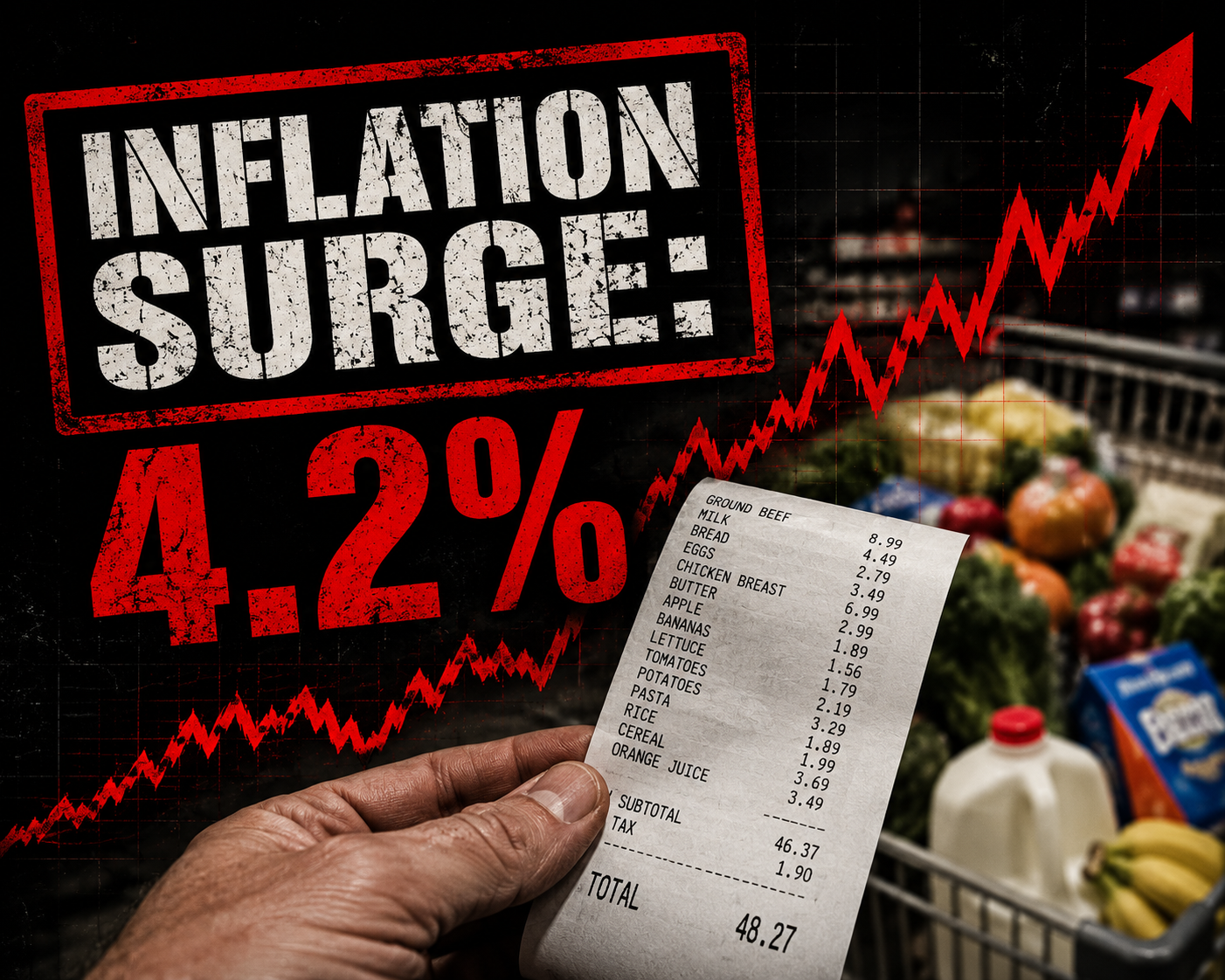
After months of gradual improvement, inflation has moved higher again, raising new concerns about the cost of living and the broader direction of the U.S. economy.
According to the latest Consumer Price Index (CPI) report from the Labor Department, consumer prices rose 4.2% over the 12 months ending in May, up from 3.8% in April. The increase marks the first time inflation has moved above 4% in more than three years and comes at a time when many Americans were hoping the worst of the post-pandemic inflation cycle was behind them.
For households already coping with elevated housing, food, and energy costs, the latest report suggests that price pressures remain a significant challenge.
Why Inflation Is Rising Again
Economists point to several factors contributing to the recent acceleration.
Energy Prices Remain a Major Driver
Rising energy costs played a significant role in May’s inflation report.
Geopolitical tensions in the Middle East and disruptions affecting global shipping routes have placed renewed pressure on oil markets, pushing fuel prices higher. Higher energy costs affect far more than the gas pump; they ripple through transportation networks, manufacturing operations, and supply chains across the economy.
As transportation expenses increase, businesses often pass some of those costs on to consumers.
Food Costs Continue to Climb
Consumers are also seeing higher prices at grocery stores.
Several food categories posted notable increases during the past year, reflecting ongoing transportation expenses, weather-related disruptions, and supply-chain challenges affecting agricultural markets.
While food inflation has moderated from its peak levels, it remains a significant concern for many families, particularly those managing tight household budgets.
Demand for Infrastructure and Technology
Another emerging factor is the rapid expansion of artificial intelligence infrastructure.
Across the country, major technology companies are investing heavily in new data centers, power systems, specialized equipment, and skilled labor. While these investments support economic growth and innovation, they also create additional demand for materials, energy, and construction resources.
Some analysts believe this surge in investment may be contributing to localized price pressures in certain sectors.
A New Challenge for the Federal Reserve
The inflation report arrives at a critical moment for Federal Reserve policymakers.
Throughout much of the year, investors expected the central bank to begin reducing interest rates as inflation gradually cooled. The latest data may complicate that outlook.
Higher-than-expected inflation increases the likelihood that policymakers will keep interest rates elevated for longer than previously anticipated.
Financial markets have already begun adjusting expectations for future rate cuts as economists reassess the path of inflation through the remainder of 2026.
Why Consumers Still Feel Financial Pressure
One reason inflation remains a major political and economic issue is that many households continue to feel squeezed despite a strong labor market.
While wages have increased over the past year, inflation has eroded some of those gains.
Average hourly earnings rose approximately 3.4% over the past 12 months, but inflation is currently rising faster than wage growth. As a result, many consumers are experiencing a decline in real purchasing power.
This means families may find that their income buys less than it did a year ago, even if their paycheck has increased.
Consumer Confidence Remains Fragile
Recent consumer sentiment surveys suggest Americans remain cautious about the economy.
Many households continue to express concerns about:
- Rising grocery costs
- Housing affordability
- Fuel prices
- Interest rates
- Long-term inflation trends
Consumer confidence often plays an important role in economic activity. When households feel uncertain about future expenses, they may reduce discretionary spending, which can affect broader economic growth.
What Happens Next?
The key question facing economists and policymakers is whether May’s inflation surge represents a temporary setback or the beginning of a more sustained trend.
Several variables will shape the answer:
- Energy market stability
- Global trade conditions
- Supply-chain performance
- Labor market strength
- Future Federal Reserve policy decisions
For now, the latest data serves as a reminder that inflation remains one of the most important economic challenges facing American households.
While the economy has shown resilience in many areas, consumers are still navigating a period where the cost of everyday essentials remains significantly higher than many expected just a few years ago.
The coming months will provide a clearer picture of whether inflation resumes its downward path or becomes a more persistent obstacle for both policymakers and consumers.
Editorial Note
Economic forecasts are inherently uncertain. This article is intended for informational purposes only and should not be considered financial or investment advice. Readers should consult qualified financial professionals before making investment decisions.
You can review a deeper technical exploration of how these compounding macroeconomic factors are actively reshaping global market projections by watching this detailed Reuters Financial Analysis of the CPI Shock. This coverage breaks down how central bank analysts are adjusting their timelines for interest rate management in response to the stubborn 4.2 percent print.
📊 Sources & Further Reading
Official Economic Data & Inflation Reports
- The Washington Post Business Desk – Analysis of U.S. inflation trends, consumer prices, wage growth, and economic policy developments.
- U.S. Bureau of Labor Statistics (BLS) – Consumer Price Index – Official government source for CPI data, inflation measurements, and historical price trends.
Consumer Confidence & Market Research
- University of Michigan Survey of Consumers – Long-running research tracking consumer sentiment, inflation expectations, and household economic outlooks.
- Federal Reserve Bank of New York – Survey of Consumer Expectations – Research on household finances, labor market expectations, inflation perceptions, and economic confidence.
- The Guardian Business – Coverage of Federal Reserve policy, interest rate expectations, and global economic developments.
Editorial Note: Economic conditions and inflation data can change rapidly. Readers are encouraged to review official government releases and primary-source economic research for the latest updates.
About Republican Column: At Republican Column, we bring you breaking U.S. news, politics, and global developments every day to keep you informed.