

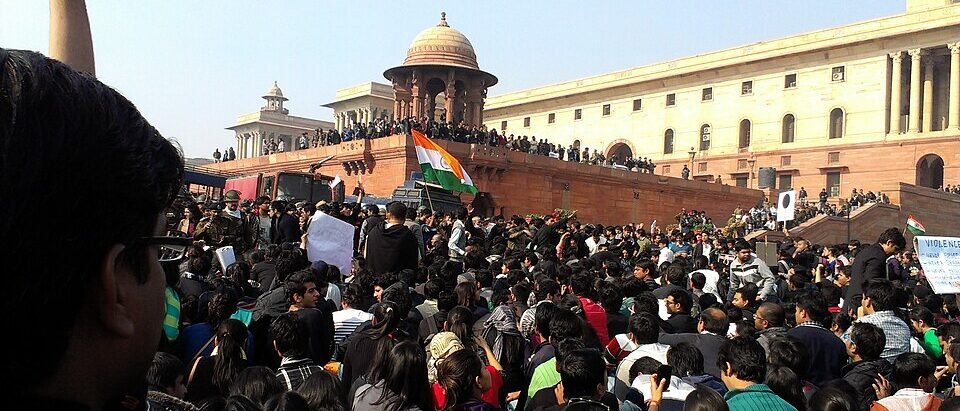
For more than two months, students across India have taken to the streets over a wave of leaked competitive exam papers — a scandal that, by some estimates, has now touched nearly seventy different exams during Prime Minister Narendra Modi’s tenure. What began as anger over a single leaked entrance exam has grown into a broader youth movement demanding reform of an education and employment system many young Indians say has failed them before they even got a fair shot.
The protests reached a new pitch in New Delhi last week, when thousands gathered at Jantar Mantar and later attempted to march toward Parliament. Protesters and police have offered sharply different accounts of what happened next: demonstrators say Delhi Police used sticks, electrified barricades, and pellet guns to disperse the crowd, leaving dozens injured and at least a few with confirmed pellet-gun wounds; police have publicly rejected those characterizations as “completely false and misleading.” What isn’t in dispute is that some protesters threw stones and bottles, injuring several officers, and that the standoff has continued for days, with Delhi Metro shutting down stations near the protest site more than once.
A Rare Break From the Party Line
What made a recent televised debate notable wasn’t the protest coverage itself, but who was doing the criticizing. A panelist who identified as a BJP supporter used the segment to deliver a pointed rebuke of his own party’s government — not the safe, symbolic kind of criticism common on partisan television, but a direct demand for accountability.
He called the government’s handling of the crisis a “massive failure,” arguing that citizens elect leaders specifically to prevent this kind of institutional breakdown. Rather than accepting ministerial resignations as sufficient, he pushed for something more concrete: removing corrupt officials from the exam and education bureaucracy itself, as a first step toward rebuilding public trust in the system.
He was especially pointed about the government’s use of force against protesters, describing images of injured students — including, he said, a young girl who was struck during the demonstrations and a student who suffered a serious eye injury from crowd-control measures. “Will anyone in the government or police take responsibility?” he asked, arguing that many of the young people in the streets weren’t political operatives but ordinary students showing solidarity with peers whose futures had been upended by leaked papers.
The Generational Argument
Much of the panelist’s most resonant material had nothing to do with policy specifics and everything to do with generational empathy. He drew a contrast between the job market previous generations faced and the one confronting Gen Z today — a world, as he put it, where fifty applicants now compete for a single position that might once have gone begging. Speaking about his own adult daughter working two jobs to get by, he urged older Indians and sitting politicians alike to actually listen to what young people are saying rather than dismiss the protests as agitation for its own sake.
That framing echoes what’s actually driving the movement on the ground. Much of the energy behind the protests has coalesced around a youth-led group calling itself the “Cockroach Party” — a name born from a widely criticized remark by India’s Chief Justice referring to unemployed young people as “cockroaches,” which protesters have since reclaimed as a badge of resilience rather than an insult.
The panelist closed his remarks with a specific institutional proposal: a constitutional amendment guaranteeing direct legislative representation for Indians between the ages of 25 and 40, arguing that the students who took to the streets waving copies of the Constitution deserve a Constitution that actually works for them between election cycles, not just during campaign season.
Whether that idea goes anywhere is an open question. What’s less in dispute is that a government facing sustained criticism from its own supporters — not just its usual opposition — is dealing with something harder to dismiss as ordinary political noise. For a movement that started with a single leaked exam paper, the fact that it’s now producing uncomfortable moments on friendly television is itself a sign of how far the frustration has spread.
About Republican Column: At Republican Column, we bring you breaking U.S. news, politics, and global developments every day to keep you informed.