

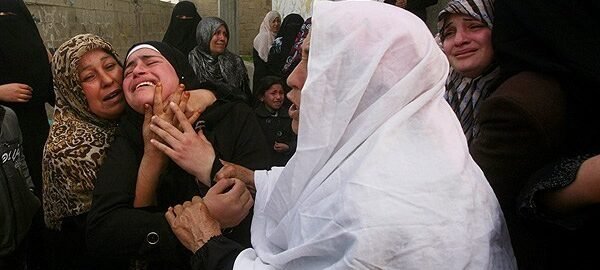
For nearly ten years, 30-year-old Nuha Auipta held onto one hope: becoming a mother. That hope has been broken repeatedly during the fighting in Gaza, through displacement, ongoing strikes, and a level of instability most people never have to live through. She has now lost three pregnancies over the course of the war.
“I woke up hoping my baby was still inside me,” she said, through tears. “I cried so much because I lost the baby I dreamed about every single day. Every time I see my husband playing with children, I start crying.”
Nuha’s story isn’t an isolated one. Medical workers and field clinics across the territory are reporting a sharp rise in pregnancy loss. According to local healthcare providers, roughly 70 percent of recent miscarriages treated at the facilities still standing are being linked directly to the conditions of prolonged war — severe malnutrition, lack of clean water, constant psychological stress, and repeated forced displacement.
When basic care disappears
Nida Isam, another woman living through the conflict, recently lost her unborn daughter — her second pregnancy loss since the fighting escalated. Trapped under heavy bombardment and forced to breathe in smoke from nearby strikes, she had no way to reach specialized maternal care or leave the area for emergency treatment.
“When I asked the doctor why this keeps happening, he told me it was because of the psychological stress we have endured and severe malnutrition,” she said.
That explanation reflects a much broader collapse in basic healthcare access. Hospitals across the region are short on equipment, clean water, and essential medication, and prenatal care that would normally be routine has become nearly impossible to access. Many displaced families have lost their medical records along with their homes, making it difficult for doctors to even track a patient’s history. Without stable nutrition, clean living conditions, or steady shelter, pregnant women remain at serious risk.
A cost that goes beyond the battlefield
For anyone who values human life and the stability of families, stories like these are a hard reminder that the price of war is never fully captured in casualty counts or territorial gains. It shows up in miscarried pregnancies, grieving mothers, and children who never got the chance to be born.
Decades of unresolved conflict in the region have left ordinary families caught between extremist groups and shifting geopolitical interests, with no clear end in sight. The argument from those who favor a firmer approach to American foreign policy is straightforward: endless military stalemate and vague diplomatic gestures haven’t produced lasting peace. What has worked, at least in isolated cases, is decisive American leadership willing to enforce real deterrence and broker actual agreements — the Abraham Accords are often pointed to as one example of that approach paying off.
When there’s clarity and strength behind U.S. foreign policy, the argument goes, trade routes stay open and humanitarian crises are easier to prevent. When that direction is missing, conflicts tend to drag on indefinitely, and it’s civilians — often the most vulnerable among them — who absorb the consequences.
Stories like Nuha’s and Nida’s point to something simple: families in this region need an actual resolution, not another prolonged standoff. Rebuilding basic healthcare access alone would go a long way toward giving mothers a real chance at carrying a pregnancy safely to term.
For now, these women are left grieving in the middle of a conflict they didn’t start and can’t control. Real relief, for them, won’t come from another round of statements or ceasefire extensions — it will come when the fighting actually stops long enough for ordinary life, and the ability to safely bring a child into the world, to return.
About Republican Column: At Republican Column, we bring you breaking U.S. news, politics, and global developments every day to keep you informed.