

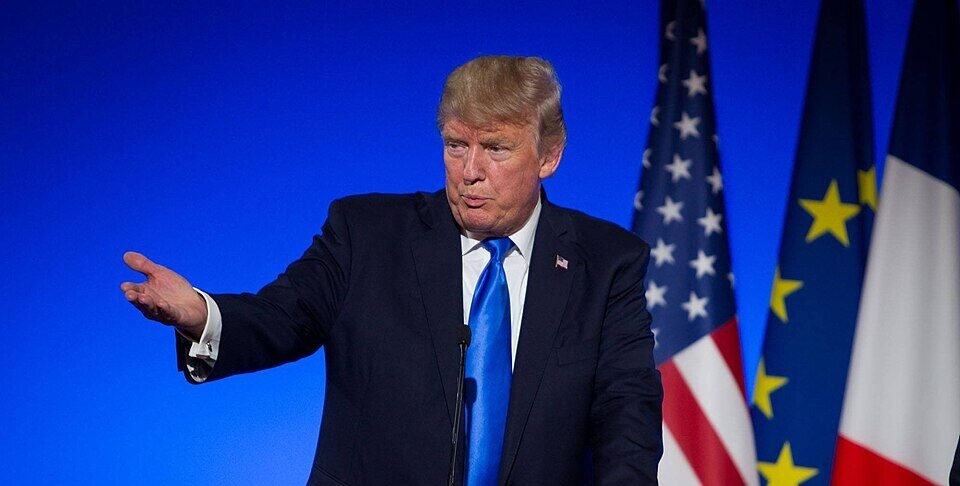
Early voting is underway across Michigan ahead of the state’s August primary, and President Trump is preparing to make a high-profile visit to a state he’s carried in two of the last three presidential elections. He arrives amid a fresh legal setback: the Boston-based First U.S. Circuit Court of Appeals has declined to lift an injunction blocking his executive order that sought to tighten mail-in voting rules in 23 states and the District of Columbia, part of a broader push to build a national list of verified citizens and standardize mail-ballot security.
Michigan Attorney General Dana Nessel, who helped lead the 24-state coalition that sued to block the order, has been consistent in her framing of the fight: that the Constitution gives states, not the federal government, primary authority over how their elections are run. “States run elections, not the federal government,” she said in one recent statement responding to Justice Department scrutiny of Michigan’s primary process — a line that captures her office’s core argument through months of litigation.
A Genuinely Decentralized System
One thing rarely disputed in the fight is just how decentralized Michigan’s election system actually is. The state’s elections are administered by roughly 1,600 county and local officials — 83 county clerks, 281 city clerks, and 1,240 township clerks — making it, by the state’s own account, the most decentralized election system in the country. Supporters of the administration’s push for national standards argue that’s precisely the problem: a patchwork of more than a thousand separate local offices, they say, is a structure built for confusion, not consistency, and one where basic safeguards like citizenship verification and mail-ballot security can vary wildly from one township to the next.
Nessel and her allies see the same decentralization very differently — as a deliberate constitutional design that keeps elections closest to the people who actually run them, insulated from federal interference regardless of which party controls the White House.
Trump’s Case to Michigan Voters
President Trump’s visit is aimed squarely at cutting through that legal fight and making his case directly to voters: that an election system Americans can trust starts with uniform verification, not fifty-plus different standards decided county by county. Having carried Michigan in 2016 and 2024, the President is betting that argument still resonates with the working-class coalition that delivered those wins, even as Democratic officials frame his push as political theater rather than genuine reform.
Part of a Larger Fight
The mail-voting case is only one front. Michigan has also joined a multistate lawsuit challenging a Trump administration policy that ties certain federal funding — including disaster assistance — to states cooperating with federal immigration enforcement and adopting stricter voter-roll verification standards. State officials call the arrangement “weaponized” federal funding; the administration has defended it as reasonable accountability, arguing federal dollars shouldn’t flow to states unwilling to verify basic eligibility standards on their own rolls.
That fight over transparency extends to the rolls themselves. Nessel’s office has also resisted Department of Justice requests for unredacted voter registration data, arguing that request raises legitimate privacy concerns for the millions of Michiganders on the list — while critics counter that resistance to basic data-sharing only deepens public suspicion about what those rolls actually contain.
What’s at Stake in November
None of this is happening in a vacuum. Michigan is one of the most competitive states in the country, and control of Congress in November may hinge on races decided by the same razor-thin margins that have defined the state’s politics for a decade. For MAGA voters, the throughline is straightforward: a president pushing for uniform, verifiable election standards, met at every turn by state officials who insist those standards belong to Michigan alone to set.
Whether that argument lands the way it did in 2016 and 2024, or whether voters side with Nessel’s states’-rights framing, is likely to become clearer well before ballots are counted in November. For now, both sides are making their case in court and on the campaign trail simultaneously — and Michigan, as usual, is where the country will be watching.
About Republican Column: At Republican Column, we bring you breaking U.S. news, politics, and global developments every day to keep you informed.