

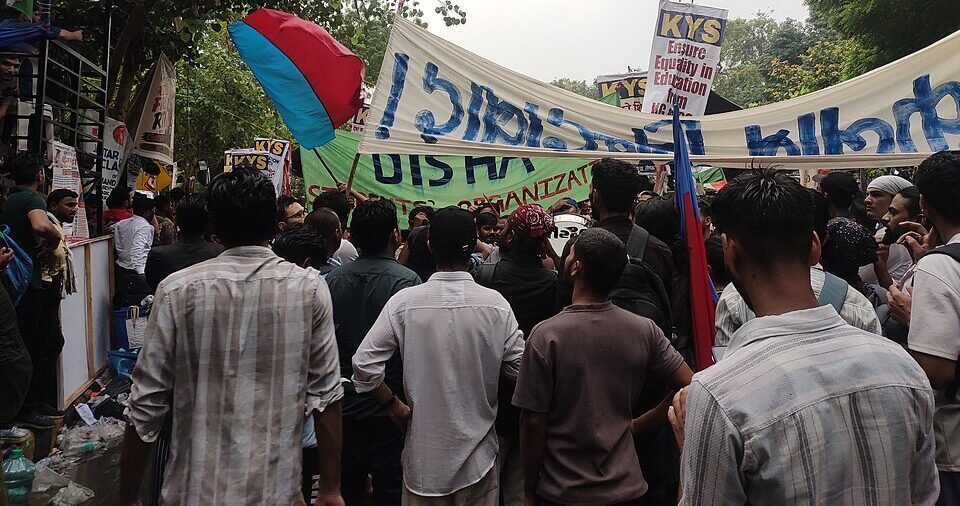
Student-Led Protests Lead to Major Political Development
India’s Education Minister Dharmendra Pradhan has resigned after weeks of sustained nationwide protests sparked by examination paper leaks that disrupted the futures of millions of students.
The resignation follows demonstrations led by supporters of the Cockroach Janata Party (CJP), a youth movement that rapidly gained attention online before organizing large public protests in New Delhi and other cities.
According to Pradhan’s public resignation statement posted on X, he submitted his resignation to Prime Minister Narendra Modi, describing recent developments as “saddening” and saying the issue was not one of “personal prestige.”
He wrote that India’s youth represent the country’s greatest strength and said he hoped the situation would not be exploited by what he described as “anti-national elements.”
Exam Leak Crisis Sparks Public Anger
The protests began after allegations that examination papers for major national entrance tests had been leaked, prompting widespread concern over the integrity of India’s education system.
Students argued that years of preparation had been undermined by failures within government institutions responsible for conducting competitive examinations.
The controversy quickly expanded beyond the examination issue itself, becoming a broader expression of frustration over unemployment, rising living costs, and confidence in public institutions.
Supporters of the movement said symbolic administrative changes were insufficient and insisted that senior political leadership should accept responsibility.
Government Attempts to Ease Tensions
Before Pradhan’s resignation, the government introduced several measures intended to address public concerns.
Prime Minister Narendra Modi released a direct video message acknowledging the seriousness of the situation.
Authorities also announced plans for new legislation aimed at preventing examination fraud and removed several officials associated with the National Testing Agency, which oversees many entrance examinations.
Despite those actions, protest organizers maintained that meaningful accountability required the resignation of the education minister before further negotiations could proceed.
Celebrations Mixed With Continuing Demands
News of Pradhan’s resignation prompted celebrations at protest sites, including New Delhi’s Jantar Mantar.
Student leaders described the resignation as evidence that sustained public pressure could produce political accountability.
One protest leader told supporters that the resignation challenged the perception that senior officials would never be held responsible for administrative failures.
However, organizers emphasized that the movement’s objectives extend beyond a single resignation.
Among the remaining demands are:
- Compensation for families affected by the examination crisis.
- Legal protection for peaceful student protesters.
- Accountability regarding police actions during demonstrations.
- Structural reforms to India’s examination system.
Movement representatives have said protests will continue until those demands receive meaningful responses.
Allegations Over Police Response
The demonstrations have also drawn attention to allegations regarding the use of force by police.
Opposition politicians have accused authorities of using batons and tear gas against student protesters attempting to march toward Parliament.
Some protesters reported injuries during clashes with security forces.
Government officials have defended police actions as necessary to maintain public order, while critics argue the response intensified public anger rather than calming the situation.
Reports from New Delhi indicate that isolated confrontations between demonstrators and police continued even after the minister’s resignation.
Broader Political Significance
Political analysts say the resignation represents one of the most significant examples in recent years of sustained public pressure resulting in the departure of a senior cabinet minister.
For much of the past decade, Prime Minister Modi’s administration has been viewed as politically resilient, making Pradhan’s resignation notable within India’s political landscape.
Whether the resignation ultimately resolves public dissatisfaction remains uncertain.
Many protesters argue that deeper institutional reforms are needed to restore confidence in competitive examinations and government accountability.
Looking Ahead
The government now faces the challenge of rebuilding trust among millions of students while addressing wider concerns surrounding employment opportunities and institutional transparency.
Negotiations between officials and protest representatives are expected to continue.
Meanwhile, protest organizers say demonstrations will remain active until additional commitments are made regarding examination reforms, accountability, and protections for those who participated in the movement.
The coming weeks will likely determine whether the minister’s resignation serves as the conclusion of the crisis—or merely the beginning of broader political and institutional changes.
About Republican Column: At Republican Column, we bring you breaking U.S. news, politics, and global developments every day to keep you informed.